
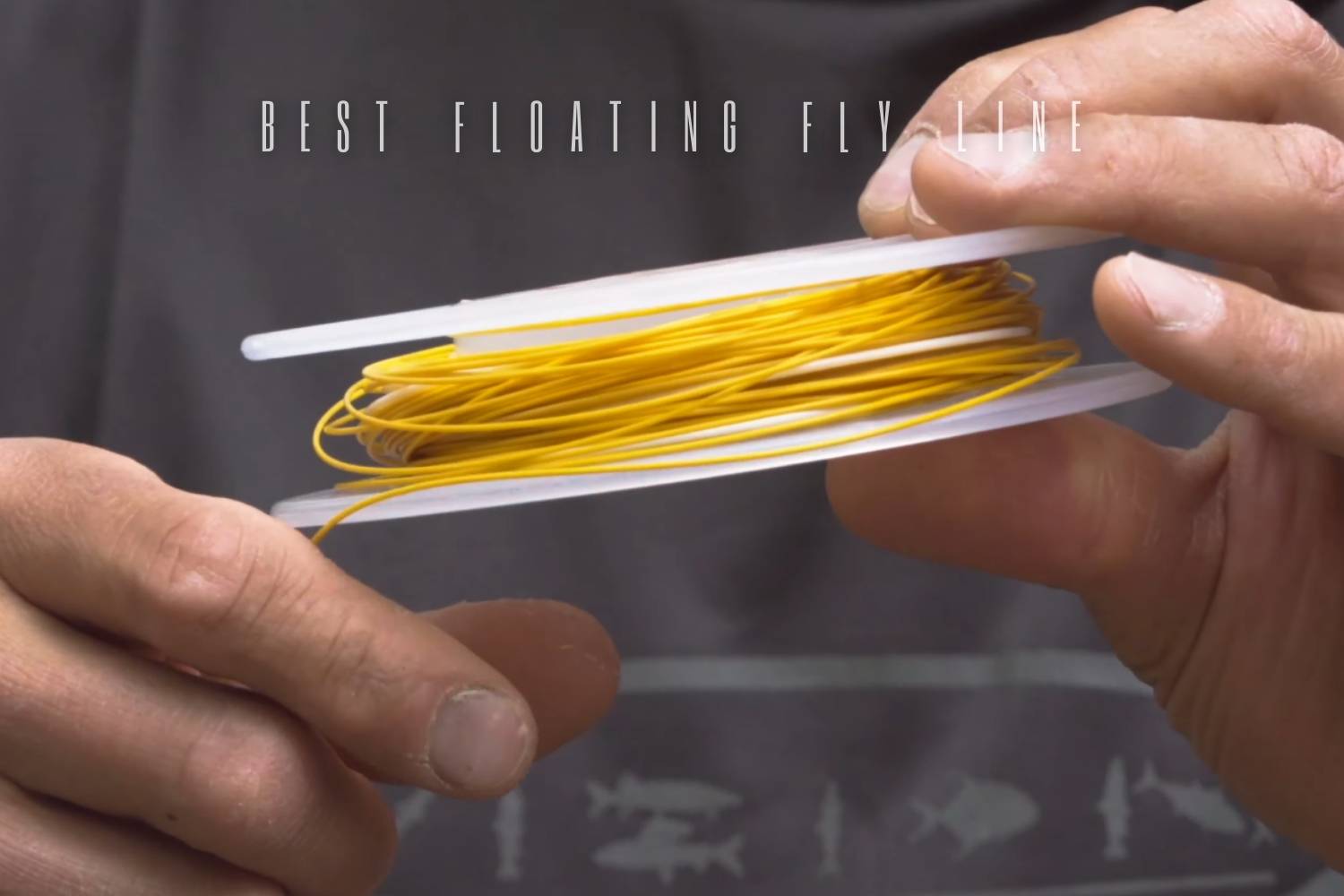
The best floating fly line is the one whose taper, head length, and weight profile suit the presentation you make most often. A long, standard-weight head rewards anglers who carry line and mend at distance. A half-size-heavy, mid-length head is easier to load across mixed fishing. A short, full-size-heavy head is built to move bulky rigs. A double taper favors line control, roll casting, and softer work rather than effortless shooting.
That construction-first approach matters more than the species printed on the box. Start with the rod’s rated line weight, decide what the line must turn over, then choose how much head you can comfortably keep outside the rod tip. If you need a broader overview before narrowing the choice, see our fly line guide.
Best floating fly lines by taper and presentation
| Line | Construction | Best fit | Main trade-off |
|---|---|---|---|
| RIO Elite Gold | Standard-weight WF; 47-foot head in WF5F | Carrying line, precise casts, long mends, small dries, and dry-dropper rigs | Needs more room and line outside the tip than a compact head |
| RIO Elite Gold XP | Half-size-heavy WF; mid-length head | Mixed rigs and short-to-long casting with one versatile taper | Less delicate than standard-weight Gold and less forceful than Gold Max |
| RIO Elite Gold Max | Full-size-heavy WF; short, rear-loaded head | Heavy indicators, big dries, bulky rigs, and easy roll casting | More line mass than fine presentations require |
| Cortland 444 Peach Double Taper | Double taper; 90 feet; braided multifilament core | Roll casting, line control, small flies, and anglers who prefer a supple DT | Does not shoot running line like a concentrated WF head |
| RIO Premier Creek Line | Floating WF built to load at close range | Tight shots, small dries, and limited backcast room | A close-range specialist is not the first choice for carrying a long head |
| RIO Elite Stillwater Floater | Floating WF with a lake-oriented profile | Long leaders, indicators, and multi-fly rigs on still water | More specialized than a general river taper |
These are job-based picks, not a claim that one line is universally superior. The right choice depends on rod action, casting distance, fly resistance, leader length, current, and temperature.
How floating-line construction changes a cast
A floating line is not one uniform cylinder. Its front taper, body, rear taper, and running line divide the mass that bends the rod and transfers energy toward the fly. Two lines with the same printed weight can feel very different because that mass sits in different places.
Front taper: turnover versus delicacy
A longer, finer front taper spreads the loss of mass over more line. That generally suits smaller flies and longer leaders because the loop can unroll with less abrupt turnover. A short, powerful front taper concentrates more mass near the front and is better suited to indicators, weighted nymphs, wind-resistant dries, and larger flies. The trade-off is not good versus bad; it is soft delivery versus authority.
Head length: carrying line versus loading quickly
A long head lets an experienced caster hold more line in the air and gives the rear taper more influence over mending and line control. It also asks for enough room, timing, and line outside the rod tip to work properly. A compact head reaches its useful loading point sooner. That helps in close quarters, from a boat, or whenever there is time for only one or two backcasts, but it gives up some of the long-head feel at distance.
Rear taper: the control section
The rear taper connects the body to the thinner running line. A longer rear taper makes the transition more gradual, which can improve control while carrying line and help preserve energy through a long mend. A short rear taper moves quickly into running line and is usually easier to shoot once the head is outside the guides.
Line weight profile: true, half-size heavy, or full-size heavy
Do not assume every line marked “5” puts the same amount of mass over the same length. RIO describes Elite Gold as standard weight, Elite Gold XP as half-size heavy, and Elite Gold Max as a full line size heavy. That sequence is a useful way to understand power. Standard weight favors the intended rod rating and a more measured load. Half-size heavy adds help at shorter distances. Full-size heavy is for a stronger load and heavier payloads, but can overwhelm a soft rod or make a small dry land harder than necessary.
Weight forward versus double taper
Weight-forward and double-taper lines can both present a fly well. The practical difference becomes clearer when you consider how much line is outside the rod and what you want to do after the cast.
Choose a weight-forward line when
- You want the head to pull thinner running line during the shoot.
- You regularly cast into wind or turn over an indicator, split shot, or a resistant fly.
- You fish from a drift boat or in cover where quick loading matters.
- You want a specialized short, medium, or long head for a defined casting job.
Choose a double-taper line when
- Your fishing centers on roll casts, line control, and relatively modest overhead distances.
- You prefer a long level body rather than a thin running line behind the head.
- You make soft presentations with lighter flies and a rod that responds well to a conventional DT profile.
- You value a reversible line, provided both ends have the same taper and remain in usable condition.
Cortland lists 444 Peach and 444 Peach Double Taper as separate current records. That distinction is important: choose the exact WF or DT product rather than assuming one box contains both profiles.
Floating line picks by construction
RIO Elite Gold: best for a long, standard-weight head
RIO describes Elite Gold as a standard-weight line with a 47-foot head in WF5F, a long rear taper, and a 5-foot 6-inch front taper in that size. Its primary roles are small dries and dry-dropper rigs, with big dries and light indicators as secondary uses. Pick it when precise medium-to-long casts and mending at distance matter more than instant loading. The long head is an asset on open water, but it is unnecessary if nearly every cast is made with only a few yards of line outside the tip.
RIO Elite Gold XP: best all-purpose power balance
Elite Gold XP moves to a mid-length head and a half-size-heavy profile. Its balanced body and medium-long rear taper are intended to combine turnover with line control. That makes it the middle choice for anglers who alternate among dry droppers, light indicators, small and large dries, and light streamers. It is a sensible one-line compromise when standard Gold feels too measured but Gold Max would add more mass than the usual rig needs.
RIO Elite Gold Max: best for bulky floating-line rigs
Elite Gold Max is the shortest-headed and most powerful of these three Gold tapers. RIO describes it as full-size heavy with a rear-loaded body, a short rear taper, and a short front taper. Its primary jobs are heavy indicators and big dries, with streamers, dry droppers, and lighter indicator work as secondary roles. Choose it because the rig demands power, not simply because overlining sounds easier.
Cortland 444 Peach Double Taper: best classic DT option
The exact current product is named 444 Peach Double Taper. Cortland records it as a 90-foot floating DT with a braided nylon multifilament core and describes it as supple and high floating. It is the choice here for anglers who prioritize roll casting and controlled presentation over shooting a compact head. The separate current 444 Peach is the weight-forward version, so check the complete product name before selecting a taper.
RIO Premier Creek Line: best for close-range loading
RIO Premier Creek Line is a floating specialist for small dries, tight shots, and short-range loading. Its listed secondary uses include small nymphs and soft hackles, and its supple coldwater core suits the kind of conditions often found on small streams. This is the right architecture when brush, pocket water, or a short leader keeps casts compact. It is not meant to replace a long-head line for open-water distance and long mends.
RIO Elite Stillwater Floater: best lake specialist
RIO Elite Stillwater Floater is recorded in WF5F through WF8F and is aimed at lakes, long leaders, indicators, and multi-fly rigs. Those jobs ask a line to manage more leader and payload than a delicate creek line. Choose it for that stillwater system rather than treating every floating WF line as interchangeable.
How to match a floating line to your rod
- Match the printed line size first. Start with the rod maker’s rated weight unless the line or rod maker gives a specific pairing.
- Check the line’s actual weight profile. Standard, half-size-heavy, and full-size-heavy lines can load the same rod differently.
- Consider the rod action. A fast rod may feel better with extra mass at short range, while a softer rod may already load deeply with a standard-weight line.
- Match the head to normal casting distance. A long head cannot show its strengths if most of it stays on the reel; a very short head can feel abrupt when you want to carry line.
- Match the front taper to the payload. A tiny dry on a long leader and a heavy indicator rig are different turnover problems.
Memory and stretch affect handling, but neither replaces taper fit. Memory is also affected by temperature, core stiffness, spool storage, and how long the line has been coiled. Stretch changes feel and feedback, yet hook setting and drift control still depend on slack management, leader design, and technique.
When a floating line is the wrong tool
A floating line can carry a weighted fly, a dropper, or a sink-tip leader, but it still keeps the main line at the surface. That is useful for mending and for shallow or suspended presentations. It becomes inefficient when the presentation requires the whole system to stay deep through the retrieve, cut through strong current, or avoid the steep hinge created by a heavy tip below a floating belly.
For sustained depth, compare intermediate, sink-tip, and full-sinking systems in our sinking fly line guide. Choose density for the water column and retrieve, not because a floating line failed to force a deep-water job.
Floating fly line FAQ
Is weight forward easier to cast than double taper?
A compact WF head is often easier to load and shoot, especially with limited backcast room or a bulky fly. A DT can be equally comfortable at ordinary fishing distances and may feel better for roll casts and line control. Rod action and casting style matter as much as the label.
Should I use a heavier floating line than my rod rating?
Not automatically. First check whether the chosen line is already half-size or full-size heavy. Extra mass can help a fast rod load at short range, but it can also make a softer rod feel overloaded and reduce delicacy.
Does a longer head cast farther?
A longer head can help a capable caster carry more line and control it at distance. It does not create distance by itself. A compact head may shoot more easily for an angler who cannot comfortably hold a long head in the air.
Can a floating line fish streamers?
Yes, when the fly should ride shallow, the current supplies some depth, or a weighted fly or short sinking leader is enough. Use an appropriate powerful taper for a large streamer. Move to an intermediate or sinking system when the main line needs to control depth through the retrieve.
When should a floating line be replaced?
Clean it first according to the maker’s instructions. Replace it when cracks, a failing coating, damaged loops, persistent roughness, or loss of dependable flotation interferes with fishing. Age alone is less useful than the condition of the working section.
Choose the taper before the label
For precise distance work, start with a long standard-weight head such as RIO Elite Gold. For mixed rigs, the half-size-heavy Elite Gold XP is the balanced option. For bulky payloads, use the short full-size-heavy Elite Gold Max. Choose Cortland 444 Peach Double Taper when roll casting and line control are the priority, RIO Premier Creek Line for close-range loading, and RIO Elite Stillwater Floater for long-leader lake systems.
The best floating line is therefore not a species winner. It is the construction that loads your rod at the distance you actually cast and turns over the fly and leader you actually fish.
