
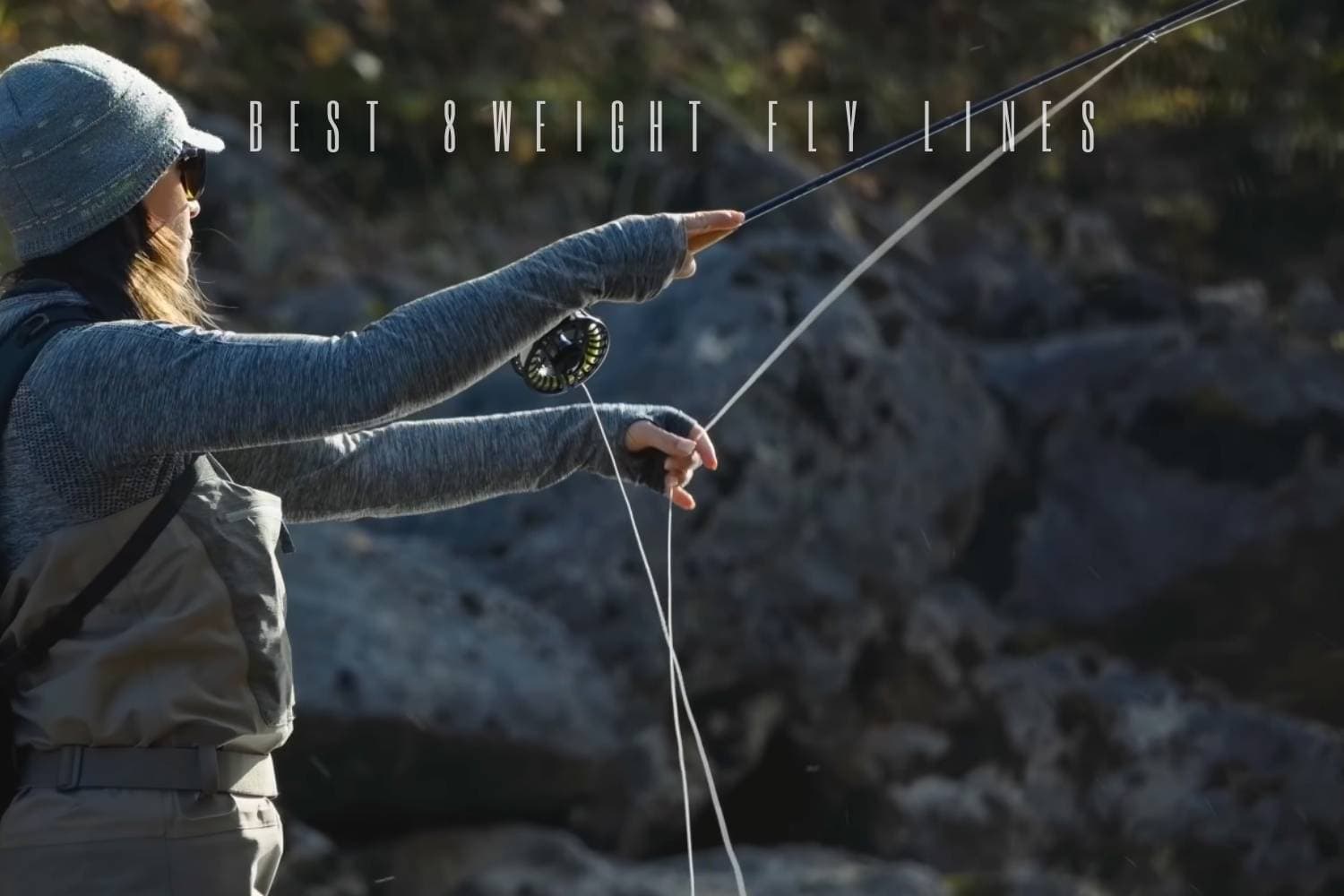
The best 8-weight fly line depends on where it will fish, how hot or cold the line will become, the fly it must carry and the depth it must hold. An 8-weight bass floater, a long-belly steelhead line, a supple cold-salt taper and a hard tropical shooting head solve different problems even though all can wear an 8-weight label.
Start with Cortland Bass for warmwater poppers and streamers, Cortland Salmon Steelhead Olive / White for mending and long-belly freshwater work, or Cortland Cold Redfish for cool saltwater. In tropical heat, RIO Elite Tropical OutBound Short combines a hard-condition design with floating, intermediate and multi-density choices. For deep presentations, Cortland Compact Sink Type 6 must be chosen by grain window, not by the broad 7/8wt or 8/9wt label alone.
8-weight fly lines compared by job
An 8-weight rod is capable of broad work, but a line still needs one clear primary job. Use this comparison to choose the environment and head style first, then select density and exact grain weight.
| Line | Best fit | Exact 8-weight build | Main boundary |
|---|---|---|---|
| Cortland Bass | Warmwater bass, poppers and large streamers | LILY GREEN / HOT ORANGE / WF8F; floating; 100 ft; braided nylon multifilament core; full line size heavy | Dedicated aggressive bass taper, not a general saltwater or steelhead line |
| Cortland Salmon Steelhead Olive / White | Indicators, nymph rigs, split shot, streamers and long mends | OLIVE / WHITE / WF8F; floating; 100 ft; 65 ft head; braided nylon multifilament core | Long-belly freshwater control, not a compact tropical shooting head |
| Cortland Cold Redfish | Cool saltwater and larger or weighted flies | WF8F; floating; 100 ft; braided nylon multifilament core; short aggressive taper | Supple cold-condition construction is not intended as the tropical default |
| RIO Elite Tropical OutBound Short | Tropical heat, large flies, quick loading and density choices | 8wt; 330-grain, 30 ft head; Float, Float/1ips/2ips, Intermediate or Int/5ips/7ips; DirectCore | Hard tropical power is a poor substitute for cold-water suppleness or delicate flats presentation |
| Cortland Compact Sink Type 6 | Deep freshwater or saltwater with large flies | 28 ft Type 6 head; intermediate running line; 7/8WT – 275 GR or 8/9WT – 310 GR; monofilament core | The correct configuration depends on the rod’s grain window and casting style |
Choose by environment and target
Warmwater bass
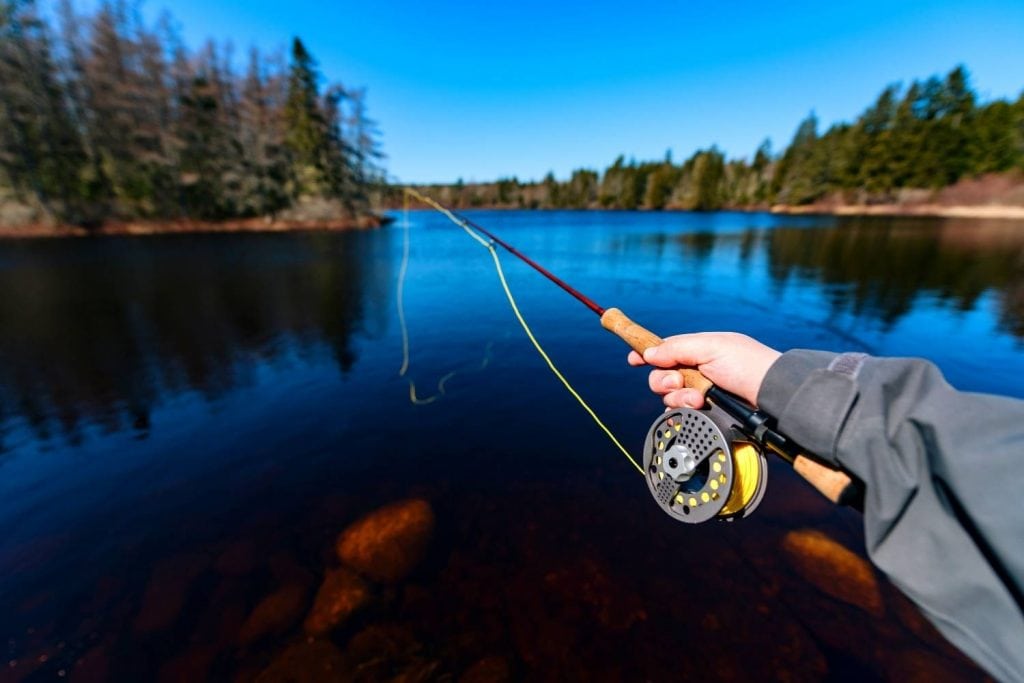
An 8-weight bass line is primarily a fly-delivery tool. Large poppers, deer-hair bugs and weighted streamers need a short front profile that can keep the leader turning over. Cortland Bass is built a full line size heavy for fast-action rods, so its WF8F designation already includes extra loading mass. It makes sense for dedicated bass work but should not be treated as a universal 8-weight line.
Steelhead and salmon
Long drifts, indicators, split shot and repeated mending demand a different shape. Cortland Salmon Steelhead Olive / White uses a 65-foot head, short front taper and overweighted profile. The long belly keeps more line under control on the water and supports roll casting and mending. That is a freshwater line-management job, not the same problem as firing a compact head at a saltwater target.
Cold saltwater
Cool surf, estuaries and early-season saltwater can make a hard tropical line coil. Cold Redfish uses a braided nylon multifilament core and supple coating, paired with a short aggressive taper for larger or weighted flies. Its exact WF8F configuration is the cool-condition floating option here.
Tropical saltwater and larger flies
RIO Elite Tropical OutBound Short is built for hot climates and uses a short front-loaded head, DirectCore and a 330-grain 8-weight head. It favors quick loading, long casts and large-fly turnover. That power is useful for some tropical jobs, but bonefish-focused presentation, running-line visibility and stealth deserve their own decision rather than being folded into one aggressive-head recommendation.
Deep freshwater or saltwater
Compact Sink Type 6 uses a 28-foot Type 6 head and intermediate running line. Cortland lists deep-water roles across trout, bass, steelhead, pike, musky and striped bass. Those labels describe potential applications, not one universal setup. The fly, current, target depth and rod grain window still decide whether the 275- or 310-grain configuration fits.
Tropical versus cold cores
Temperature is a first-order choice for an 8-weight line. A tropical line is deliberately firm enough to resist softening on a hot deck. A cold-condition line is built to remain supple when air and water are cool. Using either far outside its intended range can create memory, tangles, stickiness or poor shooting.
Cold Redfish represents the cool end of the comparison with its braided nylon multifilament core and supple coating. RIO Elite Tropical OutBound Short represents the hot end with DirectCore and a tropical construction. The shared 8-weight label does not erase that difference.
Do not use species as a shortcut for temperature. Redfish, striped bass and other saltwater targets can be pursued in very different climates. Choose from destination, season, deck temperature and expected water temperature before deciding how aggressive the taper should be.
Floating, intermediate and sinking systems
Floating
A floating line is the most versatile first spool for bass bugs, indicators, shallow saltwater and situations requiring immediate pickup. Cortland Bass, Salmon Steelhead and Cold Redfish are all floaters, but each has a different head shape and environment. Density alone does not make them interchangeable.
Intermediate
An intermediate line keeps a fly below surface chop and can produce a flatter subsurface retrieve. The 8wt Intermediate version of Elite Tropical OutBound Short uses the same 330-grain, 30-foot head dimensions as the other 8-weight versions, but its clear/gray/trans blue construction changes the track through the water.
Multi-density
Elite Tropical OutBound Short separates a Float/1ips/2ips option from an Int/5ips/7ips option. The first steps the front of the line gently through the upper water column; the second creates a much denser path. Choose for the retrieve and depth required, not from a belief that faster sinking is automatically more capable.
Compact Type 6 head
Compact Sink Type 6 places its density in a 28-foot head and pairs it with an intermediate running line. It is designed to keep large flies down in deeper water. It also requires room and a safe pickup plan: dense heads are not the automatic choice around shallow snags, heavy vegetation or situations demanding an instant second cast.
Match head and grain weight to the rod
The 8wt Elite Tropical OutBound Short head weighs 330 grains across 30 feet. Cortland Compact Sink Type 6 takes a different approach: its adjacent labels are 7/8WT – 275 GR and 8/9WT – 310 GR. Neither compact-head configuration should be chosen from the slash label alone.
Check the rod maker’s recommended grain window and the intended casting style. A rod that handles a 275-grain overhead head cleanly may feel overloaded by 310 grains. Another rod or two-handed application may favor the heavier option. The same nominal 8-weight rod class can contain different actions and recommended loads.
Head length matters with grain weight. A short 30-foot or 28-foot head concentrates mass and loads quickly with less line outside the tip. A 65-foot steelhead head carries mass over much more line and behaves differently during pickup, roll casting and mending. Compare head mass, length and purpose together.
Use the bass fly line guide for a complete warmwater decision, the saltwater fly line guide for broader climate and density choices, and the bonefish fly line guide for quick flats shots, visibility and presentation. The sinking fly line guide compares depth systems in more detail.
The 8-weight picks in detail
Cortland Bass: aggressive warmwater floater
The exact LILY GREEN / HOT ORANGE / WF8F configuration is a 100-foot floating weight-forward line on a braided nylon multifilament core. Its short powerful head, full-line-size-heavy build and large-fly focus suit fast-action bass rods. Choose it for warmwater poppers and streamers; skip it for delicate saltwater or long-belly river work.
Cortland Salmon Steelhead Olive / White: long-belly control
The exact OLIVE / WHITE / WF8F configuration is a 100-foot floater on a braided nylon multifilament core. Its 65-foot head, short front taper and overweighted design are intended to turn over indicators, nymph rigs, streamers and split shot while supporting roll casts and mends.
Cortland Cold Redfish: cool-salt floating option
The exact WF8F configuration is a floating 100-foot line with a braided nylon multifilament core, supple coating and short aggressive taper. Use it for cool saltwater and larger or weighted flies. Do not substitute it for a hard tropical line simply because both carry an 8-weight label.
RIO Elite Tropical OutBound Short: tropical power and density range
Every listed 8-weight configuration has a 330-grain, 30-foot head and DirectCore. Choose Float for surface or shallow work, Float/1ips/2ips for a stepped upper-water-column path, Intermediate for a level subsurface track, or Int/5ips/7ips for a much deeper presentation. Its short, front-loaded design prioritizes large-fly turnover and distance in heat.
Cortland Compact Sink Type 6: grain-matched deep system
This line uses a 28-foot Type 6 head, intermediate running line and monofilament core. The relevant neighboring configurations are 7/8WT – 275 GR and 8/9WT – 310 GR. Treat those as grain-defined heads: choose only after matching the exact rod and casting method.
Frequently asked questions
What is an 8-weight fly line good for?
It can cover bass, steelhead, pike, striped bass, redfish, bonefish and other medium-heavy freshwater or saltwater jobs. The proper line still depends on fly size, climate, depth and presentation.
Should every 8-weight rod use a 330-grain head?
No. A 330-grain head is one exact configuration, not a universal standard for every 8-weight rod. Check the rod’s grain window, head length and intended casting style.
Is an 8-weight line strong enough for saltwater?
Line weight describes casting mass, not a universal breaking strength or target limit. Rod, leader, backing, knots, drag and fish size all matter. Choose the outfit for the entire fishery.
Can I use a tropical line in cold water?
It may become stiff and retain coils. A braided-core cold-condition line is the safer starting point when cool air and water dominate. Likewise, a soft coldwater line can become sticky in tropical heat.
Do I need a sinking 8-weight line for streamers?
Not automatically. A floating line and weighted fly can cover shallow water. Add intermediate, multi-density or Type 6 only when the retrieve must hold deeper or current prevents the fly from staying in the intended lane.
Which 8-weight line is best for bonefish?
Bonefish line choice is narrower than this general 8-weight comparison. Presentation, quick loading, line visibility, running-line management, wind and tropical conditions all matter, so use the dedicated bonefish guide rather than choosing solely from an aggressive general-purpose head.
Bottom line
Choose Cortland Bass for warmwater large-fly work, Salmon Steelhead Olive / White for long-belly freshwater control, and Cold Redfish for cool saltwater. Use Elite Tropical OutBound Short when heat, large flies or an integrated density system define the job. Move to Compact Sink Type 6 for deep water only after matching 275 or 310 grains to the exact rod.
