
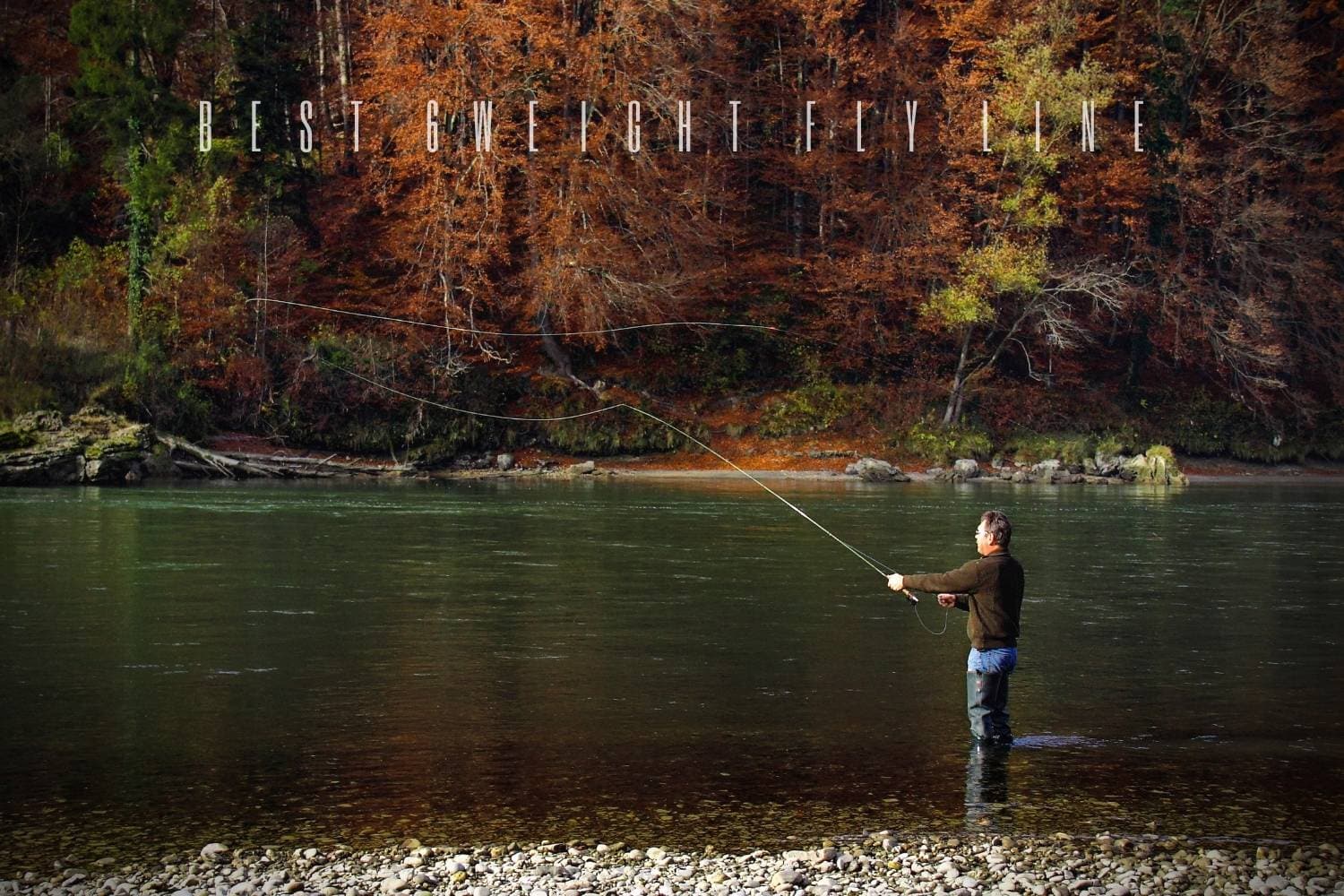
Choose a 6-weight line for heavier trout work without overloading the system
A 6-weight earns its place when trout rigs become harder to move: larger indicators, more weight, medium streamers, repeated casts in wind, and stillwater presentations that ask for distance or a sinking density. It can also cross into lighter warmwater and selected saltwater situations, but only when fly size, temperature, and conditions stay within the line’s design.
The nominal “6wt” label does not tell the whole story. A standard-weight long-head line emphasizes carry and control. A half-size-heavy line loads sooner. A full-size-heavy or short overweighted head delivers more turnover but changes the feel of the rod. Choose the head profile first for the work you actually do, then choose floating or intermediate density.
The best 6-weight fly lines for distinct jobs
| Line | Exact configuration | Mass and head profile | Best fit | Main limit |
|---|---|---|---|---|
| RIO Elite Gold | 6wt / Float / Moss/Gold/Gray | Standard weight; long head and long rear taper | General trout, controlled carries, dry-dropper, light indicators, and distance mends | Not the quickest-loading option for heavy rigs at short range |
| RIO Elite Gold XP | 6wt / Float / Moss/Electric Green/Gray | Half-size heavy; mid-length head and medium-long rear taper | Wind, dry-dropper, light indicators, and mixed trout rigs | More forceful than standard weight for the most delicate work |
| RIO Elite Gold Max | 6wt / Float / Mint/Green/Blaze Orange | Full-size heavy; shortest Gold-family head with rear-loaded power | Heavy indicators, big dries, roll casts, and light streamers | Too much line for a presentation-led 6-weight setup |
| Cortland Streamer | WF6F | Overweighted floating head with a short aggressive taper | Medium streamers and quick turnover on a floating line | Floating density does not solve deeper presentations |
| Cortland Clear Camo Intermediate | WF6I | Weight-forward intermediate; 1.5–2 inches-per-second recorded sink rate | Stillwater, shallow subsurface retrieves, and limited freshwater/saltwater crossover | Not a tropical floating line or a deep fast-sinking system |
Which 6-weight line fits your fishing?
RIO Elite Gold: standard-weight control for general trout
The exact 6wt floating configuration keeps the standard-weight, standard-power Gold architecture. Its long head and long rear taper are intended for carrying line and controlling mends rather than loading the rod with the least possible line outside the tip. This is the presentation-led choice for anglers moving from a 5-weight to a 6-weight because they want more rod authority, not because every rig is heavy.
Use it for general river and lake trout, dry-droppers, lighter indicators, and situations where a longer head helps manage line at distance. It is less specialized than the heavier options below. That is a strength when a 6-weight still needs to behave like a trout rod rather than a compact delivery tool.
RIO Elite Gold XP: extra loading power for wind and mixed rigs
The 6wt Gold XP is half a line size heavy with a mid-length head and medium-long rear taper. That combination adds mass without jumping directly to the shortest and heaviest profile. RIO positions dry-dropper and light-indicator work first, with small and big dries plus light streamers as secondary uses.
On a 6-weight, that makes XP a practical one-line answer for anglers who regularly face wind or alternate between dries, indicators, and modest streamers. It loads more readily at short-to-medium distance than standard Gold while retaining useful line control. The extra mass is not free: when long leaders and gentle delivery are the whole point, standard weight remains the cleaner match.
RIO Elite Gold Max: heavy indicators and compact power
The exact 6wt Gold Max is full-size heavy. RIO gives Max the shortest head in the Gold class and loads more mass toward the rear of the body. Its primary roles are heavy indicators and big dries; streamer, dry-dropper, and light-indicator use sit behind those jobs. The short front and rear tapers are intended to move bulky rigs, roll cast, shoot line, and mend the complete head.
Choose it because the rig requires that architecture, not because a 6-weight rod is automatically fast. Gold Max changes the system toward power and quick loading. If the day is built around small dries, long leaders, and carrying more line in the air, the standard Gold profile is a better expression of what the rod can do.
Cortland Streamer WF6F: a floating head for medium streamers
The Streamer line uses a short aggressive taper and an overweighted floating head. Its exact WF6F configuration is a direct fit for the 6-weight angler who wants quick loading and turnover without adding a sinking section. The line is 100 feet long and uses a two-color profile to identify the taper point.
This is the most specialized floating streamer option in the shortlist. It helps move a more resistant fly, but it does not make every pike, bass, or articulated trout pattern a 6-weight job. Fly bulk, hook weight, wind, and required distance still decide whether a 7- or 8-weight is more appropriate.
Cortland Clear Camo Intermediate WF6I: stillwater and shallow subsurface work
The exact WF6I configuration changes the decision from head power to density. Cortland records an intermediate sink rate of 1.5–2 inches per second, a monofilament core, a supple finish in cold conditions, and freshwater/saltwater use. That makes it relevant for steady retrieves below the surface on stillwaters and for selected cool-water crossover situations.
Intermediate does not mean universally stealthy, safe from snags, or suited to every depth. Retrieve speed, current, leader, fly weight, and pause time all affect the path of the fly. It is also not a substitute for a temperature-specific tropical line. Treat the saltwater label as a bounded application, not permission to use one 6-weight intermediate line for every coastal target.
True-to-standard versus heavier 6-weight heads
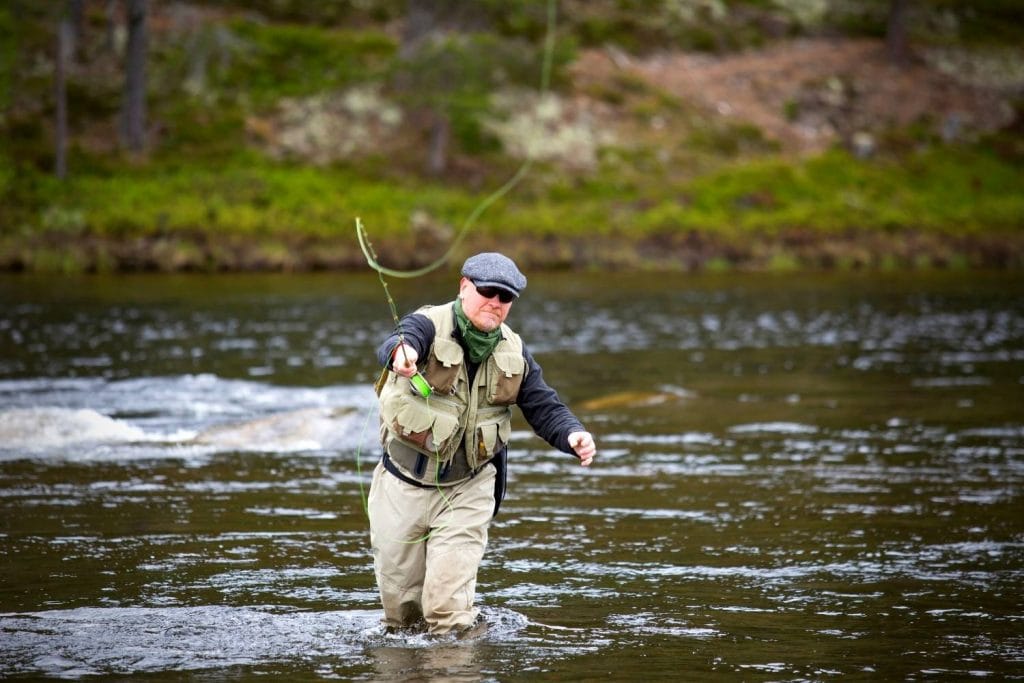
Two lines can both carry a 6wt label and load the same rod very differently. These products create a useful progression:
- RIO Elite Gold: standard weight with a long head for line carry, mending, and controlled presentations.
- RIO Elite Gold XP: half-size heavy with a mid-length head for quicker loading and mixed-rig authority.
- RIO Elite Gold Max: full-size heavy with the shortest Gold head and rear-loaded power for bulky indicator work.
- Cortland Streamer: an overweighted short head that concentrates power for streamer turnover.
Start with the exact 6-weight configuration rather than automatically overlining the rod. A line such as Gold XP or Gold Max already carries more mass than a standard-weight 6wt profile. Adding another nominal line size can create a system that feels fine at a few yards but becomes overloaded as more head leaves the guides. The right answer depends on the normal casting length as much as the rod’s action label.
Where a 6-weight fits—and where it does not
Heavier trout rigs and indicators
This is the clearest reason to choose a 6-weight over a 5-weight. More rod and a suitable heavy-head line can lift and turn over indicators, weighted nymphs, and larger dries with less strain. Gold XP covers mixed rigs; Gold Max becomes appropriate when heavy indicators are normal. For species-wide technique choices, keep the broader trout fly line guide separate from this rod-weight decision.
Wind and stillwater distance
A 6-weight gives more margin than a 5-weight, but the line still has to match the cast. A mid-length half-size-heavy head loads efficiently and remains manageable across changing distances. A standard long head rewards controlled carry and mending. An intermediate line changes how the fly travels through the water; it should be selected for the presentation, not simply because the lake is large.
Medium streamers
Cortland Streamer WF6F supplies a short, overweighted floating head for turnover. Gold Max offers a more general heavy floating profile. Choose a separate sinking or sink-tip system when depth control is the real objective; the sinking line guide compares those density jobs without forcing them into one 6-weight shortlist.
Light warmwater crossover
A 6-weight can handle smaller bass flies, modest streamers, and panfish work. It is not the universal bass answer. Large poppers, heavy flies, thick cover, and sustained wind move the decision toward heavier rods and warmwater-specific tapers. Use the bass fly line guide when bass is the primary target rather than an occasional crossover.
Limited saltwater crossover
Cortland’s Clear Camo Intermediate record includes freshwater and saltwater use, but the exact WF6I configuration remains a light system. Small flies, suitable temperatures, protected water, and modest targets are the sensible boundary. A 6-weight is not a substitute for the line mass, core stiffness, heat handling, and fly turnover required by many tropical or windy saltwater fisheries. The saltwater fly line guide separates climate, density, and target class.
A practical way to choose
- Name the heaviest normal rig. Occasional weight does not justify a specialist head; repeated indicators or streamers might.
- Estimate the distance where the rod usually loads. Short heads load quickly; long heads reward line carry and control.
- Choose density separately. Floating, intermediate, sink-tip, and full-sinking systems solve different presentation problems.
- Respect temperature and target limits. A freshwater 6-weight floating line and a tropical saltwater line are not interchangeable because the nominal weight matches.
- Keep the rod label and declared head mass together. Standard, half-size-heavy, full-size-heavy, and overweighted profiles should not be treated as equal.
For a cross-category starting point, the fly line guide compares line type, fly size, water, and rod weight before narrowing to a specific 6-weight profile.
6-weight fly line questions
When is a 6-weight better than a 5-weight?
Choose the 6-weight when heavier indicators, medium streamers, wind, stillwater distance, or a stronger freshwater crossover are routine. Keep the 5-weight when smaller flies and controlled presentation make up most of the day.
Should I use a full-size-heavy line on every fast 6-weight rod?
No. A fast rod does not automatically require the heaviest head. Casting distance, rig resistance, and the amount of line outside the tip determine whether standard, half-size-heavy, or full-size-heavy is the better match.
Can a 6-weight line cast streamers?
Yes, within limits. A short overweighted head can turn over medium streamers more effectively than a long presentation taper. Very bulky, heavy, or wind-resistant flies call for a heavier rod-and-line system.
Is an intermediate 6-weight line a general saltwater line?
No. Intermediate describes density, not climate suitability or target strength. Confirm the line’s stated water and temperature role, then keep the fly, conditions, and target within a light 6-weight system’s limits.
Can I use a 6-weight line on an 8-weight rod?
That large nominal mismatch will generally leave the rod underloaded at ordinary fishing distances. Start by matching the 6wt line to a 6-weight rod and then choose the declared head profile that fits the rig.
