

Choose a 5-weight line by the rig you cast most
A 5-weight is the common trout crossover because it can present small dries, manage a dry-dropper or modest indicator rig, and cast a light streamer without turning every outing into a specialist setup. The line still has to match the job. A standard-weight line with a longer head feels very different from a half-size-heavy or full-size-heavy line, even when every spool says “5wt.”
For the widest mix of river and lake trout fishing, start with a standard-weight or moderately powerful floating line. Move to a heavier, shorter profile only when indicators, weighted nymphs, wind, or streamers make up a meaningful share of your fishing. That choice protects the reason many anglers like a 5-weight in the first place: useful power without giving up controlled presentation.
The best 5-weight fly lines for distinct trout jobs
| Line | Exact configuration | Mass and head profile | Best fit | Main limit |
|---|---|---|---|---|
| RIO Elite Gold | 5wt / Float / Moss/Gold/Gray | Standard weight; 47-foot head and 5-foot 6-inch front taper in WF5F | Small dries, dry-dropper rigs, longer carries, and distance mends | Less immediate loading than a compact heavy head at very short range |
| RIO Elite Gold XP | 5wt / Float / Moss/Electric Green/Gray | Half-size heavy; mid-length head and medium-long rear taper | Dry-dropper, light indicators, mixed trout rigs, and light streamers | More assertive than a standard-weight line for the smallest dries |
| Cortland Indicator II | WF5F | Full-size heavy; aggressive taper with an extended head | Indicators, weighted nymph rigs, roll casts, and long mends | Specialized power is unnecessary for mostly unweighted dries |
| Cortland Streamer | WF5F | Overweighted floating head with a short aggressive taper | Light-to-moderate streamers and quick turnover on a floating system | A 5-weight setup still has practical limits with bulky flies and hard wind |
Which 5-weight line fits your fishing?
RIO Elite Gold: standard-weight control for dries and mixed river fishing
The exact 5wt floating configuration is the clearest starting point when presentation and line control matter more than brute turnover. RIO describes this Gold profile as standard weight and standard power. In WF5F, its 47-foot head, long rear taper, and 5-foot 6-inch front taper are built around carrying line, making precise casts, and mending at distance.
That architecture makes sense for small dries, a dry-dropper, or a light indicator rather than a heavily weighted multi-fly rig. It also asks the caster to manage more head outside the rod than a compact line. If most casts happen at very short range, a faster-loading profile may feel easier; if the river rewards longer drifts and controlled mends, the longer head earns its place.
RIO Elite Gold XP: the balanced crossover for a typical 5-weight
The exact 5wt Gold XP is half a line size heavy rather than standard weight. Its mid-length head and medium-long rear taper split the difference between the long, presentation-led Gold and a compact full-size-heavy line. RIO positions dry-dropper and light-indicator fishing first, with small dries, big dries, and light streamers as secondary jobs.
This is the useful middle ground for anglers who carry one 5-weight and change rigs during the day. The extra mass helps the rod load at shorter distances and gives the front of the line more authority, while the rear taper preserves more line control than a very short shooting head. The trade-off is straightforward: a half-size-heavy line lands with more purpose than a true-to-standard line, so leader length and casting tempo matter when fish are especially wary.
Cortland Indicator II WF5F: for nymph rigs and complex currents
Indicator II is the specialist here. Its WF5F configuration is floating, full-size heavy, and built around an aggressive taper with an extended head. Cortland also records a high-visibility white tip and describes the line as easy to roll cast and mend. Those features fit the real work of indicator fishing: lifting a rig, repositioning line across mixed currents, and turning over more resistance than a small dry creates.
Do not choose this profile merely because a heavy line sounds easier. If the usual rig is one dry on a long leader, the extra mass solves a problem you do not have. It becomes useful when split shot, an indicator, multiple flies, or repeated roll casts are normal rather than occasional.
Cortland Streamer WF5F: a floating line for light streamer work
The Streamer line uses an overweighted floating head and short aggressive taper. The exact WF5F configuration gives a 5-weight angler a defined streamer option without turning this guide into a sinking-line roundup. Its two-color profile marks the taper transition, while the short head is intended to load quickly and turn over larger flies.
Keep the rod class in mind. A powerful line can improve turnover, but it does not make a 5-weight the right tool for every articulated pattern, heavy sink tip, or strong wind. For truly bulky flies or sustained streamer fishing, a 6-weight or 7-weight system usually provides more room. When depth is the main problem rather than turnover, choose the density first in the dedicated sinking fly line guide.
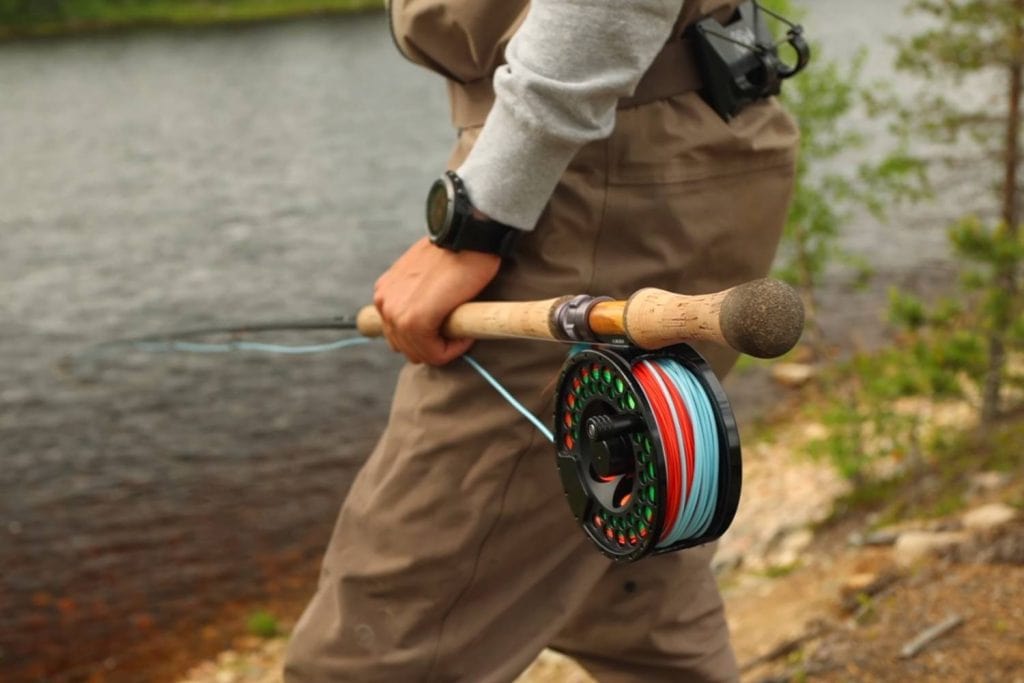
The “5wt” label is only the first part of the match
Start by matching a 5-weight line to a 5-weight rod. Then read how the manufacturer distributes mass through the head. The products above show four meaningfully different answers:
- Standard weight and a long head: favors carrying line, mending, and controlled delivery. RIO Elite Gold is the example.
- Half-size heavy and mid-length: loads sooner and turns over a wider mix of rigs without becoming the most compact option. RIO Elite Gold XP fills this slot.
- Full-size heavy with an extended aggressive head: prioritizes indicators, roll casting, and mending. Cortland Indicator II is purpose-built for that job.
- Overweighted and short: concentrates power for streamer turnover and quick loading. Cortland Streamer is the most specialized floating profile in this shortlist.
A faster-action rod may feel easier with added line mass at short range, but rod action alone does not settle the choice. Casting distance, leader length, fly resistance, weight on the leader, and the amount of line normally outside the guides all change how the system feels. Begin with the intended 5-weight configuration rather than automatically buying a 6-weight line for a 5-weight rod.
Match the profile to the rig
Small dries and long leaders
Prioritize a standard-weight line, a longer front taper, and enough head length to control the cast. That combination preserves the presentation side of a 5-weight. Elite Gold is the clearest fit in this shortlist. For a broader explanation of taper and floating construction, use the floating fly line guide.
Dry-dropper and mixed days
A half-size-heavy line is often the practical crossover. Gold XP adds authority without using the shortest, heaviest head in the group. It suits the angler who begins with a dry, adds a dropper, then changes to a modest indicator or light streamer as conditions shift.
Indicators and weighted nymphs
Choose enough front-end power to move the resistance of the whole rig, not just the flies. Indicator II makes sense when that is the main technique. A general line can handle occasional modest nymphing, but repeated roll casts, split shot, and larger indicators justify the specialist profile.
Light streamers
A short, overweighted floating head helps turn over a streamer, but fly size and wind set the ceiling. Use a modest leader and keep patterns within the rod’s comfortable range. If streamer fishing is the main plan rather than a change of pace, compare a 6-weight system before trying to force more work onto the 5-weight.
Why a 5-weight is a common beginner crossover
A matching 5-weight floating line keeps the first setup simple while leaving room to learn dry-fly casts, mends, basic nymph rigs, and small streamers. The mistake is treating every line marked 5wt as interchangeable. A beginner who mostly fishes open water with modest rigs may appreciate the quicker loading of a half-size-heavy line. Someone learning on a river with small dries and longer drifts may get more from standard weight and a longer head.
If the first setup still needs to be assembled, the beginner fly line guide covers the broader rod, reel, backing, and line relationship. For species-wide technique choices, use the trout fly line guide rather than asking one rod-weight page to answer every trout-line question.
Where a 5-weight stops being the versatile answer
A 5-weight remains a trout-centered tool. It can cross into panfish, modest warmwater flies, and occasional light streamer work, but a heavier line profile cannot add the lifting power, wind authority, or fly-size comfort of a heavier rod. Move up when medium streamers, large indicators, strong wind, or warmwater flies are the normal workload. Move down when tiny flies, light tippets, and close presentation dominate.
The broad fly line guide is the better place to compare rod classes and line types across those jobs.
5-weight fly line questions
Should a 5-weight line always be true to standard weight?
No. Standard weight suits presentation and longer line carry, while half-size-heavy and full-size-heavy profiles help with shorter loading and more resistant rigs. Match the declared profile to the fishing rather than assuming heavier is automatically better.
Can one 5-weight line handle dries, nymphs, and streamers?
A versatile floating taper can cover small dries, dry-droppers, modest indicators, and light streamers. It will still involve compromises. Dedicated indicator or streamer lines become worthwhile when those rigs dominate.
Can I put a 6-weight line on a 5-weight rod?
Do not make that the default. Some lines labeled 5wt are already half a size or a full size heavy. Start with the exact 5-weight configuration and its declared mass profile before changing nominal line size.
Is a 5-weight enough for wind?
It can manage moderate wind with sound casting and a suitable taper, but wind combines with fly size and leader resistance. If hard wind and larger flies are routine, a 6-weight system gives a more appropriate margin.
