
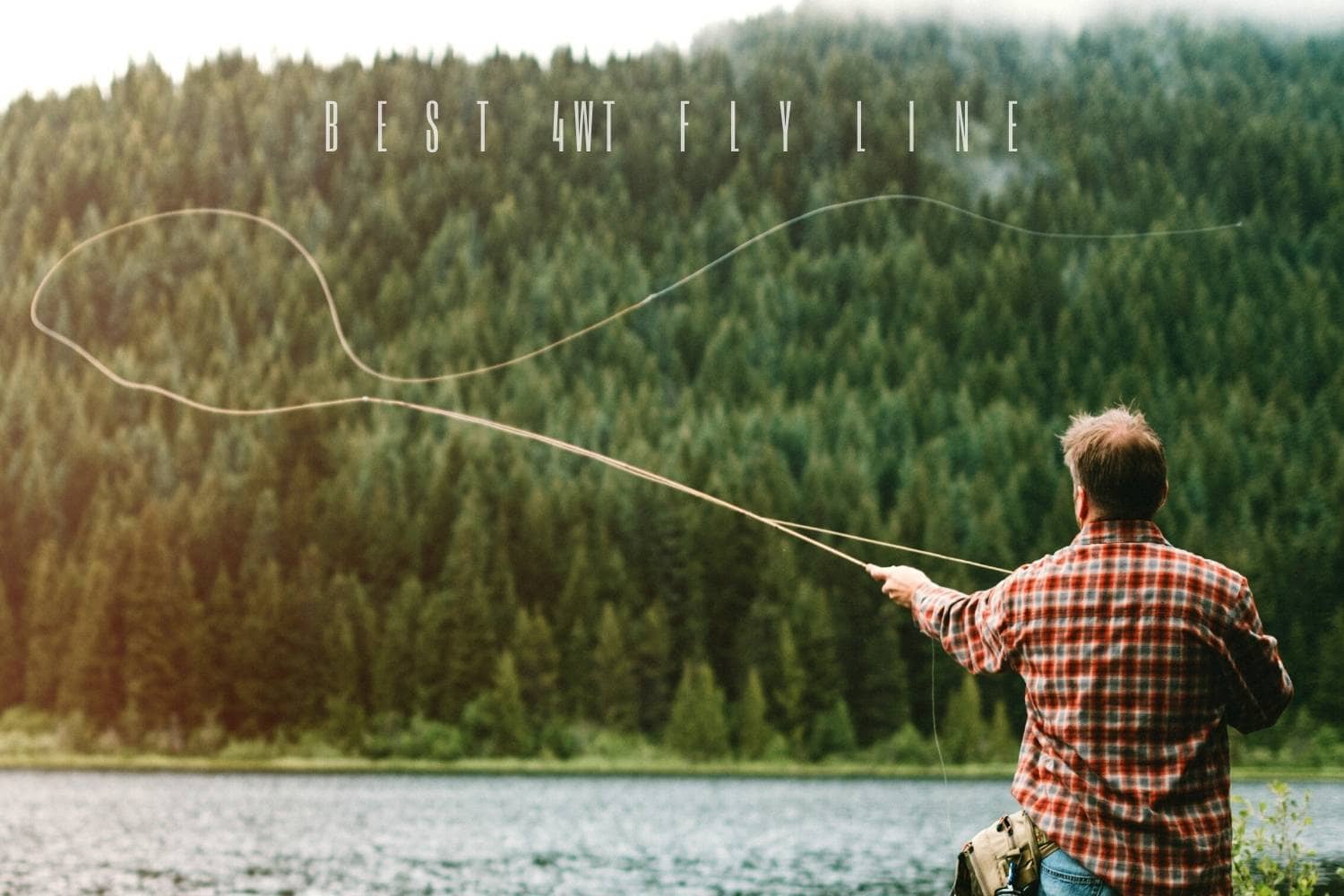
A 4-weight sits between small-stream finesse and the broader payload range of a 5-weight. It is a strong fit for small-to-medium trout water, dry flies, soft hackles, dry-droppers, and light nymph rigs. The useful choice is not one universal “best” line: it is a taper that matches your normal casting distance and the resistance of the rig.
Best 4-weight lines by job
| Exact line | Exact configuration | Best fit | Trade-off |
|---|---|---|---|
| Cortland Headwater | WF4F; floating; weight-forward; 80 feet | Small streams, short casts, and subtle presentations close to the rod | Its short-water focus gives up some of the line carry wanted on open rivers |
| RIO Premier Gold | 4wt / Float / Moss/Gold | Dries, dry-droppers, light indicators, moderate distance, and mending | The longer-head style needs casting room and is not the fastest-loading choice at a few rod lengths |
| Cortland Modern Trout Moss Green | WF4F; floating; weight-forward; 90 feet | Mixed dry-fly, light nymph, and small-streamer fishing with stronger turnover | The aggressive front taper trades some finesse for payload control |
Simple verdict: Headwater is the short-range specialist, RIO Premier Gold is the presentation and moderate-distance choice, and Modern Trout Moss Green is the more powerful mixed-rig option.
Choose by water and presentation
Small streams and close cover
When casts are short, the line needs enough mass in the working section to load the rod without carrying a long head. A short body and front taper help with quick direction changes, roll casts, and pocket-water presentations. The goal is control inside ordinary creek range, not distance.
Small-to-medium rivers
On more open water, a longer head and back taper help you carry line, mend, and manage a drift. That profile suits dry flies and dry-droppers at moderate distance. It rewards a little more line outside the tip and more room behind or beside the caster.
Light nymph rigs and small streamers
A shorter, more aggressive front taper can turn over a compact indicator, a modest two-fly setup, or a small streamer more positively. That does not make a 4-weight a heavy-payload outfit. Keep added weight and wind resistance in proportion to the rod.
Floating as the default density
A floating line covers the central 4-weight jobs: dries, emergers, light nymphing, line mending, and shallow streamer work controlled through the leader. Add a sink tip or full-sinking line only for a defined subsurface presentation. Density should solve a depth-and-retrieve problem, not stand in for choosing the right taper or rod class.
Exact 4-weight profiles
Cortland Headwater WF4F: best for short casts
Headwater is a true-to-line-weight floating line with a short body and front taper. It is designed to load rods close and uses a supple braided nylon multifilament core. The exact WF4F configuration is the upper end of its WF1F-through-WF4F range.
Choose it for compact streams, spring creeks, and casts where only a short section of line is outside the guides. Small dries, soft hackles, and light single-nymph rigs fit its job. On a broad river where repeated reach casts and long mends matter, a longer-head line is the better tool.
RIO Premier Gold 4wt: best for dries and moderate distance
RIO Premier Gold is a standard-weight, standard-power floating trout line. Its longer head and back taper are intended for precise casts, line carry, and distance mending. Small dries and dry-droppers are its primary jobs, with big dries and light indicators as secondary uses.
The exact configuration here is 4wt / Float / Moss/Gold. It gives a 4-weight outfit room to work on medium water without shifting to a heavier rod. It remains a presentation-oriented line, so a bulky streamer or heavily weighted indicator rig is outside the center of its design.
Cortland Modern Trout Moss Green WF4F: best for mixed light rigs
Modern Trout Moss Green combines a short front taper with an extended back taper. The front is designed to turn over dry flies, nymph rigs, and streamers, while the rear taper supports line control and quicker pickup. It is a floating weight-forward line, 90 feet long, with an exact WF4F configuration.
Choose it when the same rod moves among dries, a light indicator rig, and small streamers. Its all-purpose aggressive taper supplies more turnover than the other two profiles, but careful casting and a sensible leader are still needed when the presentation must land softly.
Distance, wind, and payload
Moderate distance is the 4-weight sweet spot
A 4-weight can carry and control more line than a typical 3-weight while retaining a light presentation. A longer-head line helps on open runs and pools; a short-head line loads faster in tight water. Decide which distance you fish most rather than buying for the longest cast you might attempt once.
Wind still changes the decision
A clean loop, shorter leader, and compact fly help in a breeze. Persistent wind, exposed stillwater, or repeated crosswind casts can call for a 5-weight or heavier outfit. A more aggressive 4-weight taper improves turnover but cannot supply unlimited stability.
Keep the payload light
Dry flies, soft hackles, dry-droppers, lightly weighted nymphs, and small streamers are sensible 4-weight work. Large air-resistant indicators, heavy split shot, multiple weighted nymphs, and bulky streamers demand more line mass and rod power. If those rigs are routine, choose the outfit around them instead of trying to force the 4-weight into the role.
Taper matters more than a single marketing feature
Head length affects how much line you can carry and mend. Front-taper length and shape affect how energy reaches the leader. The rear taper affects line control and pickup. Core and coating influence handling, but they do not erase a mismatch between taper, rod, casting distance, and rig.
4-weight setup checklist
- Begin with a line labeled for a 4-weight rod unless the rod maker calls for a different match.
- Use a reel with suitable capacity for the full line and backing, leaving clearance at the spool rim.
- Choose WF floating for the general dry-fly and light-nymph setup.
- Match leader length and tippet to the fly and water rather than using one leader for every rig.
- Test the outfit with a small dry or single nymph before adding an indicator, dropper, or extra weight.
Do not overline by habit. A heavier line may load a fast rod sooner at close range, but it changes the baseline and can make longer carries feel crowded. First learn how the rod behaves with an exact 4-weight configuration, then change only if the rod design and normal fishing distance justify it.
4-weight fly line questions
Is a 4-weight enough for light nymphing?
Yes, for a light indicator or dry-dropper rig with modest added weight. Modern Trout Moss Green is the stronger-turnover option here, while RIO Premier Gold suits lighter indicators and presentation-led rigs. Heavy multi-fly systems are better handled by a heavier outfit.
Can a 4-weight cast streamers?
It can cast small, compact streamers. Fly weight and wind resistance matter more than the word “streamer.” Bulky or heavily weighted patterns quickly move beyond the line class’s comfortable payload.
Should I choose a 3-, 4-, or 5-weight?
Choose a 3-weight for small water and the lightest presentations, a 4-weight for light trout versatility on small-to-medium water, and a 5-weight when broader fly sizes, heavier rigs, wind, and larger water are routine. The line should match that job as well as the number printed on the rod.
