
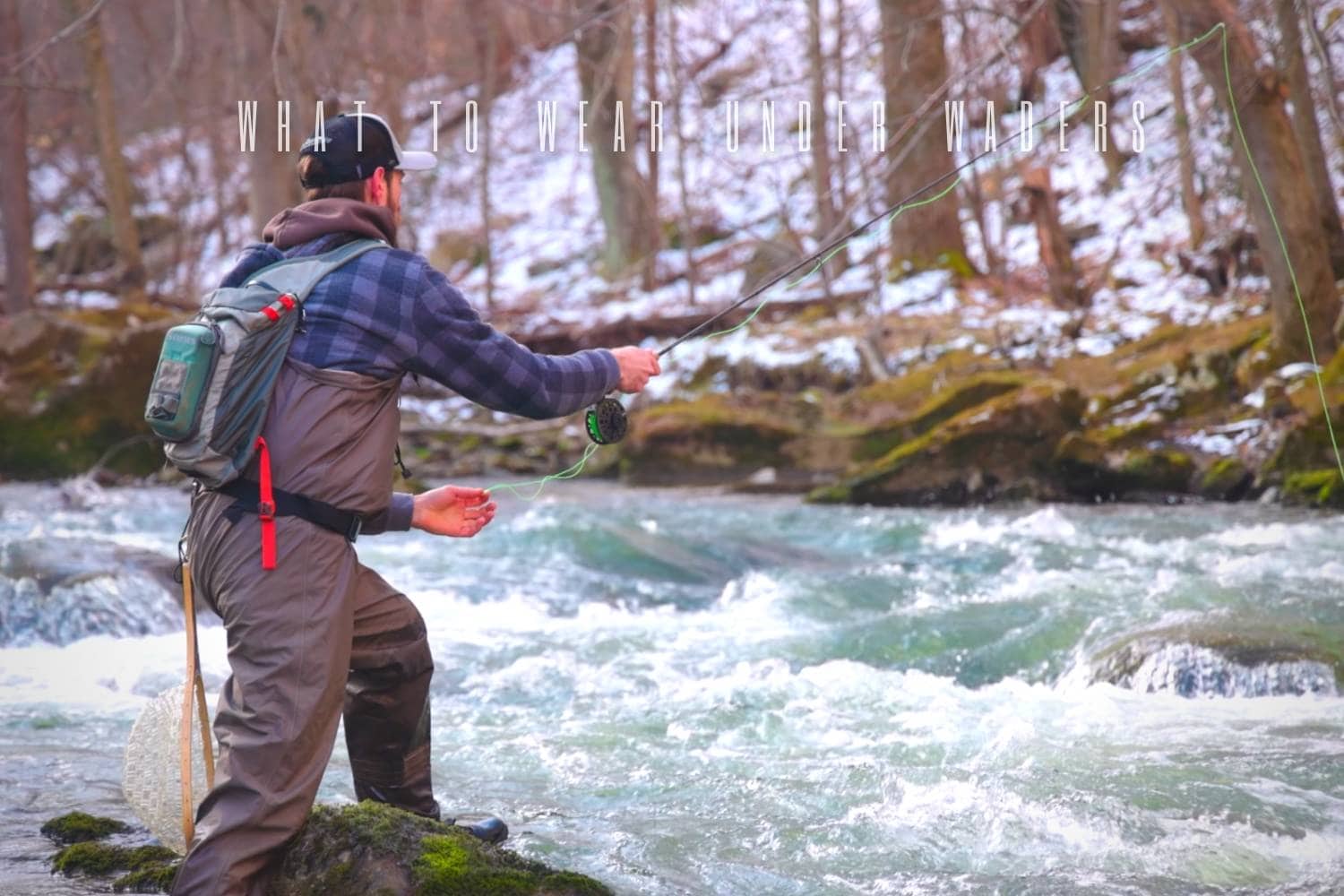
Short answer: wear a moisture-wicking synthetic or merino base layer under breathable waders, then add fleece or another breathable insulating layer as water temperature, weather and inactivity demand. Avoid cotton. It holds moisture against your skin, dries slowly and becomes a liability when you sweat, leak or fall in.
Waders are a waterproof shell, not an insulation system. The right clothing underneath keeps moisture moving away from your skin, preserves enough room to move and avoids compressing your feet or circulation.
Start here
What to wear under waders by conditions
These are starting points, not temperature guarantees. Water temperature, wind, rain, activity, circulation and personal cold tolerance all matter.
| Conditions | Next to skin | Insulating layer | Adjustment |
|---|---|---|---|
| Hot weather, warm water | Light synthetic or merino underwear | Usually none | Consider wet wading where safe |
| Mild weather, cool water | Lightweight wicking base layer | Light fleece if needed | Carry a dry spare |
| Cold water or long stationary periods | Midweight synthetic or merino | Breathable fleece or under-wader pants | Vent/remove before sweating |
| Freezing air, very cold water | Warm wicking base layer | Lofted but non-restrictive fleece system | Shorten exposure; bring dry backup layers |
What to wear under waders in warm weather
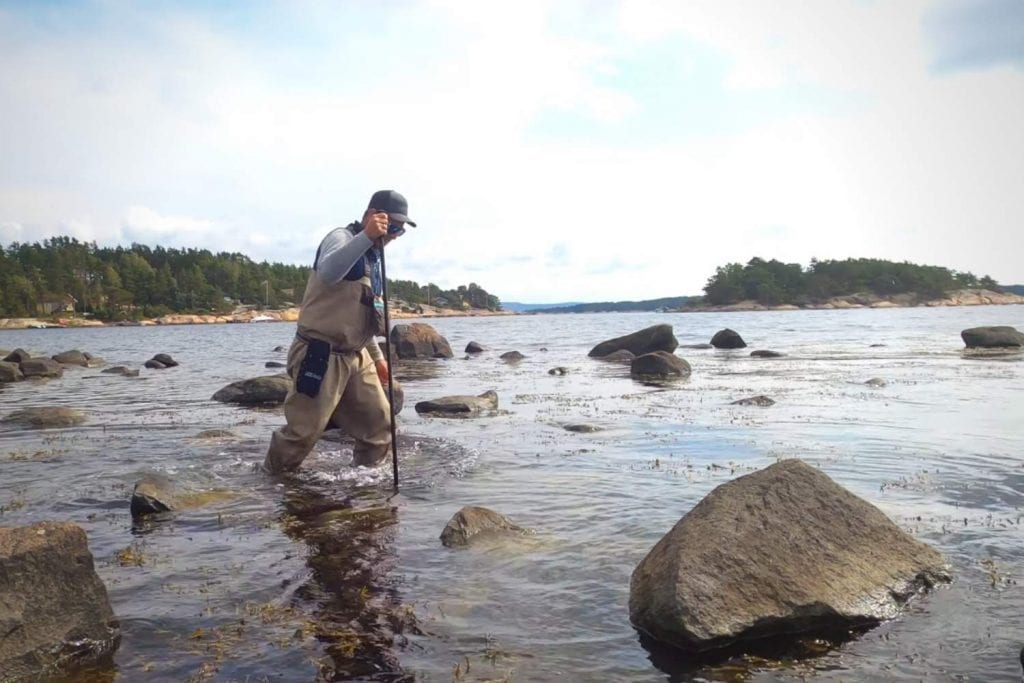
On hot days, the goal is not to create warmth—it is to keep sweat from pooling against your skin. Lightweight synthetic or merino underwear and thin wicking bottoms work better than jeans, cotton sweatpants or thick everyday trousers.
A smooth, close but non-restrictive layer also reduces rubbing inside the wader. Avoid bulky seams, hard zippers and objects in pockets that press against the waterproof membrane while you walk or crouch.
Can you wear shorts under waders?
You can, but bare skin may feel clammy against the liner and can rub during long walks. Thin full-length tights or lightweight fishing pants usually manage moisture and friction more consistently. If shorts are comfortable for your trip, make sure nothing in their pockets can abrade the wader from inside.
When wet wading makes more sense
When water and weather are genuinely warm and the river is safe, leaving chest waders behind can be more comfortable. Wear quick-drying clothing, secure footwear with suitable traction and a gravel-guard or wet-wading sock system. Our wading-socks guide covers the boot-fit side.
Wet wading is not automatically safe because the air is hot. Cold water can impair coordination and cool the body rapidly, especially after a fall or during a long session.
What to wear under waders in cold weather
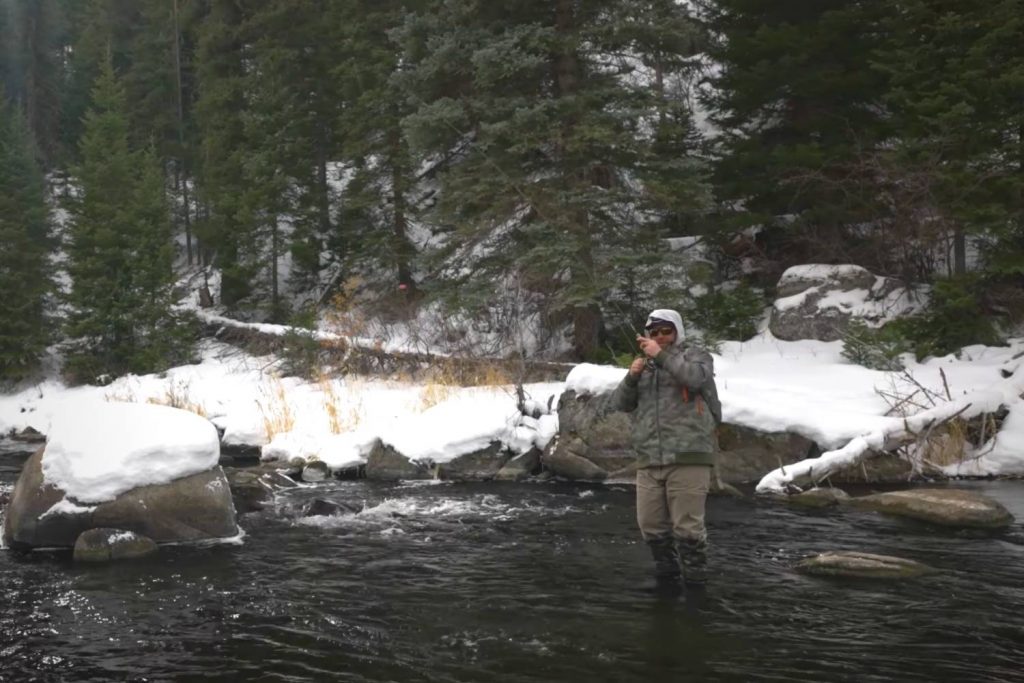
Use a simple three-part system:
- Base layer: moves moisture away from skin.
- Insulating layer: traps warm air without restricting movement.
- Wader: blocks external water and much of the wind.
Start slightly cool rather than overdressed for a hard walk. Sweat and wet clothing increase heat loss once activity slows. Add insulation before standing in cold water, and remove or vent layers before a strenuous climb back to the vehicle.
Base layer
Choose synthetic or merino garments designed to wick and dry. Lightweight fabric suits active approaches or milder weather; midweight fabric gives a warmer starting point for cold water and lower activity. The garment should sit close enough to move moisture but not bind at the waist, knee or ankle.
Insulating layer
Fleece pants or purpose-built under-wader trousers are predictable choices because they retain loft, breathe and continue to insulate better than cotton when damp. Add thickness gradually. Several controllable layers are more useful than one oversized garment that causes sweating.
Avoid packing so much material into the wader that you cannot crouch, take a high step or circulate blood comfortably. Compression reduces the trapped air that provides insulation.
Upper body, hands and head
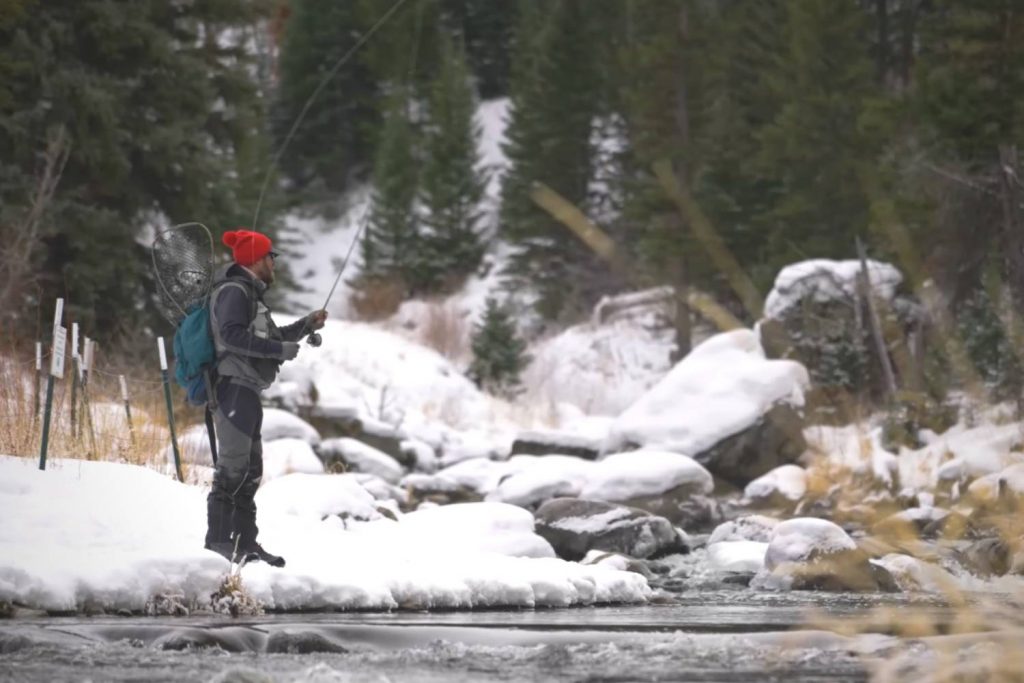
Layer the torso independently: wicking base, insulating midlayer and a weatherproof outer layer appropriate to rain and wind. Keep cuffs and bulky jacket hems from bunching under the wader bib.
A warm hat, neck gaiter and gloves can improve comfort without crowding the wader. Gloves must still let you handle the rod safely; carry a dry pair if they are likely to become soaked.
What socks should you wear inside stockingfoot waders?
Use clean synthetic or merino socks that fit without wrinkles. In colder water, a thin liner plus a warmer outer sock can work—but only if the neoprene stockingfoot and boot still leave toe room.
More socks are not automatically warmer. If extra thickness compresses your toes or reduces circulation, your feet may become colder. Size the wader stockingfoot and boot for the actual sock system you intend to wear.
- Avoid cotton socks.
- Pull trouser cuffs smooth so they do not bunch at the ankle.
- Do not tuck hard objects into socks.
- Change damp socks before a second cold session.
- Dry the wader interior and stockingfeet fully after use.
Fit matters as much as fabric
Try waders with your thickest realistic layer system before committing to the size. You should be able to:
- crouch without the crotch or knees pulling tight;
- step onto a high bank without loading the seams;
- bend at the ankle without compressed toes;
- fasten the belt without restricting breathing;
- move your arms without the bib or jacket bunching.
Too little room restricts movement and circulation. Too much loose material creates folds that rub and makes temperature control less predictable. Use the manufacturer’s body, inseam and stockingfoot measurements rather than choosing only by everyday clothing size.
What not to wear under waders
- Cotton jeans, sweatpants or socks: they retain moisture and dry slowly.
- Sharp or bulky pocket contents: they can abrade the membrane from inside.
- Too many socks: compression can reduce circulation.
- Restrictive layers: they impair movement and can stress seams.
- Unmanaged sweat: overdressing for the approach can leave you damp when you stop.
Do you need different waders for summer and winter?
Not necessarily. A well-fitting breathable wader can work across seasons because you change the layers underneath. The limits are fit and use case: a trim summer fit may not accommodate winter insulation, while waist-high pants cannot substitute for chest coverage in deeper or unpredictable water.
See our tested waders guide and wader-pants guide when choosing the shell itself.
Frequently asked questions
Do you wear normal clothes under waders?
Use technical clothing rather than ordinary cotton trousers or jeans. Synthetic and merino layers manage moisture and fit more smoothly beneath breathable waders.
Should base layers be tight?
They should sit close enough to wick moisture but should not restrict circulation or movement. Avoid tight waistbands and ankle cuffs.
What should children wear under waders?
Use the same moisture-wicking, non-restrictive principles, but be more conservative about cold exposure. Check fit, warmth and comfort frequently, supervise continuously and end the session early if the child becomes cold or wet.
Can waders prevent hypothermia?
No. Waders help keep external water out when intact, but they are not a guarantee against cold stress or immersion. The CDC notes that hypothermia can occur even above 40°F when a person is chilled by rain, sweat or cold-water immersion.
