
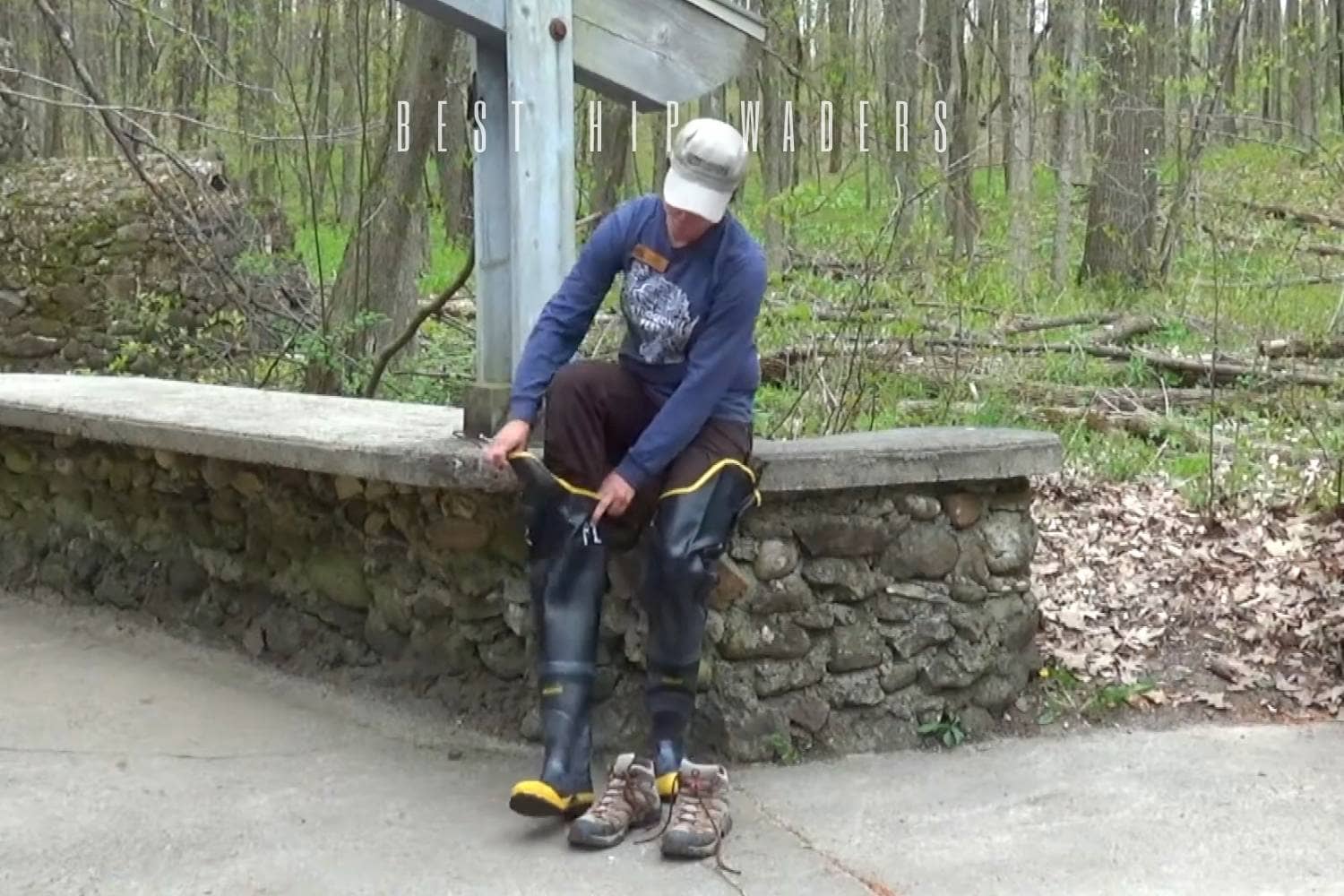
Quick answer: the Frogg Toggs Men’s Canyon II Stockingfoot Hip Wader is our best overall current hip wader for most anglers because its breathable 4-ply build and separate-boot fit are adaptable across warm-weather shallow fishing. Choose the Cascades v3 Lug Sole if you want an integrated boot without felt, or the Cascades v3 Felt Sole for slick rock only after checking local restrictions.
Best hip waders at a glance
- Best overall: Frogg Toggs Canyon II
- Best bootfoot option: Frogg Toggs Cascades v3 Lug Sole
- Broadest boot-size range: Frogg Toggs Rana II PVC Lug Sole
- Felt option where legal: Frogg Toggs Cascades v3 Felt Sole
- Best for mud and soft banks: Paramount Slipstream Cleated
- Best all-rubber hip boot: LaCrosse Grange 32-inch
Hip waders vs wading pants
A true hip wader has two separate thigh-high legs. Each leg is held up by a leash attached to a waist belt. A wading pant is one connected garment that reaches the waist and usually has stockingfeet for separate boots. Retailers sometimes call waist-high pants “hip-high,” but the two forms offer different coverage and fit.
This guide covers only separate-leg hip waders and hip boots. If you want continuous waist coverage, see our best wader pants guide. Choose chest waders when you need more freeboard, expect spray above the waist or cannot confidently keep water below the openings of hip waders.
Current hip-wader comparison
| Product | Form | Outsole | Best for | Action |
|---|---|---|---|---|
| Frogg Toggs Canyon II | Breathable stockingfoot | None; separate boots required | Warm weather and boot choice | View on Amazon |
| Frogg Toggs Cascades v3 Lug | Bootfoot; PVC-backed 300D polyester | Lug sole; steel shank | Versatile shallow-water fishing | — |
| Frogg Toggs Rana II | Nylon-reinforced PVC bootfoot | Lug-sole PVC boot | Wide boot-size range | — |
| Frogg Toggs Cascades v3 Felt | Bootfoot; PVC-backed 300D polyester | Felt; steel shank | Slick rock where felt is legal | — |
| Paramount Slipstream Cleated | Nylon/PVC bootfoot | Cleated PVC | Mud and soft banks | — |
| LaCrosse Grange 32-inch | All-rubber bootfoot | Chevron Cleated | Mud, chores and mixed use | — |
The six best current hip waders
These six current picks are true separate-leg hip waders with manufacturer-documented construction and sole packages.
Frogg Toggs Men’s Canyon II Stockingfoot Hip Wader: Best overall
Evidence: Current manufacturer specifications and exact Canyon II Amazon offer
Verdict: choose the Canyon II when breathability and independently fitted wading boots matter more than an all-in-one package. Its separate legs use breathable 4-ply nylon, 4 mm double-taped neoprene booties and attached gravel guards with lace hooks.
Sizes run from Small through 2XL, with no current short or tall branches. Your wading boots provide the outsole and should be sized for the neoprene stockingfeet. This makes the system more adaptable than bootfoot models, but it also adds a separate purchase and another fit decision.
Reasons to choose it
- Breathable 4-ply construction
- Choose boots for your terrain and fit
- Attached gravel guards and lace hooks
Reasons to skip it
- Separate wading boots are required
- No short or tall fit branches
- More pieces to clean and dry
Frogg Toggs Men’s Cascades v3 Lug Sole Hip Wader: Best bootfoot option
Evidence: current-generation manufacturer product and live size matrix
Verdict: the Cascades v3 Lug is the most balanced option here for anglers who want a complete bootfoot setup without felt. Its rubber boots have a lug sole and steel shank, while the upper uses PVC-backed 300D polyester with stitched and taped seams.
Frogg Toggs lists integrated boot sizes 7–14 in the current boot range. Adjustable poly-web leashes and snap-lock buckles secure each leg to a belt. The lug package is more broadly usable than felt, but no molded tread guarantees grip on every rock, bank or submerged surface.
Reasons to choose it
- Current v3 construction
- Integrated rubber boots
- Lug sole avoids felt-specific restrictions
- Steel shank and adjustable leashes
Reasons to skip it
- Boot sizing is less adjustable than stockingfoot systems
- PVC-backed fabric is not the breathable choice
- Lug tread can still slip on algae-covered rock
Frogg Toggs Men’s Rana II PVC Lug Sole Hip Wader: Broadest boot-size range
Evidence: current manufacturer catalog, exact color and size branches
Verdict: the Rana II is the practical pick when a broad integrated-boot range matters. The brown branch spans boot sizes 3–13, while the MAX7 branch covers 7–13. Its nylon-reinforced PVC upper has sealed and taped seams, paired with a 2 mm non-insulated PVC lug-sole boot.
Adjustable web leashes and quick-release buckles support the separate legs. The construction favors straightforward waterproof utility rather than warm-weather breathability or insulation, so choose socks and conditions accordingly.
Reasons to choose it
- Broad brown-color boot-size range
- Integrated lug-sole boots
- Sealed and taped seams
- Simple quick-release leashes
Reasons to skip it
- Non-breathable PVC construction
- Non-insulated boots
- Color branches have different size ranges
Frogg Toggs Men’s Cascades v3 Felt Sole Hip Wader: Felt option where legal
Evidence: current-generation manufacturer product with exact felt package
Verdict: this is the felt-soled counterpart to the Cascades v3 Lug bootfoot option. It uses the same PVC-backed 300D polyester format, rubber boot and steel shank, but replaces the lug tread with felt for slick, algae-covered rock and streambeds.
Felt can improve traction on specific submerged surfaces, but it can also carry aquatic organisms and is prohibited in some destinations. Check current state, provincial, federal-land and water-specific rules before buying or traveling. Where felt is restricted, choose the lug version or a suitable separate-boot outsole instead.
Reasons to choose it
- Exact current felt package
- Designed for slick rock and streambeds
- Integrated rubber boots
- Steel shank and adjustable leashes
Reasons to skip it
- Felt is restricted in some destinations
- Needs careful cleaning and complete drying
- Not the right outsole for every bank or trail
Paramount Outdoors Slipstream PVC Hip Boots – Cleated: Best for mud
Evidence: current manufacturer product and live variant payload
Verdict: the Slipstream is built around a cleated molded-PVC outsole that makes more sense for mud, soft banks and general outdoor chores than a fishing-specific felt sole. A puncture-resistant nylon outer with PVC coating, stitched and taped seams and molded PVC boots form the waterproof package.
Paramount lists brown and khaki branches in boot sizes 8–13, although live color-and-size availability varies. Quick-release leashes secure the legs to a belt. “Cleated” is the manufacturer’s outsole term; the cleats do not hold the wader legs up.
Reasons to choose it
- Cleated PVC outsole for mud and soft ground
- Puncture-resistant nylon/PVC upper
- Brown and khaki branches
- Quick-release belt leashes
Reasons to skip it
- Limited to boot sizes 8–13
- Color-and-size stock varies
- Non-breathable construction
LaCrosse Grange Hip Boot 32-inch: Best all-rubber option
Evidence: current LaCrosse U.S. hip-wader catalog
Verdict: the Grange is the traditional all-rubber option for muddy access, farm work and fishing situations where a continuous rubber leg and integrated boot make sense. LaCrosse uses ZXT rubber with a nylon-fabric liner, fiberglass shank, EVA footbed and Chevron Cleated Outsole.
Regular-width sizes run from US 5–14. An internal adjustable calf harness supports the leg rather than an external top buckle. This is a rugged utility format, not a breathable river-wading system, and its cleated outsole should still be matched to the actual terrain.
Reasons to choose it
- Continuous ZXT rubber construction
- Broad boot-size range
- Internal calf harness
- Mud-shedding Chevron Cleated tread
Reasons to skip it
- Not breathable
- Regular width only on the current listing
- Less fishing-specific than stockingfoot systems
Older models you may still find
The Hodgman Mackenzie Cleated Hip Bootfoot was a true traditional hip wader, but its official variants are out of stock and the exact Amazon family is unavailable. Hodgman identifies no current successor, so residual listings carry uncertain age, condition, support and return rights.
The Simms G3 Guide Wading Pants, Frogg Toggs Pilot II Stockingfoot Guide Pant, Patagonia Swiftcurrent Wading Pants, Caddis Hybrid Extreme Elements Waist High and Cabela’s Premium Stocking-Foot Pant Waders are connected waist-high garments, not separate-leg hip waders. Compare them as wading pants rather than as substitutes for the products above.
How to choose hip waders
Bootfoot or stockingfoot
Bootfoot hip waders are faster to put on and remove because the boot is integrated. Fit is governed mainly by boot size, so the upper may be less tailored. Stockingfoot hip waders require separate wading boots but give you more control over boot fit, support and outsole choice.
Lug, cleated or felt
“Lug” and “cleated” are manufacturer-specific outsole descriptions, not interchangeable packages. Molded lug and cleated soles can suit mud, mixed banks and general use, while felt is intended for specific slick submerged surfaces. No outsole eliminates slip risk.
Check both leg and boot fit
The thigh opening should not bind when walking or kneeling, but it should not gape so widely that brush and debris constantly enter. On bootfoot models, check sock allowance and heel movement. On stockingfoot models, size the wading boots around the neoprene feet rather than your street-shoe size alone.
Coverage should follow conditions
Hip waders are convenient only when the water remains safely below their open tops. If splash or depth could reach those openings, move to continuous waist-high or chest coverage. More fabric does not make swift, flood-affected or uncertain water safe.
Wading safety and care
- Keep it shallow: Frogg Toggs positions hip waders for shallow, low-current water. National Park Service crossing guidance supports keeping water below the knees where practical.
- Current overrides height: shallow fast water can be dangerous. Turn back when current, depth, footing or downstream hazards are uncertain.
- Secure both legs: fasten the supplied leashes to a sturdy waist belt. They support the legs but do not seal the open tops.
- Use a PFD: wear a properly fitted, USCG-approved personal flotation device when on, in or near water.
- Add a third point of contact: use a wading staff to probe depth and bottom changes, not as permission to push farther.
- Plan for change: check local weather, upstream rain, water level and temperature. Fish with a partner in uncertain conditions or leave a detailed trip plan.
After each trip, inspect seams, straps, buckles, boots and soles. Rinse with fresh water after salt exposure. Clean, Drain, Dry equipment between waters, and dry both the inside and outside completely before storage. Check destination-specific felt rules before every trip.
Final recommendation
Our final recommendation is the Frogg Toggs Canyon II.
Frequently asked questions
What is a true hip wader?
It is a pair of separate thigh-high waterproof legs, normally secured to a waist belt. A connected garment reaching the waist is a wading pant, even when a retailer calls it “hip-high.”
How deep can you safely wade in hip waders?
There is no universal safe-depth rating. Treat hip waders as shallow, low-current gear and keep water below the knees where practical. Garment height does not make current, holes, unstable footing or rising water safe.
Do hip waders need a wading belt?
Attach both supplied leg leashes to a sturdy belt as designed. The belt supports the legs; unlike a snug chest-wader belt, it does not seal the separate open tops.
Do stockingfoot hip waders need boots?
Yes. Neoprene stockingfeet are not exterior walking soles. Wear compatible wading boots sized around the stockingfeet and matched to the terrain and local rules.
Are felt soles legal everywhere?
No. Felt restrictions vary by state, province, federal unit and named water. Verify the current destination-specific rule before buying or traveling.
Are hip waders safer than chest waders?
Neither form makes unsafe water safe. Hip waders are convenient for shallow, low-current use; chest waders provide more coverage when conditions remain otherwise suitable. Depth, current, footing, weather and flotation matter more than the garment label.
