
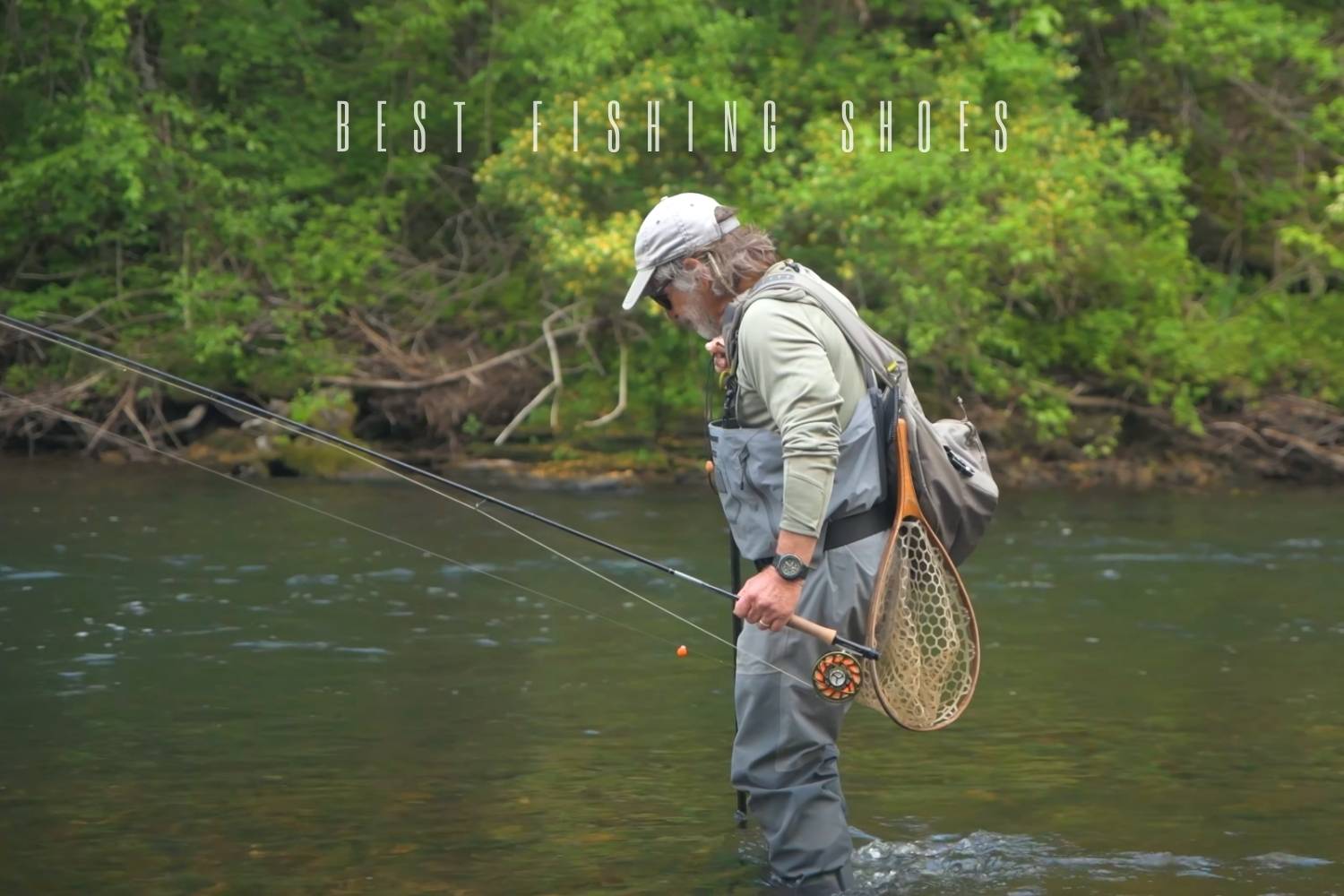
Quick answer: the Columbia PFG Bahama Vent Slip On is our best overall fishing shoe for boat decks and casual shoreline use. The exact current product family matches the pair we used, and its drainage ports, cushioned midsole and siped non-marking outsole make more sense around water than an ordinary canvas slip-on.
Choose the HUK Rogue Wave when keeping your feet dry matters more than drainage. For wet-foot fishing, paddling and warm-weather shore use, the Columbia Drainmaker ATV is the strongest current drainable option.

Best fishing shoes at a glance
- Best overall boat shoe: Columbia PFG Bahama Vent Slip On
- Best waterproof deck boot: HUK Rogue Wave
- Best drainable active water shoe: Columbia Drainmaker ATV
- Best lower-cost drainable slip-on: Aleader Xdrain Cruz 1.0
- Best water-hike crossover: Merrell Maipo Explorer Aerosport
- Best classic leather boat shoe: Sperry Sea Kite Sport Moc
The best fishing shoes compared
Quick comparison
Six current choices for different boat, shore and wet-foot needs, checked August 5, 2026.
| Shoe | Best for | Water strategy | Evidence | Action |
|---|---|---|---|---|
| Columbia Bahama Vent | Boat decks and everyday wear | Drainage ports; treated upper | Field-tested exact current product family | View on Amazon |
| HUK Rogue Wave | Wet and cool deck conditions | Waterproof neoprene-rubber boot | Current later generation; current model verified | — |
| Columbia Drainmaker ATV | Active wet-foot use | Open drainage channels | Current later family model; current model verified | — |
| Aleader Xdrain Cruz 1.0 | Lower-cost wet-foot use | Xdrain sole drainage | Field-tested exact current model family | — |
| Merrell Maipo Aerosport | Shore walking and water crossings | Mesh upper; trail-style outsole | Current role equivalent; current model verified | — |
| Sperry Sea Kite Sport Moc | Classic leather boat-shoe feel | Siped non-marking outsole | Current reissue verified as a distinct design | — |
How we tested and verified these shoes
The footwear used by the named author was bought or borrowed, never gifted. We considered wet-deck grip, cushioning, drainage, heat, sand entry, fit, drying and comfort through full fishing days. Those observations apply only to the exact model or style generation used.
Our hands-on observations still apply to the Columbia Bahama Vent product family and the Aleader Xdrain Cruz family sold today. The current HUK, Drainmaker, Merrell and Sperry choices are later generations, role equivalents or reissues; their descriptions rely on current manufacturer specifications and current-model verification.
We also separated footwear by purpose. A waterproof deck boot keeps outside water away during spray and washdown. A drainable shoe assumes your feet will get wet and aims to release water. A leather boat shoe prioritizes deck use and everyday comfort, while a water-hike shoe adds coverage and trail structure.
Current fishing-shoe picks
Pick 1 of 6
Columbia PFG Bahama Vent Slip On: Best overall
Evidence: Field-tested current regular- and wide-width versions
Verdict: the Bahama Vent is the best all-round choice for anglers who move between the boat, marina and town. It looks like a casual slip-on but adds underfoot drainage, a cushioned Techlite midsole and an Omni-Grip non-marking rubber outsole with razor siping.
We used the wide version in Titanium/Bright Red. Columbia also sells a regular-width version. Both use a canvas-and-leather upper treated with Omni-Shield Blood ’n Guts fluid and stain resistance.
The drainage ports are important: this is not a sealed dry-foot shoe. Water can move through the midsole for ventilation and drainage, which also means fine sand or debris can enter. Choose the width from Columbia’s chart rather than assuming the slip-on will stretch into the right fit.
Reasons to choose it
- Drainage ports and underfoot ventilation
- Non-marking rubber with razor siping
- Casual enough for off-boat use
Reasons to skip it
- Not waterproof
- Less toe and ankle protection than an active water shoe
- Drainage openings can admit sand
Pick 2 of 6
HUK Rogue Wave Boots: Best waterproof deck boot
Evidence: Current HUK Rogue Wave specifications
Verdict: choose the current Rogue Wave when spray, rain and a wet deck make a low shoe impractical. Its neoprene-and-rubber slip-on construction is designed to keep outside water away during normal deck use, while a mesh liner helps manage the interior.
The current Rogue Wave is a later generation with its own construction and Grip-X Slice outsole, whose microchannels are designed for multidirectional wet traction.
Reasons to choose it
- Waterproof ankle-height deck coverage
- Non-marking Grip-X Slice outsole
- Easy pull-on construction
- More protection than an open water shoe
Reasons to skip it
- Does not drain like a wet-foot shoe
- No official insulation rating
Pick 3 of 6
Columbia Drainmaker ATV: Best drainable active water shoe
Evidence: Current manufacturer specifications
Verdict: the Drainmaker ATV is the strongest choice here for warm-weather fishing where getting wet is expected. Its mesh-and-webbing upper adds toe and midfoot protection, while the Omni-MAX Vent platform uses channels to move water and air through the shoe.
The Drainmaker ATV is the current family product. It is lighter on paper than the retired Drainmaker IV and uses a different Omni-MAX Vent platform.
Reasons to choose it
- Designed to release water and admit airflow
- More toe coverage than a sandal
- Lightweight active-shoe construction
Reasons to skip it
- Wet-foot design will not keep socks dry
- Drainage can admit sand and fine debris
- Not a supportive substitute for wading boots
Pick 4 of 6
Aleader Xdrain Cruz 1.0: Best lower-cost drainable slip-on
Evidence: Field-tested current Aleader Men’s Xdrain Cruz 1.0 family
Verdict: our hands-on observations apply to the current Aleader Men’s Xdrain Cruz 1.0 family. It is a simple wet-foot option when packability and easy drainage matter more than protection.
The current shoe uses a soft textile upper, elastic lacing, cushioned midsole and Xdrain drainage. It packs easily and releases water, but the low, flexible construction provides less protection and support than the HUK, Merrell or Columbia ATV.
Reasons to choose it
- Light and easy to pack
- Fast water release
- Simple slip-on fit
Reasons to skip it
- Limited toe and ankle protection
- Drainage openings allow debris entry
- Not intended for rough submerged terrain
Pick 5 of 6
Merrell Maipo Explorer Aerosport: Best water-hike crossover
Evidence: Current Merrell specifications for a distinct water-hike option
Verdict: choose the Maipo Explorer Aerosport when reaching the water involves more walking than a boat shoe handles well. It combines a synthetic-and-mesh upper with an EVA midsole, FLEXconnect platform and Merrell sticky-rubber outsole with 4 mm lugs.
This closed athletic water shoe covers a similar hike-and-water role to the discontinued All Out Blaze Sieve, with its own materials, outsole and fit.
Reasons to choose it
- More coverage for shore approaches
- Trail-style lug depth
- Flexible EVA platform
- Breathable water-oriented construction
Reasons to skip it
- Lugged outsole may be unnecessary on clean decks
- Closed upper can retain more sand than a simple sandal
Pick 6 of 6
Sperry Sea Kite Sport Moc: Best classic leather boat shoe
Evidence: Current manufacturer specifications
Verdict: the current Sea Kite suits anglers who prefer a structured leather boat shoe over open mesh. It pairs a molded EVA midsole with a non-marking rubber outsole and Sperry’s Adaptive Wave Siping for wet-deck water dispersal.
The Sea Kite name returned in a new generation with a molded EVA midsole, leather upper and current Adaptive Wave Siping outsole.
Reasons to choose it
- Structured leather boat-shoe feel
- Cushioned molded EVA midsole
- Non-marking siped outsole
- Works beyond fishing trips
Reasons to skip it
- Not a fast-draining mesh water shoe
- Less protection than a waterproof deck boot
Discontinued and non-equivalent fishing shoes
- Merrell All Out Blaze Sieve: discontinued. The Maipo Explorer Aerosport fills a similar water-hike role but is a distinct current product.
- Columbia Drainmaker IV: discontinued. The Drainmaker ATV is a later family product with different construction.
- HUK Rogue Wave Mid: discontinued; the current Rogue Wave is a later generation.
- Mishansha Water Shoes: current marketplace listings do not provide a stable model identity that can be matched confidently to the tested pair.
- Rugged Shark Bill Dance Pro: discontinued. Current marketplace listings use different model names and are separate from the historical Bill Dance Pro.
- Sperry Sea Kite: the tested historical version is distinct from the current reissue.
How to choose fishing shoes
Start with the water strategy
Dry-foot footwear uses rubber or sealed construction to keep outside water away during spray, rain and deck wash. It becomes hot in warm weather and is not designed for prolonged submersion.
Wet-foot footwear uses mesh and drainage channels. Water enters, then leaves. This is comfortable in warm conditions but requires skin care, sensible socks or bare-foot compatibility, and complete drying after use.
Match the outsole to the surface
Non-marking rubber is useful on finished boat decks. Siping and water channels can help move water from the contact patch. Deeper lugs help on dirt, mud and shore approaches but may collect debris and can feel less stable on a clean flat deck.
“Slip-resistant” describes design intent under some conditions, not a guarantee. Fish residue, algae, fuel, soap, sand and worn tread can defeat any outsole. Keep decks clean and replace footwear when the tread hardens or wears smooth.
Do not confuse water shoes with wading boots
A lightweight drainage shoe is useful for paddling, wet-wading on easy bottoms and casual shoreline use. It usually lacks the toe protection, heel hold, ankle support and traction options of a purpose-built wading boot. Use proper wading boots for rough submerged rock, strong current or demanding approaches.
Look for secure heel hold
A shoe that lifts at the heel can chafe and become unstable when wet. Elastic lacing or a slip-on collar should hold the foot without pinching. Waterproof boots also need enough room for the socks you actually wear, but excess volume reduces control.
Balance drainage against debris entry
Large ports release water quickly and admit sand quickly. Fine mesh can slow debris but also dry more slowly. For sandy beaches, a closed or integrated design may be more comfortable than an aggressively ported sole.
Choose protection for hooks and structure
Closed toes, reinforced overlays and thicker soles add a margin around hooks, shell, rocks and boat hardware. No shoe makes stepping on a hook safe. Keep loose tackle off the deck and use a stable tool rather than your footwear to control a fish.
Fishing-shoe safety and care
- Wear a life jacket: footwear does not provide flotation or prevent immersion. Follow the boat and destination’s life-jacket requirements.
- Clean the deck: remove fish residue, weeds, fuel and loose line before relying on outsole traction.
- Check tread and fit: retire hardened or worn soles and stop using footwear that slips at the heel.
- Protect cuts: do not expose broken skin to contaminated water; clean and cover any wound promptly.
- Rinse after saltwater: use fresh water on the upper, laces, ports and outsole.
- Dry completely: remove insoles when approved, open the shoe and dry away from direct high heat.
- Clean between waters: remove plants, mud and organisms and follow destination-specific Clean, Drain, Dry instructions.
The National Park Service fishing-safety guide also recommends checking conditions, telling someone your plan, carrying appropriate safety equipment and wearing a life jacket around hazardous water.
Fishing-shoe FAQ
What are the best shoes for fishing from a boat?
Choose a secure shoe with a non-marking rubber outsole suited to the deck. The Columbia Bahama Vent works for general boat and marina use. The HUK Rogue Wave is better when waterproof coverage matters.
What shoes should I wear for wet-wading?
Use a drainable shoe only on easy terrain where its protection and support are adequate. The Drainmaker ATV is the strongest active water shoe here. For rough rock, deeper water or current, choose a supportive wading boot instead.
Are waterproof boots or drainable shoes better?
Waterproof boots are better for spray, rain, cold decks and washdown. Drainable shoes are better when immersion is expected and temperatures support wet-foot use. A waterproof boot that fills from the top will hold water rather than drain like an open water shoe.
Are Crocs good fishing shoes?
They can be convenient for low-risk casual use, but standard clogs offer limited heel retention and foot protection. A secure strap, appropriate outsole and closed upper are safer choices around moving boats, hooks and uneven shorelines.
Should I wear socks with fishing shoes?
It depends on the shoe and conditions. Quick-drying synthetic or wool socks can reduce rubbing and manage temperature better than cotton. In a drainable wet-foot shoe, use a sock system intended to get wet and dry both layers fully afterward.
How do I stop fishing shoes from smelling?
Rinse away salt and organic residue, remove insoles when the manufacturer permits, and dry the shoes completely between trips. Rotate pairs during consecutive fishing days rather than storing damp footwear in a closed bag.
Can fishing shoes prevent every slip?
No. Siping, channels and rubber compounds can improve traction, but surface contamination, tread wear and movement still matter. Move deliberately, keep three points of contact when appropriate and clean wet work areas.
Final recommendation
Our final recommendation is the Columbia Bahama Vent.
Choose the Columbia Bahama Vent for the best blend of verified exact-model experience, deck-friendly traction, drainage and off-boat comfort. Choose the HUK Rogue Wave for waterproof deck coverage or the Drainmaker ATV when getting wet is part of the plan.
Fit and surface matter more than the “fishing shoe” label. Decide whether you need to keep water out or let it drain, match the outsole to the whole route, and use purpose-built wading boots when the terrain demands real support and protection.
