
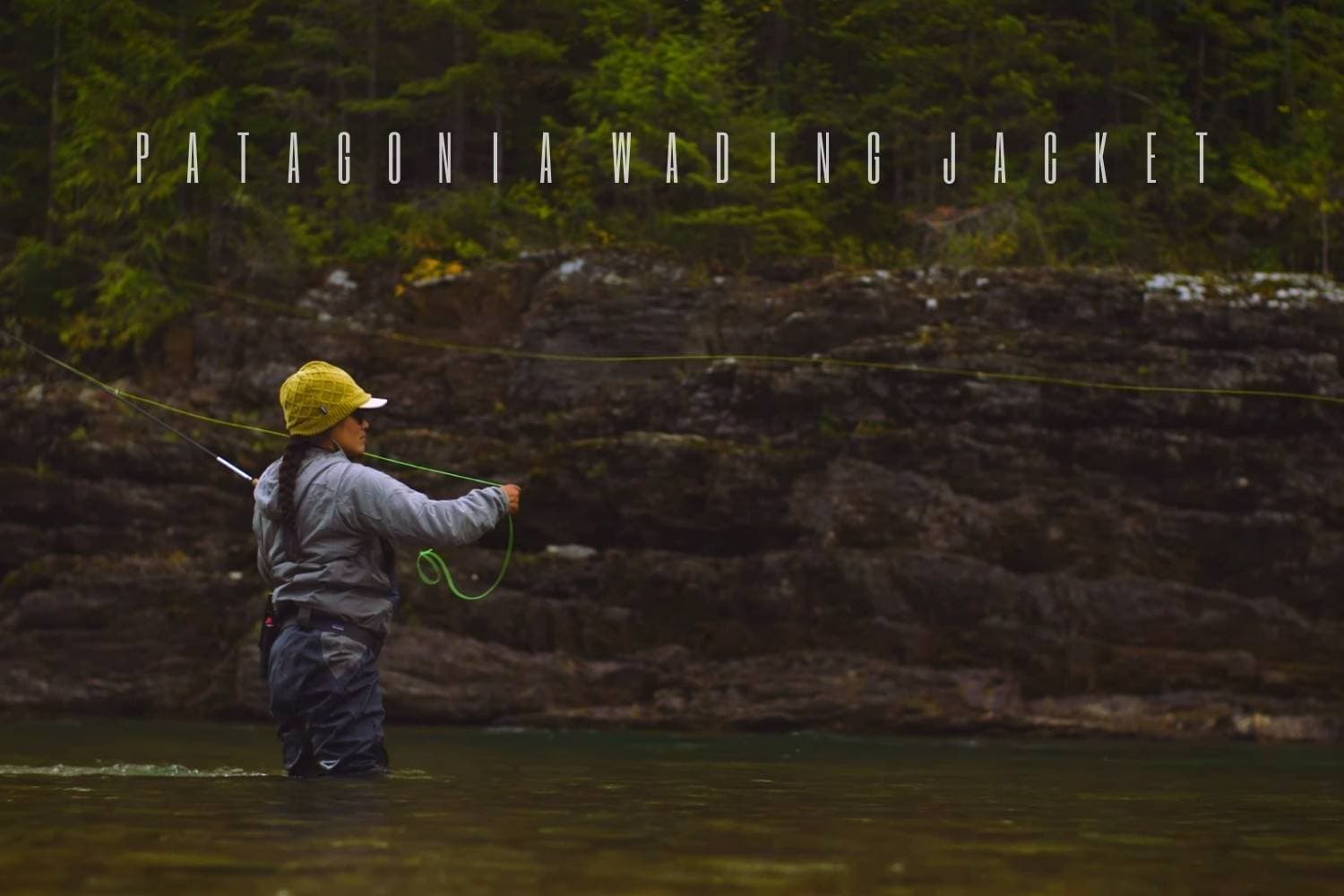
This guide covers three earlier Patagonia wading jackets plus one current role-based comparison, the Patagonia Swiftcurrent Wading Jacket. No official successor relationship is asserted.
The practical value is therefore in understanding the three older designs and using their lessons—packability, cuff sealing, pocket bulk and zipper usability—when assessing a current shell in person.
Quick answer
Status first: Treat the Ultralight Packable, River Salt and SST sections as earlier-generation context. Do not buy a similarly named jacket or replacement solely because it fills the same role; confirm the exact current model, size and manufacturer specifications first.
Current model status
The Patagonia Swiftcurrent Wading Jacket is a current role-based option verified at Trident. It is not presented as an official successor to the Ultralight Packable, River Salt or SST.
The Swiftcurrent is an unranked current comparison, not an official successor; use the feature checklist below to assess its exact size and configuration.
Model and lifecycle guide
These observations apply only to the three exact older models; none is presented as part of the current Patagonia lineup.
| Named product | Classification | What that means for readers |
|---|---|---|
| Patagonia Ultralight Packable Jacket | Earlier model; lifecycle unresolved | Useful as a packability and short-shell reference only. |
| Patagonia River Salt Jacket | Earlier model; lifecycle unresolved | Cuff, pocket and breathability observations apply only to this exact model. |
| Patagonia SST Jacket | Earlier model; lifecycle unresolved | Zipper and pocket observations apply only to this exact model. |
How to choose
Ultralight Packable: the travel-first pattern
The Ultralight Packable emphasized low packed volume and a simple chest pocket. The trade-off was less wading-specific cuff protection and a short cut. Use that pattern when comparing any current packable shell.
River Salt: the protective minimalist pattern
The author praised the River Salt’s cuff seal, slim pocket profile and weather protection while also noting fewer pockets. It suits anglers who prefer a cleaner front and carry less tackle in the jacket.
SST: the fishing-feature pattern
The author highlighted the SST’s high chest storage, rear stash pocket, larger zippers and fishing-specific details. The trade-off was extra bulk and pockets that may not fit every guide-size box.
Verify the exact current shell
Check current fabric construction, hood adjustment, cuff design, pocket dimensions, care instructions and size chart directly with Patagonia before treating any present-day product as equivalent.
Why generation identity matters
A reused family name does not guarantee the same waterproof laminate, face fabric, cuff, zipper, pocket dimensions or fit. Those details determine whether a jacket works over your layers and with your tackle. Match the model name, product code and current manufacturer description before relying on a specification or care instruction.
Fit checks for any replacement
Try a current shell over the insulation and waders you expect to wear. Raise both arms, mimic a cast, turn your head with the hood adjusted and reach downward as if releasing a fish. Check that cuffs stay sealed without restricting circulation, high pockets remain accessible, and loaded storage does not bow into the path of loose fly line.
What the author experienced
The author’s hands-on observations apply only to these three older jackets.
- On the River Salt, the author described the lockdown cuffs as effective at preventing cold water from running up the arm and praised the slim pockets for avoiding line snags.
- On the SST, the author liked the larger zippers because they were easier to use with cold hands.
- On the Ultralight Packable, the author valued a jacket that did not take over the whole backpack.
- None of those observations is applied to a current Patagonia model.
Questions anglers ask
Is the Patagonia River Salt Jacket still the current model?
The River Salt’s current lifecycle is unconfirmed here; do not treat a similarly named shell as the same model.
Is another Patagonia shell an official successor?
No successor relationship is asserted here. A current role-equivalent is not automatically the same product or generation.
Can the old specifications guide a current purchase?
They can frame questions about cuffs, pockets and packability, but current specifications must come from the exact current product page.
Bottom line
Use the River Salt, SST and Ultralight observations as generation-labeled context. They do not establish a current lineup or support treating a similarly named jacket as equivalent.
