
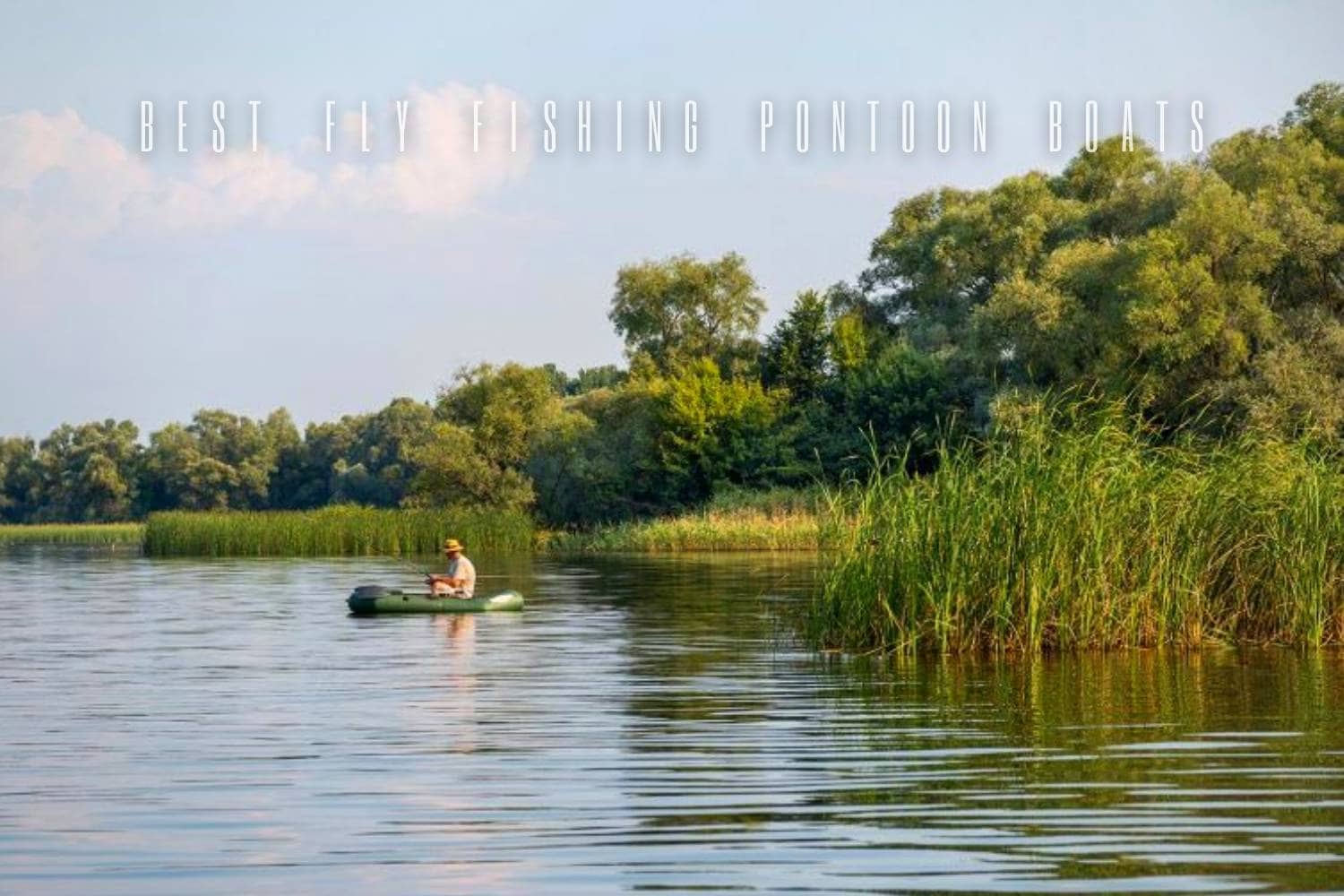
An inflatable fishing pontoon can create a practical working platform with a raised seat, oars, storage, and room to manage line. It also brings more pieces, more setup, and more transport decisions than a float tube. The right question is not which craft has the longest feature list; it is which complete setup fits the water, the angler, and the route from storage to launch.
The named boats below are article-era examples. Their described capacities, construction, motor arrangements, and included equipment must not be treated as present-day facts for another generation. Confirm every limit and operating instruction for the exact craft, and follow local rules for the place where it will be used.
Define the water and the whole trip
Start by describing a normal outing: sheltered lake or moving water, distance from the vehicle, solo handling, duration, fishing style, and the amount of tackle. A framed boat may provide a substantial platform but become burdensome on a long carry. A frameless design may pack more compactly yet have its own setup and layout considerations.
| Requirement | Prioritize | Confirm for the exact craft |
|---|---|---|
| Solo loading and launch | Manageable packed pieces and clear handholds | Can one person lift, carry, assemble, and recover every component? |
| Long approach | Packed dimensions and balanced carry weight | Does the complete load include oars, pump, seat, frame parts, clothing, and tackle? |
| Frequent casting | Seat position, open line area, and reachable storage | Do rod holders, pockets, and straps stay clear of the casting and stripping path? |
| Optional propulsion | Purpose-built mounting and compatible equipment | What does the manufacturer permit, and what do local rules require? |
Avoid turning broad categories into safety claims. A pontoon is not automatically suitable for a particular current, wind, depth, or route. The exact boat, its condition, the operator, and the water all matter. Use the model instructions and local guidance rather than a universal rule.
Article-era pontoons as design references
Each named generation highlights a different compromise. These observations are useful for second-hand inspection and design comparison, not as a present-day specification sheet.
| Article-era model | Recorded design point | Buyer lesson |
|---|---|---|
| Sea Eagle 285FPB Pro Inflatable Pontoon Boat | The described frameless one-person setup was compact and paired a swivel seat with a floor, rod holders, stripping gear, and a motor mount. Initial seat and floor assembly could be awkward. | Compact storage does not eliminate assembly; practice and component organization still matter. |
| Colorado Inflatable Pontoon Boat | This article-era framed model offered substantial storage and a padded folding seat but was bulky to carry. | A frame can improve the working layout while increasing transport and storage demands. |
| Colorado XT Inflatable Pontoon Boat | The named version emphasized detachable storage bags, many pockets, adjustable seating and footrests, and a transport wheel. | Organization features help only when they remain reachable and do not encourage unnecessary load. |
| Classic Accessories Roanoke Inflatable Pontoon-Boat | The described entry-level version used a relatively light frame, folding seat, adjustable footrests, and a rear platform. | Simple layouts can be easier to transport but may provide less integrated storage. |
| Classic Accessories Skagit Inflatable Pontoon Boat | This version focused on a padded adjustable seat, adjustable footrests, and numerous side pockets. | Comfort and storage should be tested with the angler seated, not judged from a parts list. |
Transport, storage, and assembly
Measure the real storage space available at home and in the vehicle. A craft that fits only when every piece is rearranged can make spontaneous trips frustrating. Keep frame parts, oars, fasteners, pump fittings, seat hardware, and soft goods organized so a missing item is obvious before departure.
Use the assembly and inflation sequence for the exact model. Practice on level ground where every connection can be seen. Do not improvise inflation values, motor mounting, standing positions, or substitutions between generations. If the craft is being considered second-hand, confirm that all original structural parts are present and that any replacement component is approved for that model.
Build a clean fishing workspace
Seat and footrest adjustment determine posture, reach, and the angle of the cast. Set them with normal footwear and outer layers. Place frequently used tackle where it can be reached without deep twisting. Larger items can ride behind the seat only when the exact craft permits it and they remain secured without obstructing operation.
Rod holders, anchor systems, stripping aprons, and motor mounts solve different jobs, but each also adds line-catching edges and control steps. Trace the fly line from reel to water and remove avoidable snags. Keep the oars and any control needed to maneuver available rather than buried behind tackle.
Inspection, maintenance, and cautious operation
Before use, inspect the pontoons, seams, valves, frame joints, oar hardware, seat mount, straps, and every load-bearing connection according to the manufacturer guidance. After use, remove grit and organic material, dry the components, and store them so hooks, tools, or frame edges cannot press into inflatable fabric. Unexplained pressure loss, a damaged connection, or corrosion on structural hardware calls for assessment before another outing.
Follow the manufacturer instructions and all local rules, including requirements for personal equipment, propulsion, registration, and permitted water. Do not infer a safe load, safe water classification, or standing capability from a historical description. Check weather and water conditions, keep the plan within your experience, and turn back when the setup or conditions are not right.
