
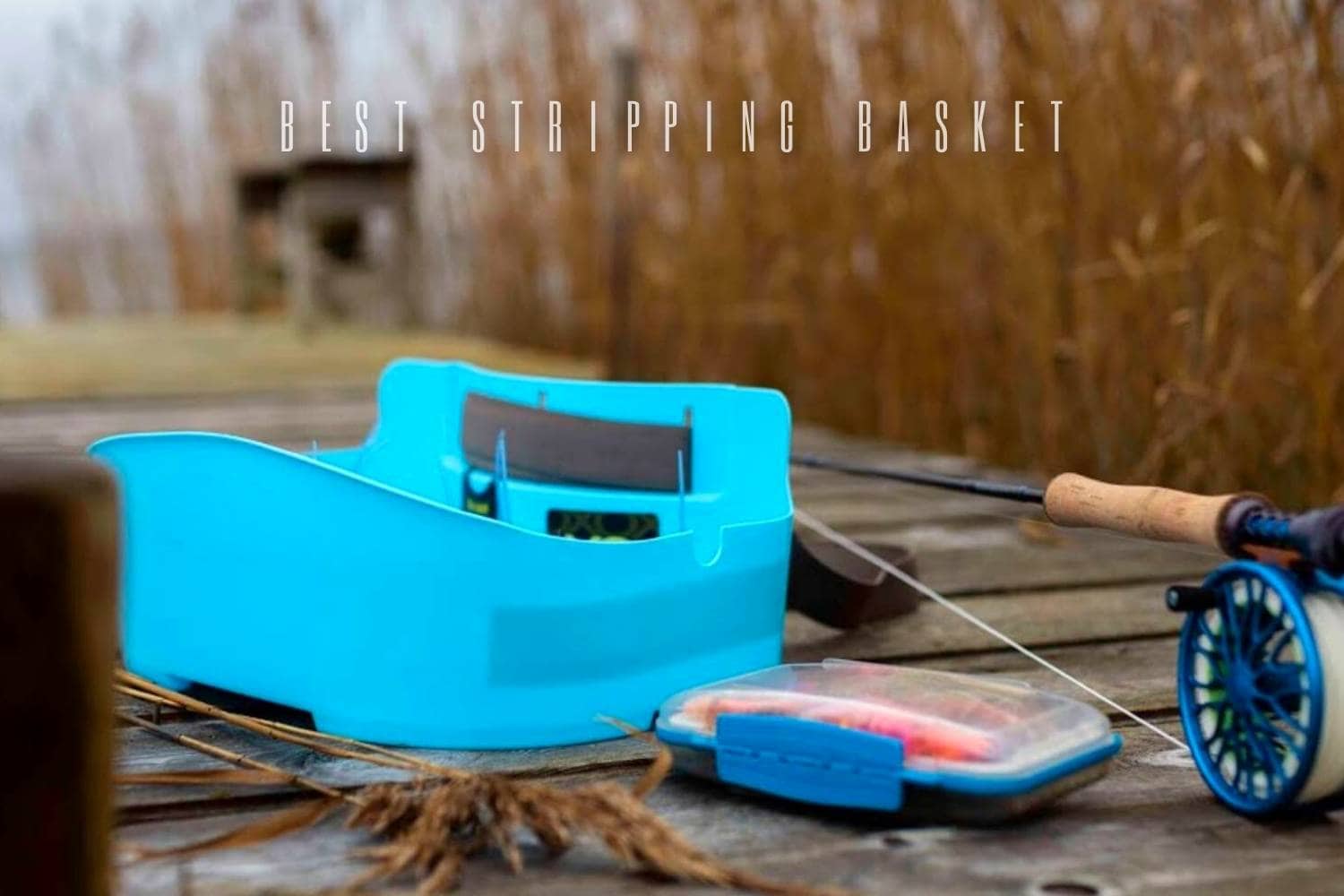
Quick answer: Choose a stripping basket by conditions, not by fish size. High-sided baskets help contain line around surf and wind; mesh or folding baskets travel well and drain quickly; open peg platforms are light and comfortable in calmer or shallower water. Treat the named products below as article-era configurations and compare any similarly named basket on its own design.
Stripping baskets compared
| Basket | Design | Best fit | Buying status |
|---|---|---|---|
| Aventik Eupheng Fly Fishing Stripping Basket | Rigid bucket with drainage and line-control inserts | General surf, bank and boat use | Treat as an article-era configuration; confirm the maker and molded layout. |
| Temple Fork Outfitters LineKurv Stripping Basket | Rigid high-sided basket with line-control cones | Article-era rigid basket for mobile line management | Treat as an article-era configuration; confirm the molded layout and drainage. |
| Packable Stripping Basket | Folding fabric and mesh basket | Travel and quick drainage | Treat as an article-era configuration; confirm the maker, frame and pocket. |
| Ahrex Flexistripper | Open base plate with flexible pegs | Lightweight line control in calmer or shallower settings | Treat as an article-era configuration; confirm the base, pegs and belt. |
What the four designs do well
Aventik Eupheng: rigid all-round layout

The original article described a polypropylene basket with drainage holes, an adjustable waist belt and interchangeable round line holders and spikes. That combination was presented as useful from river to surf, with bulk as the main travel disadvantage.
Use that description to identify an article-era unit. On any similarly named basket, confirm the material, drainage, belt and line-control inserts.
Temple Fork Outfitters LineKurv: rigid article-era option

The article-era LineKurv used a rigid high-sided basket, adjustable belt, rounded line-control cones and a saddle for temporarily holding a rod. That layout favors containment and orderly coils over compact packing.
The article said the high sides helped keep line contained and liked the rod holder, but criticized the lack of drainage holes in rough water and the bulky shape for travel. Confirm the molded layout before assuming a similarly named basket behaves the same way.
Packable Stripping Basket: travel-first design

The original description paired polyester sides with a mesh bottom and a folding frame. Fast drainage, a gear pocket and a small packed shape were the clear advantages. The compromise was line control: without rigid cones, loops could move or tangle in wind and rough water.
The article did not name a maker. Verify the dimensions, frame material and pocket layout on the exact item; generic products with similar pictures are not automatically the same basket.
Ahrex Flexistripper: open peg platform

The article-era Flexistripper used a sideless base with flexible pegs to separate running-line loops. Its open layout stayed light and did not hold water, but offered less shelter from wind or waves than a high-sided basket.
The original writer found the article-era Flexistripper simple, comfortable and light. He also warned that a wave above the platform could wash line off, making it a weaker surf choice than a high-sided basket.
Choose the basket by wind, waves and travel
Rigid high-sided basket
This is the default for surf and windy banks because the walls contain loose running line. Look for rounded cones or pegs, a belt that stays level and a shape that does not catch your stripping hand. Drainage is a trade-off: holes release water after a wave, but they can also admit moving water. A basket with no drainage can become heavy if flooded. Neither design makes deep or rough wading safe.
Folding fabric or mesh basket
A folding basket saves luggage space and a mesh floor drains immediately. It is a sensible travel tool where moderate conditions matter more than perfect loop separation. The softer body can collapse against line, and the absence of cones allows loops to cross. Practice forming larger, even coils rather than dumping a tight pile into one corner.
Open peg platform
An open platform is light, does not hold water and allows unrestricted hand movement. Flexible pegs give loops enough separation for many calm-water casts. It offers little shelter from a crosswind or breaking wave, so move it higher and to the side that protects the line—or switch to a basket with walls when conditions demand it.
Set up a stripping basket correctly

- Wear it slightly toward the stripping-hand side, high enough to clear the water you expect.
- Set the belt snugly so the basket stays level when loaded with wet line.
- Check every cone or peg for a sharp molding edge before fishing.
- Stretch and clean the running line, then lay coils across the full basket rather than one pile.
- Keep the first strip outside or on the water if the product instructions call for it, then let later loops fall over the pegs.
- Before casting, confirm the line is not wrapped around the reel seat, belt, rod holder or your feet.
Rinse salt and sand from the basket, belt and pegs after use. Let fabric designs dry fully before packing. Inspect drilled or molded drainage holes for sharp edges that can damage running line.
Bottom line: Choose a rigid basket for containment, a packable basket for travel and drainage, or an open peg platform for light, unobstructed line control. Confirm the exact belt, drainage and line-separation layout on any model before relying on an article-era name.
