
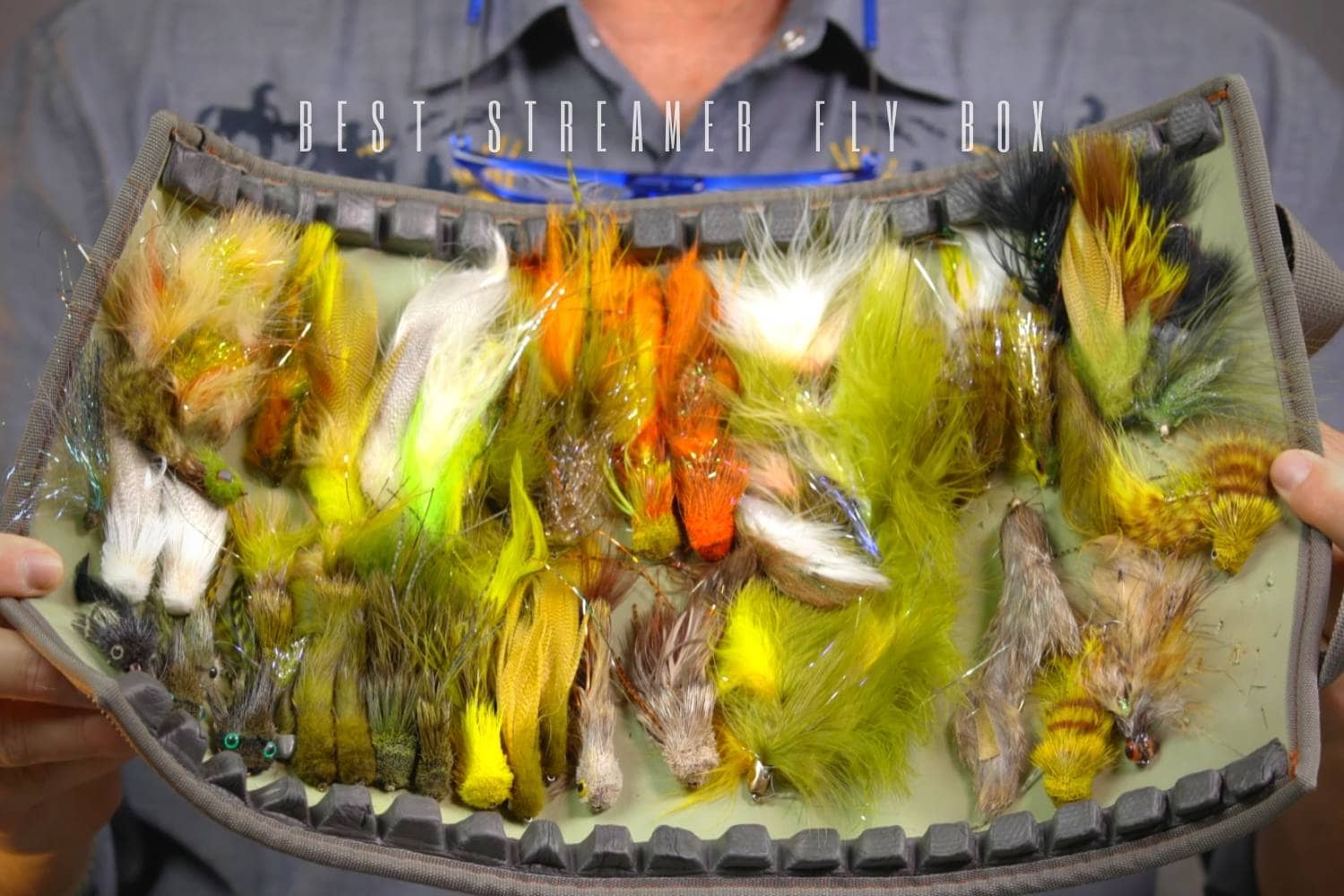
Streamer boxes have a harder job than ordinary fly boxes. Long shanks, articulated bodies, bulky materials, and large hooks need clearance as well as anchoring. The best layout depends on whether the box lives in a boat, a backpack, or a wading pocket. Choose the carry format first, then compare insert design, depth, closure, and weather sealing.
Choose by the job you need done
The article-era streamer boxes in the table demonstrate different depths, insert spacing, closures, and carry formats. Use those design examples to inspect an exact box with your own streamers; they do not establish that an older model is still available or preferable today.
| Job | Look for | Trade-off | Article-era examples |
|---|---|---|---|
| Boat-based assortment | A wide, deep box with a clear layout | Prioritize capacity and organization over pocket size | Aventik Large Streamer Boat Box; Plan D Boat Fly Box; Cliff Outdoors Bugger Beast Boat Box |
| Articulated patterns | An insert or retention system designed for long flies | Check tail clearance and whether adjacent flies tangle | Cliff Outdoors The Articulator Box |
| Wading or pack carry | A narrower sealed box with a positive latch | Measure the box against the actual pocket or pack sleeve | Plan D Pack Fly Box; C&F Small Waterproof Streamer Fly Box CF-1600 |
| Compact selection | A small box for a deliberate set of streamers | Carry fewer patterns without compressing materials | C&F Small Streamer Fly Box CF-1500; Tacky Big Bug Fly Box |
| High-capacity double-sided carry | Deep opposing sides and visible contents | Confirm both sides close without hooks contacting the lid | White River Fly Shop Magnum Double-Sided Fly Box; Cliff Outdoors Bugger Barn Box |
Choose boat, pack, or pocket first
Boat boxes can spread flies across a large surface and make selection easy, but their dimensions are inconvenient for wading. Pack boxes reduce bulk while still carrying substantial patterns. Pocket boxes force a smaller selection but keep it close. There is no universal winner across these jobs. Measure the storage location, include the thickness of filled materials, and decide how often the box must be opened while moving.
Plan around articulated length
Articulated streamers can work loose and tangle. Give long patterns enough linear space and avoid packing the joint against a neighboring hook. A retention system designed for articulated flies can help organize them, but layout still matters. Place the longest flies first, close the empty box gently, and check the contact points before filling the remaining space.
Distinguish seal from latch
Some boxes use sliding latches without weather sealing; others pair a gasketed body with a latch. Those are separate features. A latch controls closure, while the body and seal determine how the box handles water exposure. Do not infer a seal merely because the lid closes firmly. If the box will remain in a wet pack or boat, inspect the complete rim and hinge area.
Look at depth and insert spacing together
Streamer materials need vertical clearance, while large hooks need an insert that grips without forcing them into crowded rows. Deep foam can suit larger hooks; silicone-style inserts can provide distinct slots. Neither material solves poor spacing. Load a few of your bulkiest patterns, then inspect whether tails, flash, and hackle are trapped when the lid closes.
Build a two-box system when jobs conflict
Many anglers need both a large selection and a small carry set. A boat box can hold the broad library, while a sealed pack box carries the patterns chosen for the day. This division is often more practical than demanding maximum capacity, pocketability, and deep clearance from one box. Keep the transfer deliberate so articulated flies are not bent or crowded.
Common questions
Do streamer boxes need to be waterproof?
Not for every setup. A sealed box can be valuable in wet carry, while a boat box may prioritize capacity. Match the feature to exposure.
Is double-sided always higher capacity?
It can add usable area, but only if both sides have enough depth for the flies you load.
How should articulated flies be arranged?
Give them linear room, secure the hook in the intended insert, and check that the joint and tail do not snag neighboring flies or the lid.
A practical final check
Build a streamer-box test around your longest articulated flies, tallest materials, and normal carry method. Arrange a representative selection, close the lid gently, and check whether hooks stay separated without compressing tails or shoulders. A boat box, pack box, and pocket box solve different storage problems, so prioritize the location and fly profile before raw capacity.
