
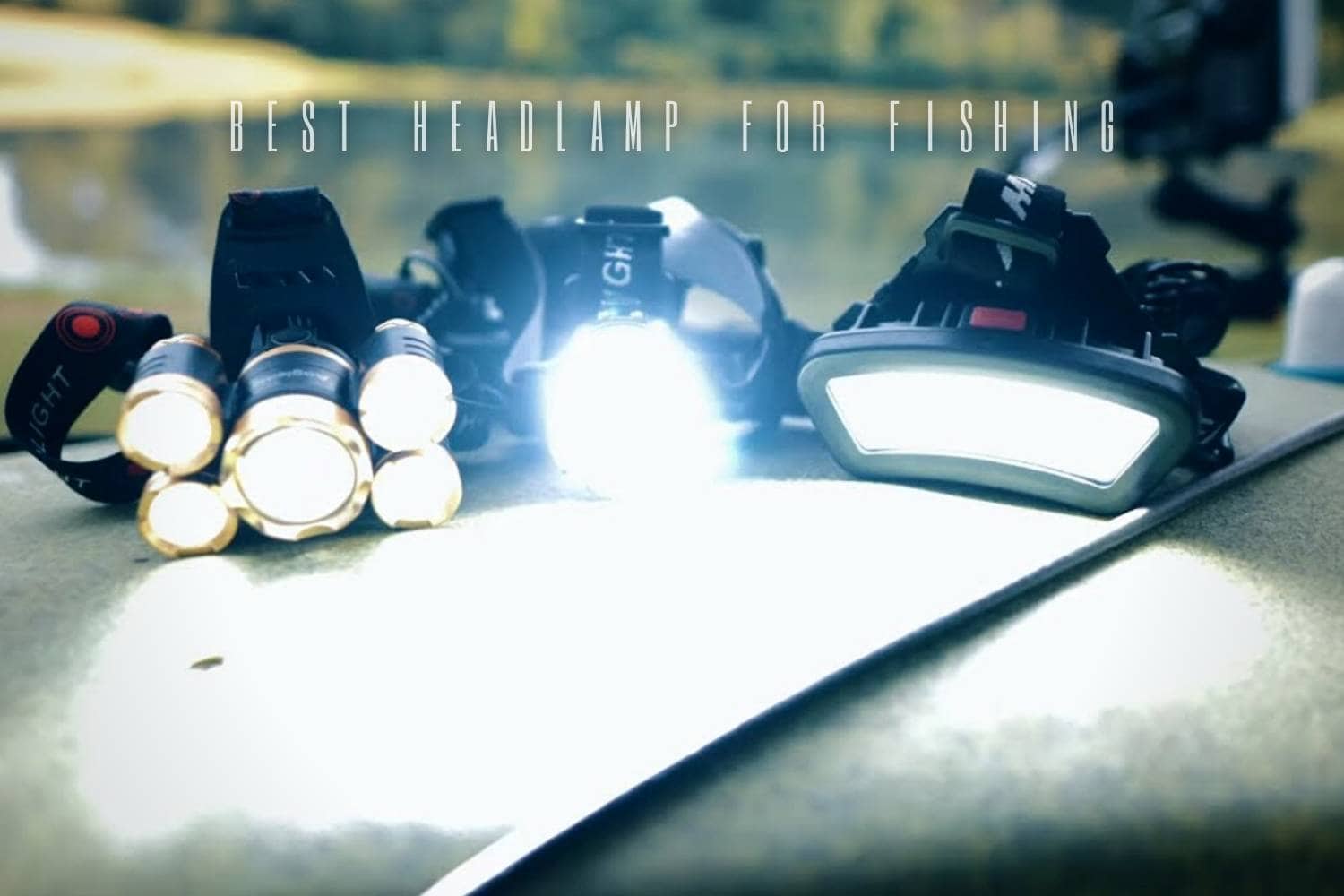
A fishing headlamp is most valuable during the unglamorous parts of a trip: walking to the water, tying a knot, finding a dropped tool, sorting a pack, or returning after dark. The strongest beam is not automatically the best beam. Close work, route finding, battery planning, comfort, and simple controls all pull the choice in different directions.
The models below are article-era examples. Their recorded features and performance belong to those named versions, not automatically to later products with similar names. Use the examples to understand trade-offs, then confirm power options, water protection, controls, and operating time for the exact lamp you intend to use.
Start with the lighting job
Separate close work from distance work. Knots, flies, zippers, and tackle need an even, low-output beam that does not flood your vision with glare. Walking an uneven bank may call for more reach and a wider view. A high-output mode can be useful briefly, but operating a lamp at maximum output also places the greatest demand on its batteries.
| Task | Useful beam behavior | Field check |
|---|---|---|
| Rigging and fly changes | Low, even light with easy dimming | Can you reach the setting without cycling through a dazzling mode? |
| Walking to or from the water | A balanced combination of width and reach | Can you see footing and the route ahead without constant adjustment? |
| Working around companions | A restrained setting or colored auxiliary mode | Can you change modes without shining the main beam into someone’s eyes? |
| Long or remote sessions | Predictable power management and a backup plan | Can you replace or recharge the batteries under your actual trip conditions? |
Brightness figures describe only part of the experience. Beam pattern, control logic, balance, and the lamp’s lowest practical setting often matter more during fishing. A huge claimed output is not helpful if the lamp is uncomfortable, confusing to operate, or exhausted when the walk out begins.
Article-era headlamps as design examples
The following distinctions were attached to the named article-era models. They offer useful design comparisons without implying that the same specifications, ratings, or compatibility remain unchanged.
| Article-era model | Recorded characteristic | Design lesson |
|---|---|---|
| Black Diamond Icon 700 | The described unit used a separate rear power pack, multiple beam colors, and either standard batteries or an optional rechargeable pack. The author recorded roughly seven hours at full power on four AA batteries. | A heavier lamp can balance well when battery weight is distributed, and mixed power options can simplify longer trips. |
| Energizer Vision Rechargeable Headlamp | This version relied on an integrated rechargeable battery and was described as straightforward but dependent on charging. | Rechargeable simplicity trades away the instant reset of swapping common cells. |
| Petzl Tikka Headlamp | The article-era Tikka was notably light and accepted either AAA cells or the matching rechargeable Core battery. | Low weight and flexible power can matter more than maximum output for close work. |
| Black Diamond Storm 400 | The named version combined a compact body, several colored modes, and substantial weather protection for its generation. | A fishing lamp benefits from clear controls and protection suited to repeated use near water. |
| Foxdott Rechargeable Headlamp | This multi-LED design included a rear red light but placed considerable weight on the head. | More emitters and modes can increase bulk and control complexity. |
| Odear Super Bright Headlamp | The described single-LED unit used rechargeable cells and was considered heavy for extended wear. | Output should be judged beside comfort, not in isolation. |
Power strategy and controls
Choose a power system around the trip. Replaceable cells are easy to swap, provided spares are carried correctly and kept dry. Rechargeable systems reduce disposable-cell use but need a dependable charging opportunity. A lamp that accepts both can be flexible, although only the exact manufacturer-approved power options should be used.
Controls deserve a hands-on check. Count how many presses separate off, low, high, colored light, and flashing modes. Look for a lockout if the lamp will ride in a tightly packed bag. The best control sequence is the one you can remember with cold fingers and without pointing the lamp at your face.
Fit, balance, and field use
Try the lamp over the hat, hood, or warm layer you actually wear. Tight straps can create pressure during a long session, while loose straps let the beam bounce or tilt down. A top strap may stabilize a heavier body; a rear battery compartment may balance front weight but can interfere with a hood or headrest.
Use the lowest beam that safely completes the task. Tilt the lamp down for knot work and turn your head away before speaking to another angler. A colored auxiliary light can preserve a darker working environment for some tasks, but it does not remove the need for considerate beam direction.
Care and pre-trip checks
Before leaving, charge or replace the batteries, test every needed mode, inspect the strap and housing, and pack a separate backup light. Water-protection labels apply to exact models and conditions; never infer submersion resistance from the appearance of the housing. Follow the instructions for seals, charging ports, and battery compartments.
- Wipe away water and grit before opening a battery compartment.
- Let the strap and housing dry before long storage.
- Remove replaceable cells for extended storage when the manufacturer directs it.
- Do not rely on an article-era operating-time figure for a different battery, temperature, output setting, or generation.
A sensible fishing headlamp is comfortable enough to keep on, simple enough to operate without thought, and supported by a realistic power plan. Those qualities are more dependable than choosing by a single maximum-output number.
