
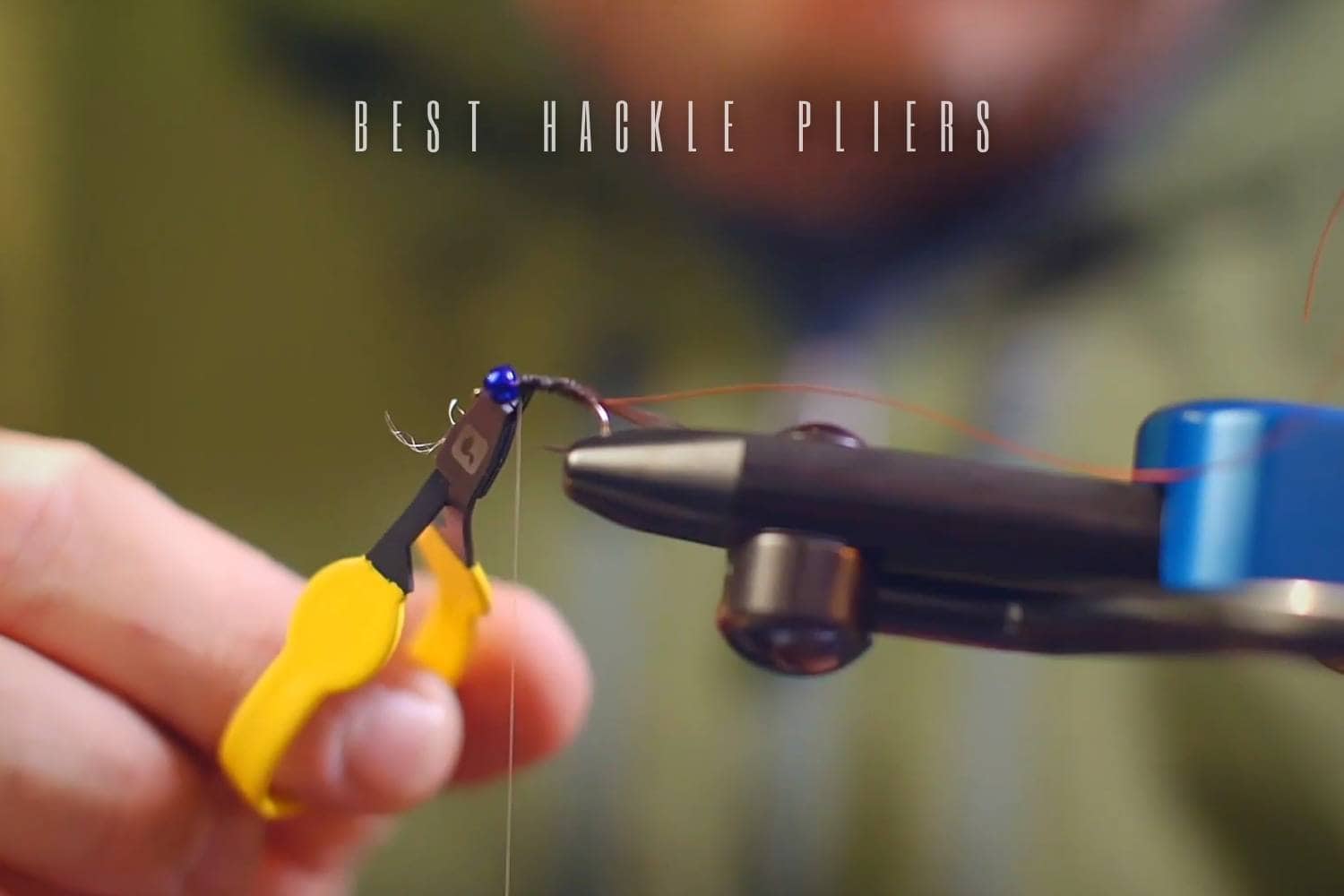
Hackle pliers act like a small extra hand at the vise: they grip a feather or other material, maintain tension, and let the tier wrap with more control. The important differences are jaw shape, grip pressure, opening action, balance, and whether the tool rotates. The strongest clamp is not always the best because delicate stems need secure contact without crushing or cutting.
Choose by the job you need done
The article-era hackle pliers in the comparison demonstrate different jaw shapes, opening actions, sizes, and rotating layouts. Use those forms to identify the control you need, then inspect the exact tool rather than assuming an older model name guarantees suitable grip or current availability.
| Job | Look for | Trade-off | Article-era examples |
|---|---|---|---|
| Simple non-rotary wrapping | A basic clamp with a cushioned jaw | Prioritize clean contact and easy opening | Dr. Slick Hackle Pliers with Rubber Tubing |
| Ergonomic finger control | A shaped handle that stays stable between the fingers | Check comfort through a complete wrap, not just one squeeze | Loon Outdoors Ergo Hackle Plier |
| Small versus large materials | A jaw size matched to the stem and hook | Use article-era size labels only as orientation, not a current specification | Stonfo Pinza Elite Hackle Plier |
| Rotary wrapping | A joint or handle that turns while maintaining alignment | Confirm the joint moves smoothly without twisting the material | Tiemco Spinning Hackle Pliers |
| Classic all-round use | Balanced steel construction and a straightforward clamp | Choose dependable handling over decorative finish | Umpqua Dream Stream Hackle Pliers |
Judge grip by the material, not maximum force
A useful jaw holds the stem without slipping, but excess pressure can mark or break delicate material. Test the pliers on the same kind of feather you tie most often. Look for even contact across the jaw and smooth edges at every point that touches the stem. Rubber or soft tips can increase traction, but alignment still determines whether the grip is dependable.
Choose an opening action you can repeat
Hackle pliers are often opened while other materials are already under tension. The lever, ring, sleeve, or finger grip should be easy to operate without changing your hand position dramatically. A clamp that is awkward to open can make material placement inconsistent. Practice attaching and releasing it several times before judging comfort.
Use balance as feedback
A tool can feel awkward when weight is concentrated in the wrong place. A little mass can help keep tension when the pliers hang, while too much can pull on a delicate stem. A very light tool may provide less feedback. The useful balance depends on the material and how often you pause during wrapping.
Decide whether rotation helps your technique
A rotary joint can help maintain the relationship between handle and material during a wrap. A fixed clamp is simpler and gives direct feedback. If you choose a rotary design, inspect the joint for smooth motion and learn how it changes hand position. Rotation should reduce twisting rather than add uncontrolled movement.
Keep jaw edges smooth
Contact edges deserve close attention. Roughness near the jaw can cut thread or damage a stem. Inspect the closed jaw under good light and feel the outside edges carefully before use. If a new tool has a damaging burr or poor alignment, do not try to compensate by squeezing more gently; choose a sound tool.
Common questions
What makes hackle pliers dependable?
Even jaw contact, enough traction for the material, easy opening, smooth edges, and balance that suits your tying motion.
Do beginners need rotary pliers?
No. A simple fixed clamp can be easier to understand. Rotary designs are useful when their movement fits the tier’s wrapping method.
Can one size handle every material?
Not perfectly. A general tool covers many jobs, but very small stems and large, robust materials can benefit from different jaw sizes or shapes.
A practical final check
Evaluate hackle pliers with the feather stems and other materials you most often wrap. The jaws should hold with modest pressure, release deliberately, and avoid a sharp edge that cuts or creases the material. Opening the tool and maintaining tension through a full wrap should feel repeatable, because excess grip is not useful when it damages the stem.
