
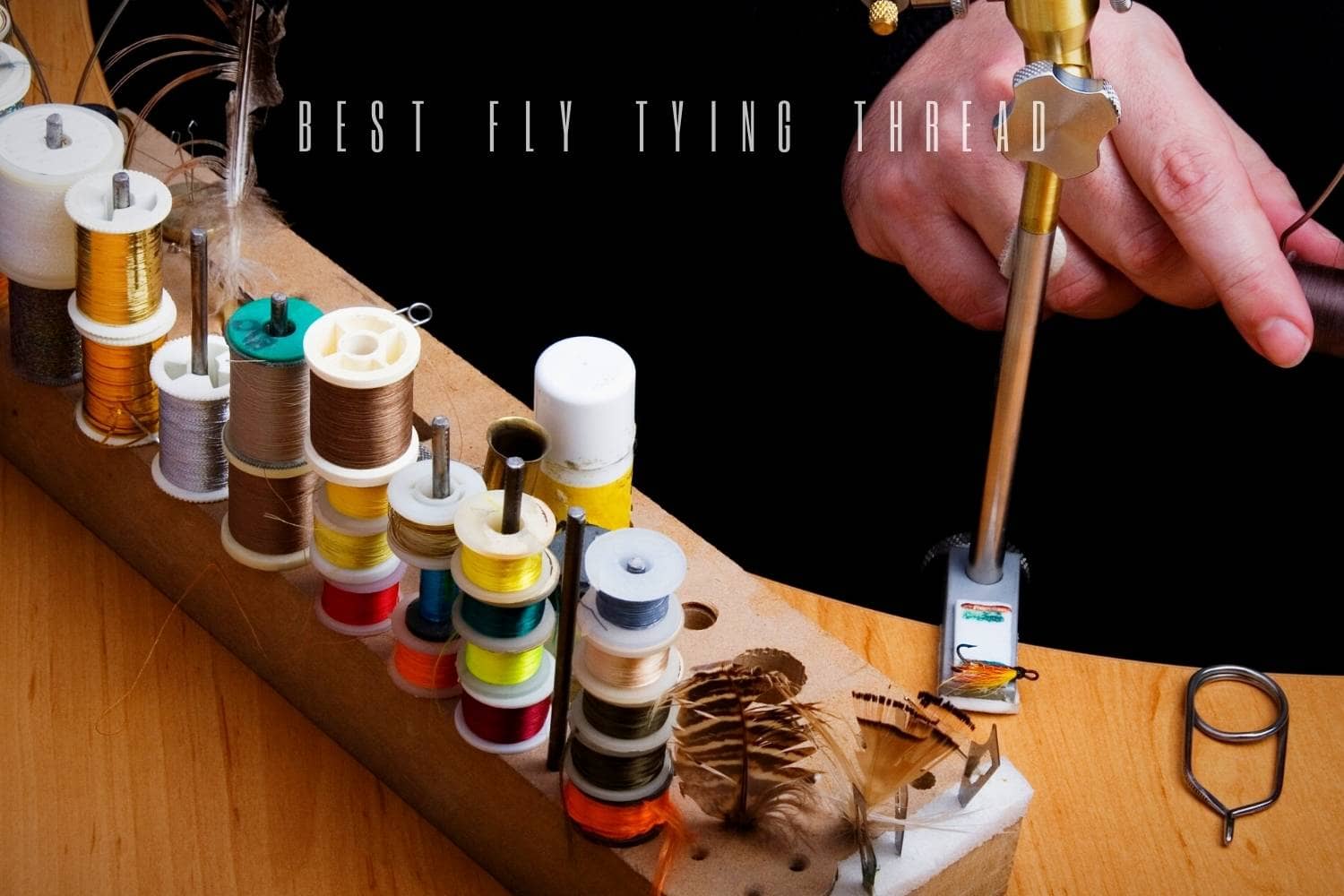
Thread is the structural control line of a fly. Diameter, construction, material, twist and surface treatment affect pressure, flatness and bulk. No single label predicts every property, and sizing systems are not interchangeable.
Choose the thinnest thread that gives a comfortable strength margin for the hook and materials. Learn its breaking point at the vise before using it on a full pattern.
Selection framework
| Choice or job | What it should accomplish | What to check |
|---|---|---|
| Fine thread | Small flies and low-bulk heads | Use light tension and smooth tools |
| General thread | Learning and varied medium flies | Practice flattening and break pressure |
| Stronger thread | Large materials or high-pressure work | Protect fingers and cut with a tool |
| Flat multi-filament | Low-bulk wraps or splitting | Control separation and abrasion |
| Special-effect material | Visible ribs, bodies or accents | Do not assume structural equivalence |
Understand thread labels
Aught labels and denier describe different properties, and neither alone establishes usable strength, flatness or abrasion resistance. Denier measures mass per length, not direct performance. Compare within known materials and constructions, then tie a sample. Record the exact label that works so substitutions can be judged by behavior and bulk.
Learn the breaking point
Load a smooth bobbin and make controlled wraps on a practice hook. Increase pressure gradually until the safe range becomes familiar. Use less force near sharp features and inspect the thread path when breaking repeats at one place. A deliberate pressure test makes most later failures diagnosable rather than surprising.
Use twist intentionally
Thread can be flattened for smooth, low-bulk wraps or corded for a narrower concentrated pull, depending on construction. Bobbin rotation and wrapping direction change twist. Pause and observe the strand before correcting it. Split-thread work needs a suitable construction and a clean bodkin.
Choose surface treatment by task
Wax can alter grip, handling and dubbing adhesion, but it does not replace tension control. Excess residue may collect in a bobbin tube or affect a delicate finish. Choose treatment for the operation and keep the thread path clean. If adding wax, use a restrained amount on a sample first.
Diagnose breaks and unraveling
Breaking can come from excess pressure, a chipped tube, a sharp hook feature, damaged thread or an abrupt change in direction. Unraveling may follow weak finishing, cut fibers or poor control. Diagnose location and timing: failure at the tube suggests hardware, while failure at the hook suggests contact or pressure.
Article-era thread examples
Earlier sections named UNI Products 6/0 Unithread Waxed, UNI Products 3/0 Unithread Waxed, Phecda Sport 150 Deniers Lightly Waxed, Uni-Thread 8/0, Fly Shack Kevlar Thread, Veevus 8/0 Fly Tying Thread and Riverruns Micro Glint Nymph Thread. The author wrote that flies had often been retired after thread unraveled. That general observation supports careful selection and finishing but does not transfer performance to later spools.
Decision checklist
- Define the first two or three fly patterns and the range of work you will actually do.
- Measure the bench and set a comfortable hook height before selecting accessories.
- Test the component with the exact neighboring tools, materials or consumables it must work with.
- Prefer controllable and repeatable operation over maximum features, power or assortment.
- Inspect contact surfaces, moving parts and storage needs before a long session.
- When a problem repeats, change the one component or adjustment responsible for it.
Build a small thread card for the patterns you tie most. Record the full spool label, hook style, number of foundation wraps, whether the strand was flattened or corded, and where extra pressure was needed. This makes it easier to repeat a clean head and compare a substitute by actual behavior. Keep the card practical; it should help at the vise rather than turn a simple fly into paperwork.
Build a thread system by matching diameter, strength, surface behavior, and color to the tying operation. Learn how the chosen thread responds to tension and twist before adding another spool, then reserve different constructions for clearly different jobs. Consistent control at the hook matters more than accumulating labels that describe similar material in incompatible ways.
