
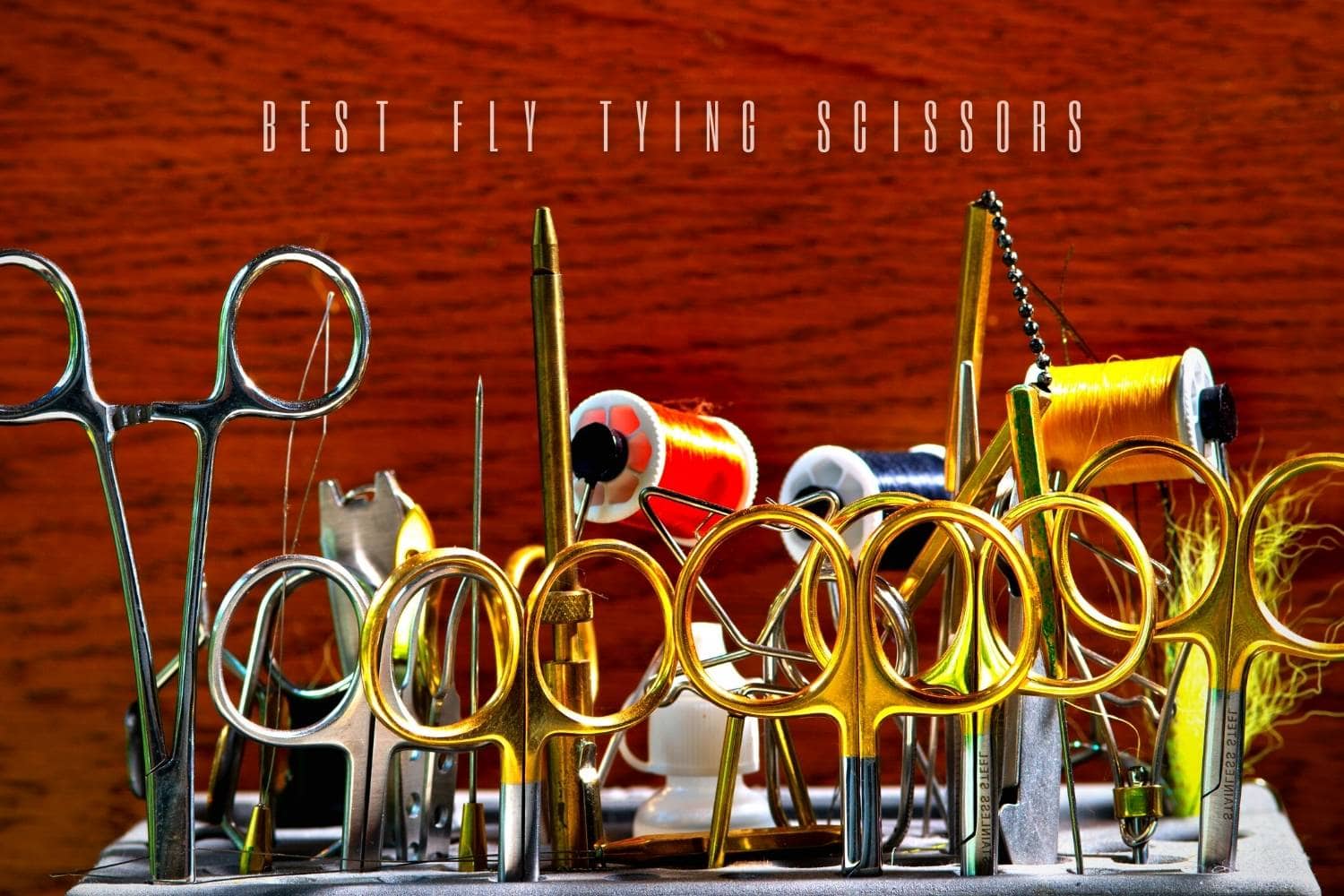
Fly tying scissors work best when they are matched to the material and the cut. Fine tips help close trimming, longer blades make smoother cuts through hair, and serration can keep slippery material from pushing away. One pair can cover general tying, but tiers who regularly alternate between delicate thread work and dense hair will usually benefit from separate tools.
Choose by the job you need done
The article-era scissors below show variations in blade length, tip shape, serration, loops, and tension adjustment. Use those examples to inspect the exact pair and its intended cutting job; they are not evidence that an older product remains a present-day best choice.
| Job | Look for | Trade-off | Article-era examples |
|---|---|---|---|
| Fine thread and close trimming | Short, precise tips with comfortable loops | Keep a dedicated pair away from heavy or abrasive material | Westcott 2-Inch Embroidery Scissors |
| General bench use | A controllable blade with useful serration | Choose a size that can stay in hand while tying | Dr. Slick Razor Scissors; Loon Outdoors Razor Scissors |
| Synthetic materials | An edge intended for repeated demanding cuts | Do not assume every tungsten-carbide label describes the entire scissor | Dr. Slick Tungsten Carbide Scissors |
| Hair and large streamers | Longer, heavier blades with room for straight cuts | Bulk that helps on hair can hinder tiny flies | Dr. Slick Hair Scissors |
| Adjustable feel | A pivot or tension control you can set deliberately | Avoid overtightening merely to mask a poor edge | Dr. Slick Razor Scissors; Loon Outdoors Razor Scissors |
Match blade length to the cut
Short blades and fine tips make it easier to trim near the hook without disturbing nearby materials. Longer blades are useful for straight cuts through hair or longer pieces of material. Neither is universally superior. Think about the cut you make most often: close thread trimming, shaping a wing, or cutting dense hair. The scissor should place the useful part of the blade where your fingers can control it.
Choose serration with purpose
A serrated edge can grip material that tends to slide along a smooth blade. A smooth edge can produce a clean cut when the material stays put. Some tying scissors combine one serrated blade with one smooth blade. That arrangement can be versatile, but blade alignment and sharpness still matter more than the label.
Separate delicate and demanding materials
Fine natural materials, synthetics, and heavy hair place different demands on scissors. Keeping one pair for precise thread and feather work protects its tips and edge from demanding cuts. A second, stronger pair can handle synthetics or hair. This simple division also makes it obvious which scissors to reach for rather than forcing one tool into every job.
Fit the loops and pivot to your hand
Finger holes that are too tight create pressure; loops that are too loose reduce control. Try the scissors in the position you use at the vise, not only with your hand held flat. Check whether the pivot feels smooth across the full stroke. Adjustable tension is useful when it changes the feel predictably, but it cannot restore a damaged edge or misaligned blade.
Respect a very sharp edge
Razor scissors can cut thread or hackle with light pressure. That is useful bench guidance: make deliberate cuts, keep fingers clear of the blade path, and avoid closing the scissors against the hook. Fine tips are precise but can also be damaged by twisting or prying, so use them only for cutting.
Common questions
Can one pair handle every fly?
A good general pair can tie many patterns, but separate fine and heavy-material scissors protect precision and improve control.
Are longer scissors more powerful?
They can make long cuts easier, but blade construction, edge condition, and hand leverage matter too.
When does adjustable tension help?
It helps tune the opening feel and blade contact on a sound pair. It is not a substitute for proper alignment or sharpening.
A practical final check
Test tying scissors on the materials and cuts that matter at your bench: close thread cuts, precise feather trimming, and tougher synthetic or hair work where relevant. The loops should suit your fingers, the pivot should move smoothly, and the tips should reach the cut without forcing your wrist into an awkward angle. Separate demanding materials from delicate work when one blade geometry cannot serve both well.
