
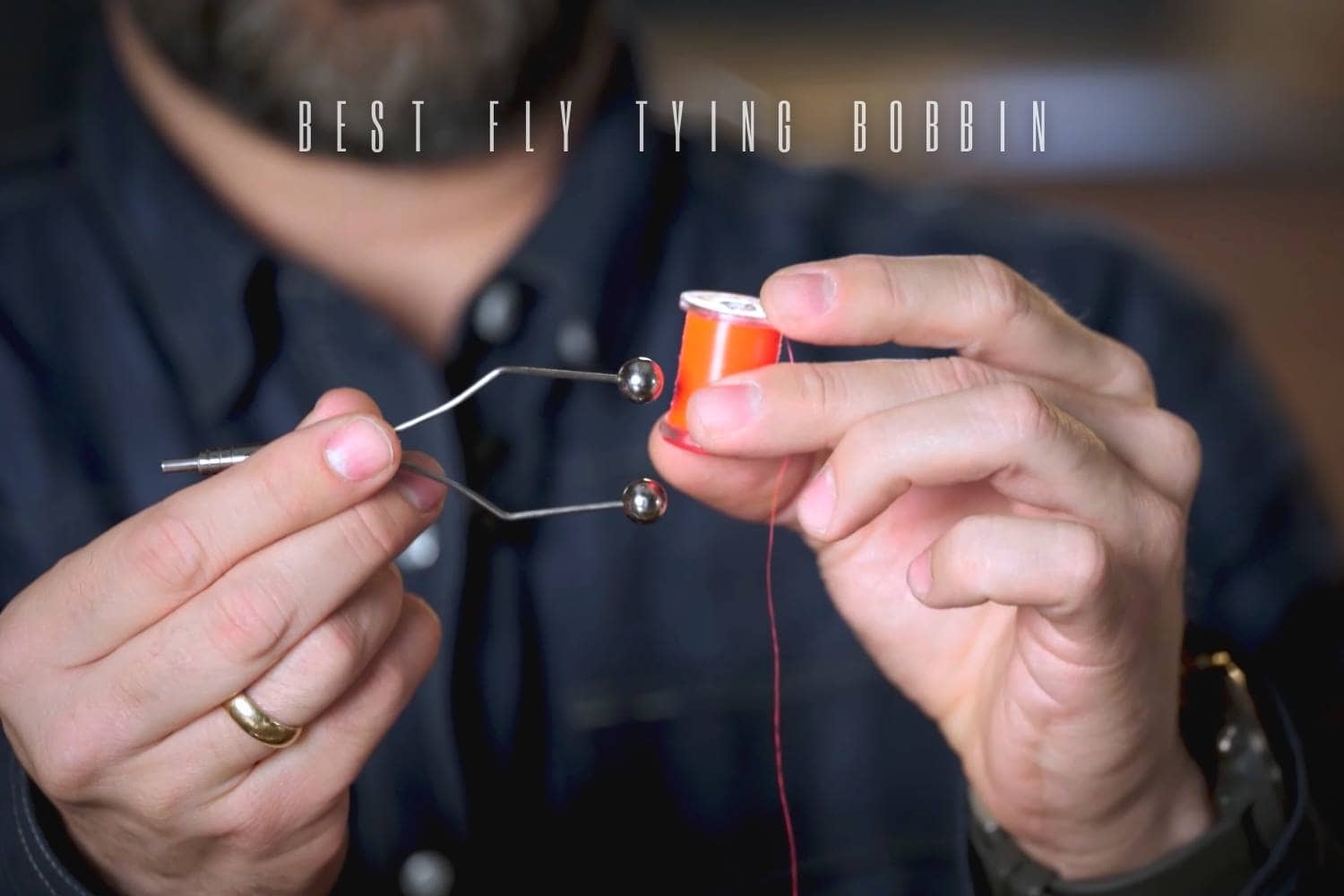
A bobbin holder turns a spool of thread into a controlled tying tool. It should fit the spool, feed thread through a smooth tube, maintain useful tension and sit comfortably in the hand. The best choice is a match among spool, thread, fly size and grip.
Bring the spool format and thread you use to the decision. Confirm foot spacing, tube diameter, edge finish and tension range before comparing handle shape or drag features.
Selection framework
| Choice or job | What it should accomplish | What to check |
|---|---|---|
| Spool fit | Hold the spool without crushing or releasing it | Check installation, side play and removal |
| Tube finish | Feed thread without abrasion | Pull thread at several working angles |
| Tension | Maintain controlled wraps | Test fine and heavy intended threads |
| Tube shape | Reach the hook without blocking sight | Try straight and angled approaches |
| Grip | Remain comfortable through a pattern | Check pinch position and balance |
Fit the spool first
Spools vary in width, hub shape and material. The feet should keep the spool centered while allowing smooth rotation. If the frame is intended to be adjusted, make small even changes rather than repeatedly bending one side. A loose spool can overrun; an overtight one makes fine thread feel inconsistent.
Inspect the whole thread path
Thread touches the entrance, inner tube and exit, so each contact matters. Use a threader where appropriate and avoid scraping across the rim. Pull a length through under light pressure, then inspect it against a contrasting background. Fuzzing or repeated breaks at one point indicate a damaged or contaminated tube rather than weak technique.
Set tension for the operation
Use enough resistance for control while leaving a margin before breakage. Delicate flies need lighter tension; larger materials may need more. Depending on design, pressure can also be controlled by spool contact and hand position. Practice changing pressure without jerking the strand.
Integrate the holder into the sequence
Keep the tube near the hook for accurate wraps, then lower it to preserve tension when pausing. The hanging tool should not strike the pedestal or bench. Before rotating the vise, check that the thread clears hardware. Split-thread and corded-thread techniques require a suitable construction and an abrasion-free tube.
Clean and organize
Remove wax and fibers without scratching the tube or feet. Store holders so heavier tools cannot chip the exit. If several remain loaded, label them by thread purpose or size. Retire a holder when a rough edge cannot be safely corrected.
Article-era bobbin examples
Earlier sections named the Stonfo Disc Drag Bobbin, Dr Slick ECO Flared tool, Stonfo Elite2 Saltwater Streamer Disc Drag Bobbin, Rite Ceramic Bobbin, Loon Outdoors Ergo Bobbin, Dr. Slick Glass Bobbin with Delrin Feet, Umpqua Tiemco Ceramic Bobbin Heavy Straight, C&F Design CFT-61 and an XFISHMAN two-pack. The Stonfo Disc Drag section reported an easy-to-adjust drag. That observation belongs only to the article-era tool in that section.
Decision checklist
- Define the first two or three fly patterns and the range of work you will actually do.
- Measure the bench and set a comfortable hook height before selecting accessories.
- Test the component with the exact neighboring tools, materials or consumables it must work with.
- Prefer controllable and repeatable operation over maximum features, power or assortment.
- Inspect contact surfaces, moving parts and storage needs before a long session.
- When a problem repeats, change the one component or adjustment responsible for it.
Before loading several holders, tie one complete fly with each spool-and-holder combination. Start the thread, make flat wraps, apply stronger pressure, park the holder and finish the head. This sequence reveals drag changes, poor balance and abrasion that a simple pull test can miss. Keep successful combinations together or label them so a reliable setup can be repeated without another adjustment session.
Choose a bobbin holder by tracing the whole path from spool to thread tube. Confirm that the spool fits, tension can be adjusted for the operations you perform, and every contact surface is smooth enough for the thread you use. A second holder earns its place when it solves a distinct material or tension job, not merely because another design is available.
