
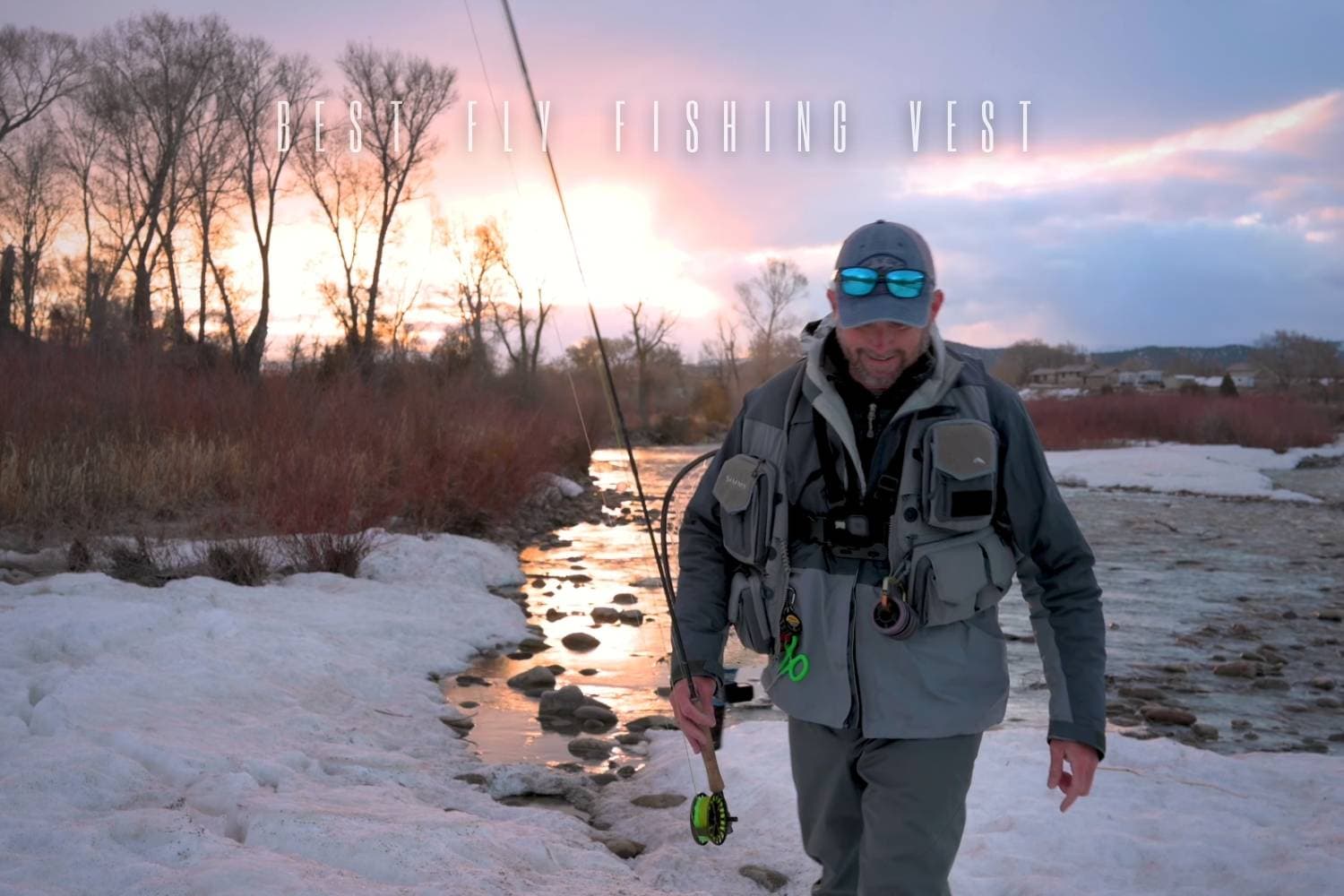
A good fly-fishing vest is less about the biggest pocket count and more about putting the right gear where your hands naturally reach. Start with your normal fly boxes, tools, water and rain layer, then choose the lightest system that carries that load without blocking your cast or your view of the riverbed.
The author’s years of use apply only to the older SIMMS Headwaters Pro. The 2026 Simms Headwaters Vest is a different model, and a familiar name should not be treated as proof of the same generation.
Quick answer
Best decision rule: Choose by load, balance and wading depth. Minimalists should start with a light, low-profile vest; anglers carrying multiple boxes, water and a shell should prioritize balanced front-and-back storage and a supportive collar.
Current models to compare
These four current products show distinct carry approaches. Compare their layout and fit directly; none carries the author’s older Headwaters Pro experience or a seller recommendation here.
| Product | Best starting job | Manufacturer-stated points | Buying boundary |
|---|---|---|---|
| Simms Headwaters Vest | Loaded full-day vest | Quick-drying build, breathable shoulder padding and four lower fly-box pockets. | A 2026 product distinct from the older SIMMS Headwaters Pro used by the author. |
| Simms Tributary Fishing Vest | Simple breathable starter vest | Lightweight mesh, revised pocket layout and a retractor docking station. | Manufacturer details only; the author did not use this exact vest. |
| Orvis PRO Fly-Fishing Vest | Structured high-capacity layout | Current Orvis page confirms the named PRO Vest family. | The name matches an earlier model, but exact generation continuity is unresolved. |
| Orvis Ultralight Fishing Vest | Low-profile carry | Current Orvis page confirms the Ultralight family. | The name matches an earlier model, but exact generation continuity is unresolved. |
Model and lifecycle guide
These nine earlier products have different lifecycle and generation status. “Unresolved” means the exact current counterpart is unknown; it does not mean the product is definitely discontinued.
| Named product | Classification | What that means for readers |
|---|---|---|
| Simms G3 Guide Fly Fishing Vest | Earlier model; lifecycle unresolved | Do not apply the earlier vest’s 24-pocket description to the current G3 wading jacket or another Simms vest. |
| Redington Blackfoot Vest | Earlier model; lifecycle unresolved | Retain only as an earlier named vest until Redington confirms an exact current model. |
| Orvis PRO Vest | Current name; exact generation unresolved | Use specifications from the exact current Orvis model; earlier impressions apply only to the earlier generation. |
| Orvis Ultralight Vest | Current name; exact generation unresolved | The current family exists, but the earlier photo and observations do not establish the current revision’s performance. |
| MAXIMUMCATCH Maxcatch Fly Fishing Vest Pack | Earlier model; lifecycle unresolved | Verify the exact current model before buying. |
| Aventik Fly Fishing Vest | Earlier model; lifecycle unresolved | Verify the exact current model before buying. |
| Redington FIRST RUN Fishing Vest | Earlier model; lifecycle unresolved | Verify the exact current model before buying. |
| Fishpond Gore Range Tech Pack | Earlier model; lifecycle unresolved | Do not substitute another Fishpond vest or pack. |
| Patagonia Mesh Master II | Earlier model; lifecycle unresolved | Do not apply observations about this model to another Patagonia vest. |
How to choose
Lay out your real kit
Pack the fly boxes, leaders, tippet, floatant, nippers, forceps, water and weather layer you actually carry. Empty pockets invite extra weight.
- Put frequent tools on the front and secure them.
- Use rear storage for water or a light shell to balance the load.
- Keep keys and a phone in a separate waterproof pouch.
Match the vest to wading depth
Higher pockets help when you wade deeper, while a longer vest can be comfortable for bank fishing. A clear lower front also helps you see your footing.
Fit it over fishing layers
Try the vest over the same shirt or jacket you will wear. Check casting reach, collar pressure and whether loaded pockets swing or sag.
What the author experienced
The author’s clear ownership statement applies only to the older SIMMS Headwaters Pro.
- The author reported fishing a SIMMS Headwaters Pro for years and described that exact vest as comfortable, practical and durable.
- The 2026 Simms Headwaters Vest is a different named catalog record; it does not inherit the Headwaters Pro field note.
Questions anglers ask
How many pockets should a fly-fishing vest have?
Enough for your normal kit, with a consistent place for every frequently used item. Pocket count alone is a poor proxy for comfort or organization.
Is a vest better than a chest pack?
A vest spreads smaller items around the torso; a chest pack can be simpler and easier to remove. Choose the system that keeps your cast and line path clear.
Should a fishing vest be waterproof?
Most vests are not a substitute for dry storage. Protect electronics, keys and documents in a dedicated waterproof pouch.
Bottom line
Start with the gear you carry and the water you fish. The right vest is the one that remains balanced, accessible and unobtrusive after several hours—not the one with the longest feature list.
