
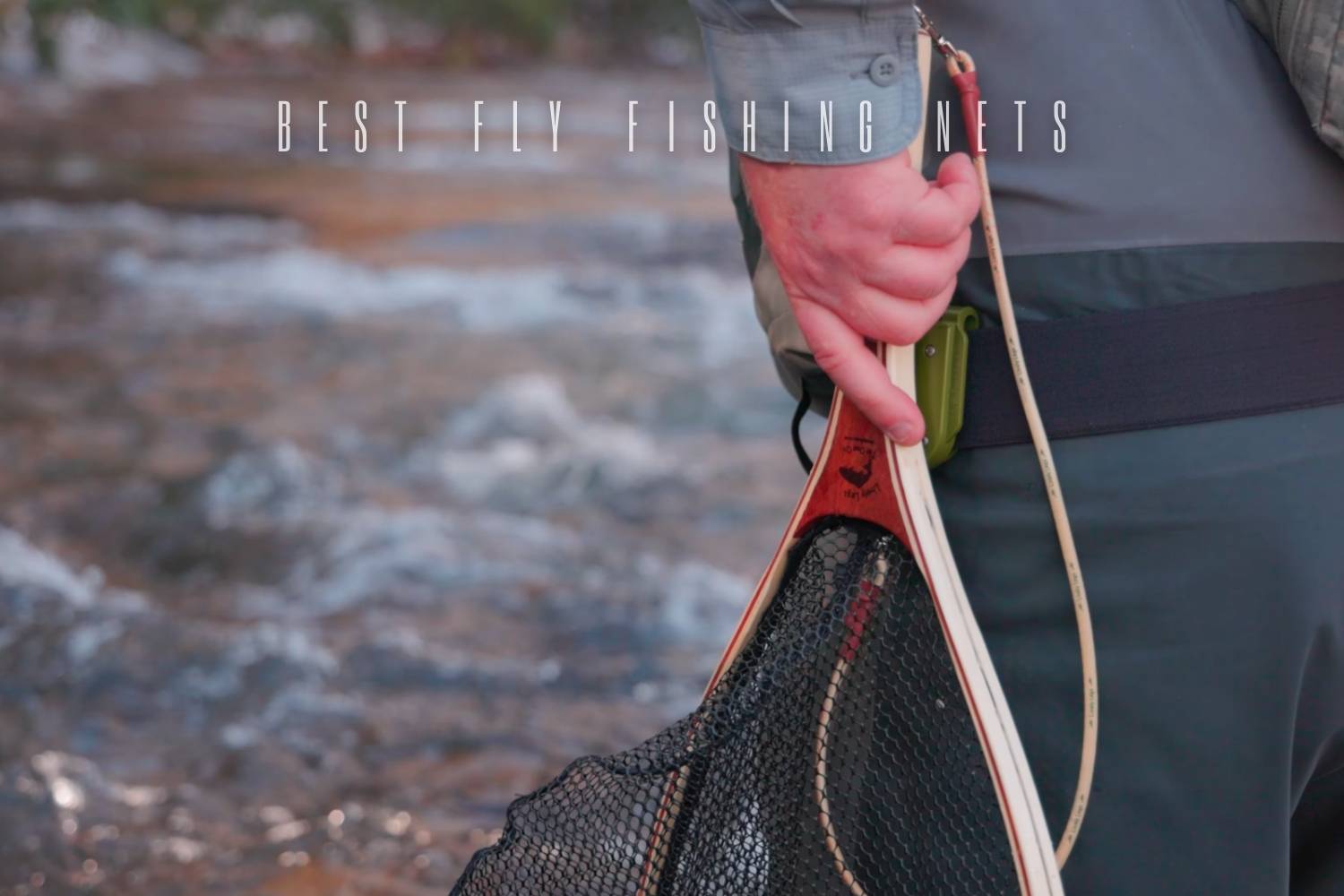
Quick answer: Choose a landing net by the water you fish, the fish you realistically expect, and how you carry it. A short hand net is easier in brush; a deeper hoop and longer handle help from a boat or around larger fish. The product notes below apply to the pictured article-era nets; a familiar model name does not guarantee the same generation or construction.
Which kind of fly-fishing net fits your day?
| Net | Best fit | Buying note | Main limit |
|---|---|---|---|
| Fishpond Nomad Emerger | One hand net for varied trout water | Use these notes only for the pictured article-era generation. | The article-era carrying and handling notes do not prove how the 2.0 fishes. |
| Freestone Rubber Mesh Net | Compact use around smaller trout | Treat this as an article-era model and confirm the maker on any used example. | The original basket was relatively small and the wood frame was not described as buoyant. |
| Fishpond Nomad Native | Minimal bulk for hike-in and wade fishing | Use these notes only for the pictured article-era generation. | A compact hoop gives less room for unusually large fish. |
| PLUSINNO Fly Fishing Net | A simple wood-frame hand net | Confirm the exact dimensions, materials and release supplied with any similarly named net. | The article noted large mesh openings around very small fish. |
| Fishpond Nomad Mid-Length Net – Tailwater | Extra reach from a boat | Treat this as an article-era boat net and compare any newer option on its own dimensions. | Longer than most wading anglers need. |
What the original nets were like
Fishpond Nomad Emerger: the article-era all-rounder

The original author had spent time on the river with this net and liked the balance of reach, grip and carrying weight. The article-era specifications described a 32-inch overall length, a 12-inch handle and a carbon-fiber-and-fiberglass composite frame. The author also found that its mid-length profile could catch in thick brush, although that was less troublesome while actively wading.
Use the dimensions and handling notes above only for the pictured generation. Before choosing a similarly named net, compare the exact handle length, hoop, bag depth, frame and carry attachment.
Freestone Rubber Mesh Net: compact article-era option

The article described a 25-inch hardwood net with a clear rubber bag. In use, the author found it comfortable on the back and less prone to catching in brush than the longer nets. Its smaller basket was the important trade-off: it was presented as a better fit for modest trout than for a long, heavy fish.
For a used example, check the frame, bag attachment, handle joint and tether before relying on it.
Fishpond Nomad Native: compact article-era option
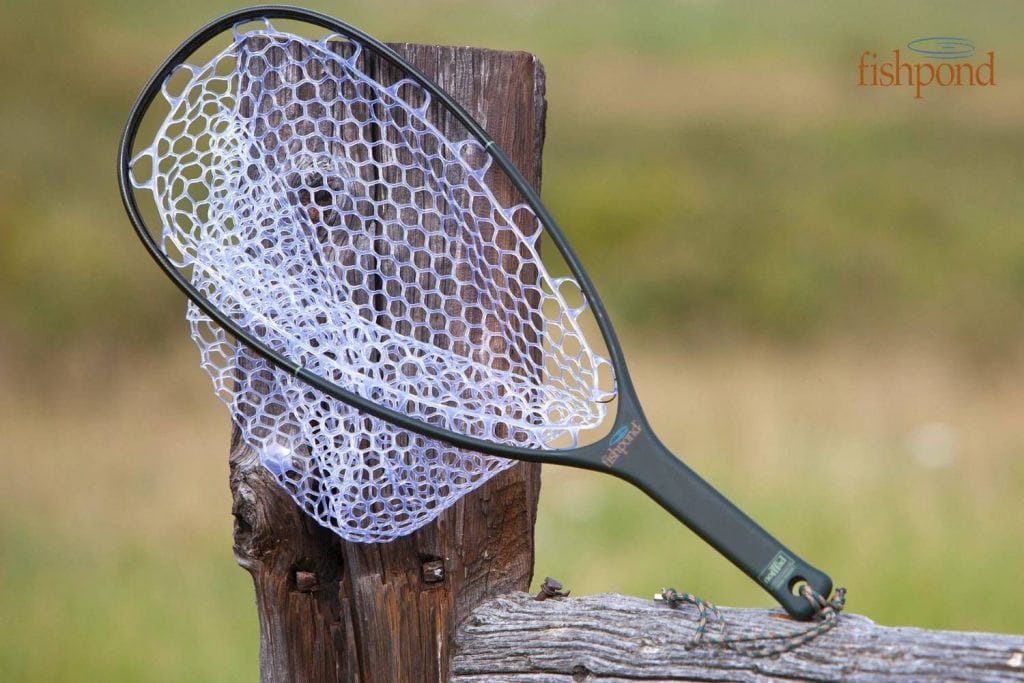
The original notes favored this net for travel and hike-in fishing: short, light and easy to attach to a release. The trade-off was predictable—less basket space and less reach than the Emerger or Tailwater. The author’s positive notes apply only to that article-era unit.
Use the travel and handling notes only for the pictured generation. On any similarly named net, confirm the frame, bag, handle length and attachment before comparing it with this article-era model.
PLUSINNO Fly Fishing Net: compact wood-frame option
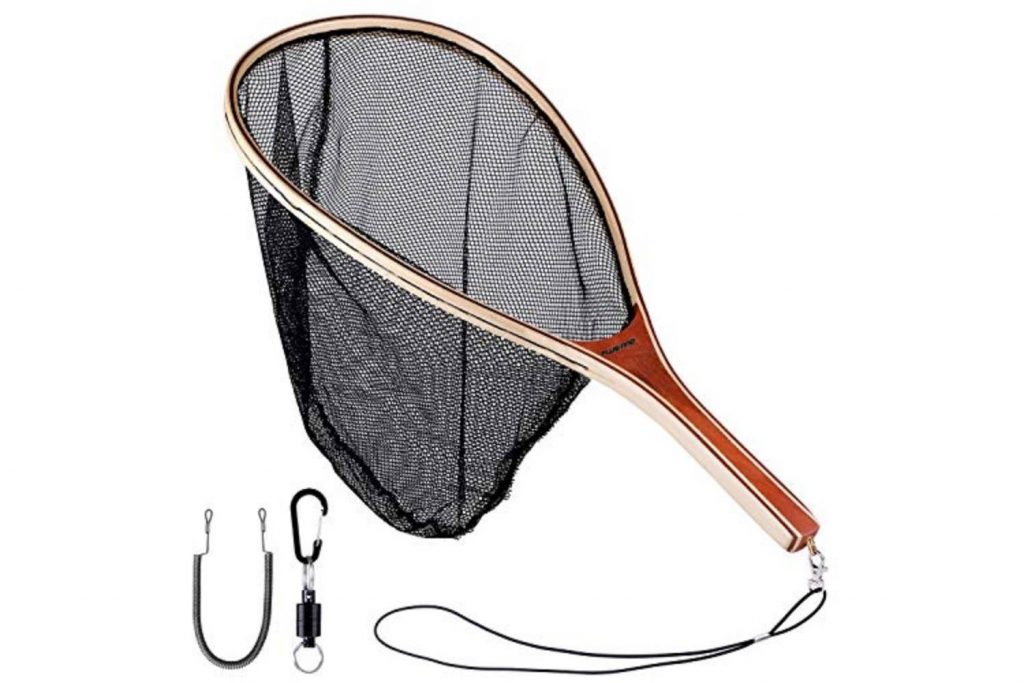
The article-era PLUSINNO Fly Fishing Net measured 23.6 inches and paired a wood frame, rubber mesh, magnetic release and 14.56-by-5.9-inch hoop. The author considered that net surprisingly solid for medium fish and liked its manageable size, while warning that very small trout could pass through the larger openings.
On any similarly named net, confirm the hoop, mesh, frame and release before relying on the article-era durability note.
Fishpond Tailwater: article-era boat option
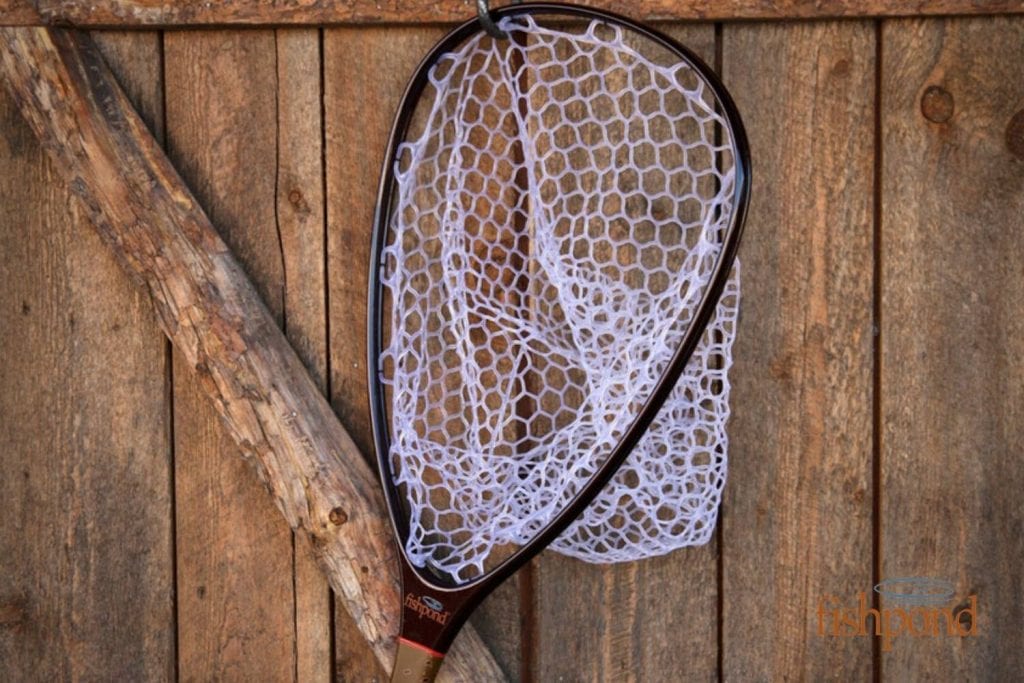
The article described the Tailwater as grippy and useful from a boat but cumbersome for ordinary wading. It described a 37-inch net with a 13-by-18-inch head and a buoyant composite frame.
Treat those dimensions and handling notes as specific to the pictured Tailwater. Compare any newer boat net by its own overall length, handle, hoop and bag depth.
How to choose a landing net
Match the hoop to real fish, not dream fish
A compact trout net is easier to carry, but the fish must fit without folding hard against the frame. If your water regularly produces larger trout, salmon, steelhead or saltwater fish, favor a deeper bag and a wider opening. From a boat, extra handle length can keep you from leaning dangerously over the side. In brushy walk-and-wade water, that same handle can snag branches.
Prefer smooth, knotless rubber or TPU bags
A smooth bag is easier on fins and generally less troublesome around hooks than coarse knotted mesh. Check depth as well as hoop width: a shallow bag may look large enough until a fish turns beside the frame. Replace cracked, stiff or torn bags rather than stretching one more season from them.
Plan the carry system
A floating net can still drift away. Pair the attachment point with a secure magnetic release or tether, then practice drawing and replacing the net with one hand. Hang it where the hoop does not strike your legs or pull your pack off balance.
A simple landing routine
- Keep the fish in the water and bring it within controlled reach.
- Lead it head-first over the hoop rather than chasing its tail.
- Slide the net under the fish; avoid scooping upward from a distance.
- Keep the bag submerged while removing the hook.
- Wet your hands before touching the fish, support it gently and release it only when it can hold itself upright.
Bottom line: The article-era Emerger was the original author’s all-round pick. Start with hoop size, handle length and carry fit, then verify the exact generation rather than assuming a familiar name means an unchanged net.
