
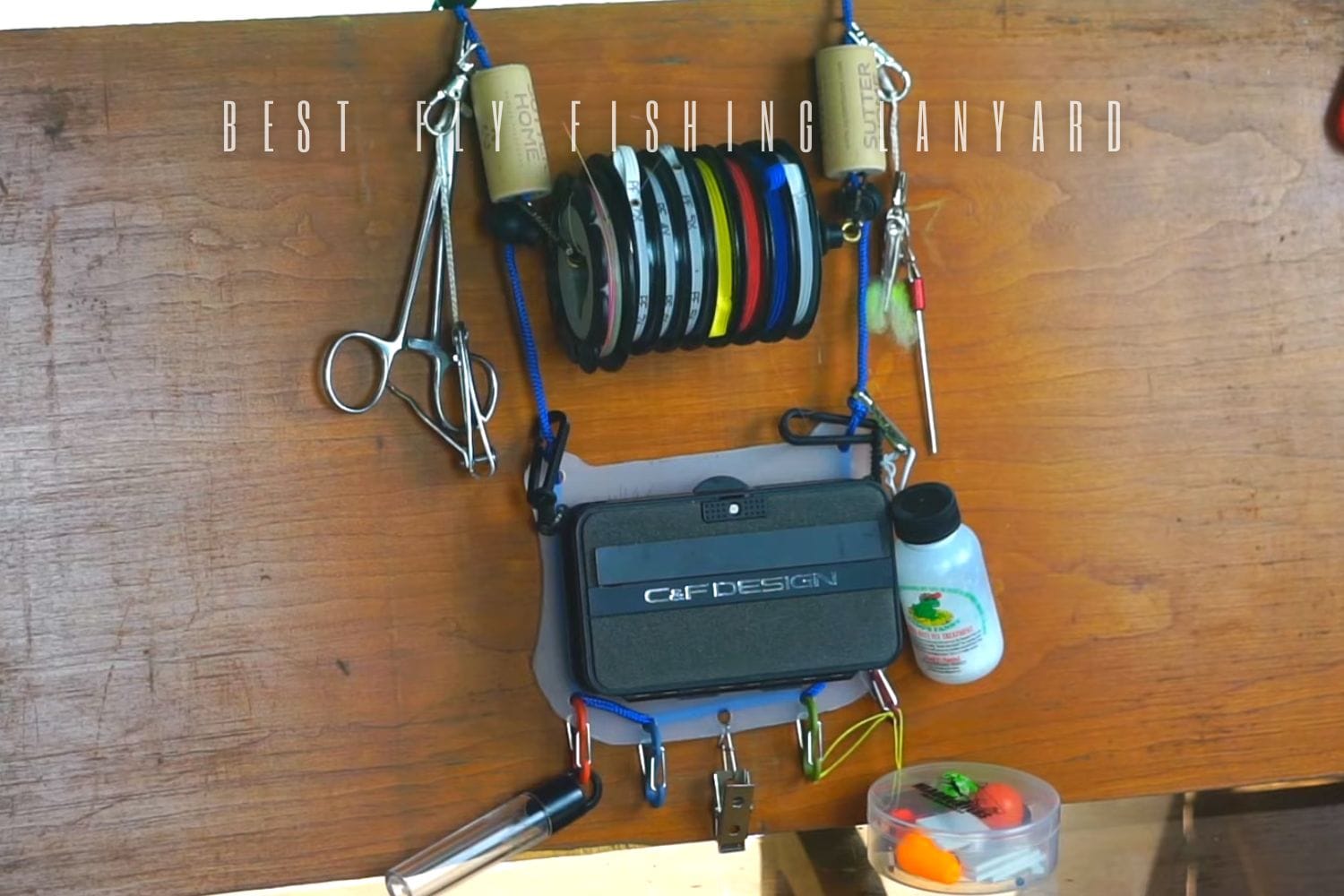
Quick answer: A lanyard works best when it carries only the tools you use repeatedly—typically nippers, forceps, floatant and a small tippet selection. Overload it and it becomes a swinging, neck-heavy substitute for an overstuffed vest. Treat the named products below as article-era configurations and confirm the exact setup before choosing one.
Fly-fishing lanyards compared
| Lanyard | Carrying job | Buying status | Main limit |
|---|---|---|---|
| Mountain River Angler Lanyard | Four tools, tippet and a drying chamois | Treat as an article-era configuration; confirm every included attachment. | No integrated floatant holder in the preserved configuration. |
| River Canyon Fishing Lanyard | One or two essential tools | Treat as an article-era configuration; confirm the maker and release. | Not a full neck-vest replacement. |
| Loon Outdoors Neckvest Lanyard | Modular tool and tippet setup | Treat as an article-era configuration; confirm what is included. | Confirm configuration before comparing features. |
| Ultimate Fly Fishing Lanyard | Basic clips and fly patches | Treat as an article-era configuration; confirm the maker and included holders. | The article-era configuration lacked tippet and floatant holders. |
| Scientific Anglers Lanyard | Tippet, floatant, flies and drying cloth | Treat as an article-era configuration; confirm the exact model and release. | Do not assume an old marketplace listing represents the same model. |
What each setup is for
Compare these article-era setups by tool capacity, weight distribution, adjustment and snag release. A similar product name does not guarantee the same clips or included accessories.
Mountain River Angler Lanyard
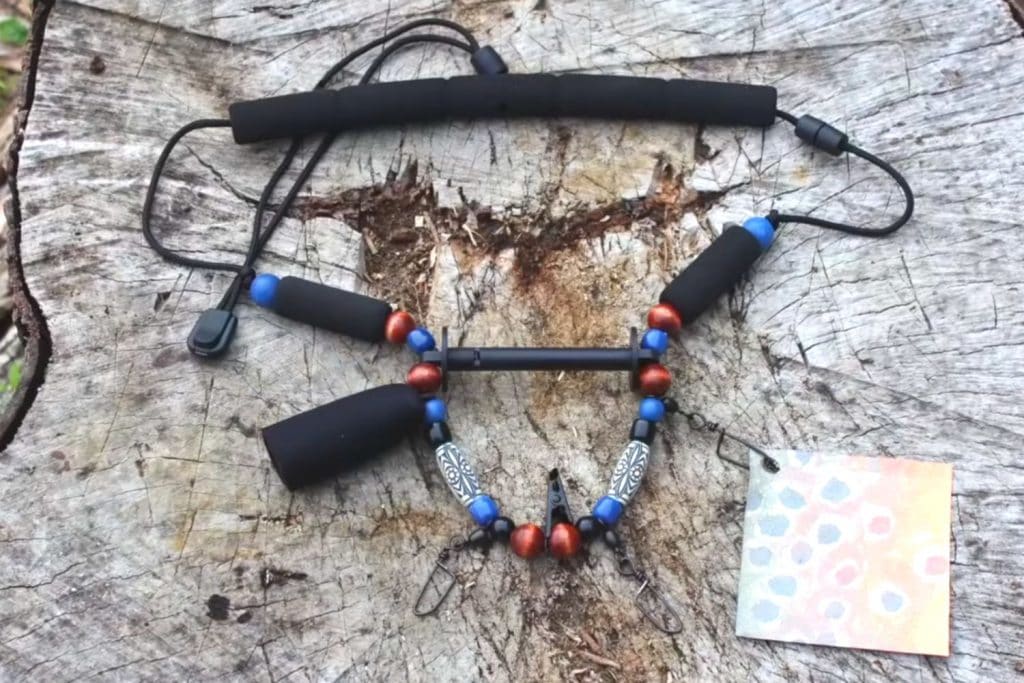
The article-era Mountain River Angler paired four tool attachments with a tippet holder and drying chamois. That layout suits an angler who wants several small tools and tippet spools in fixed positions.
The article also described a padded neck section, lower shirt clip and several docking points. Check the exact supplied configuration rather than treating every similarly named lanyard as identical.
River Canyon Fishing Lanyard
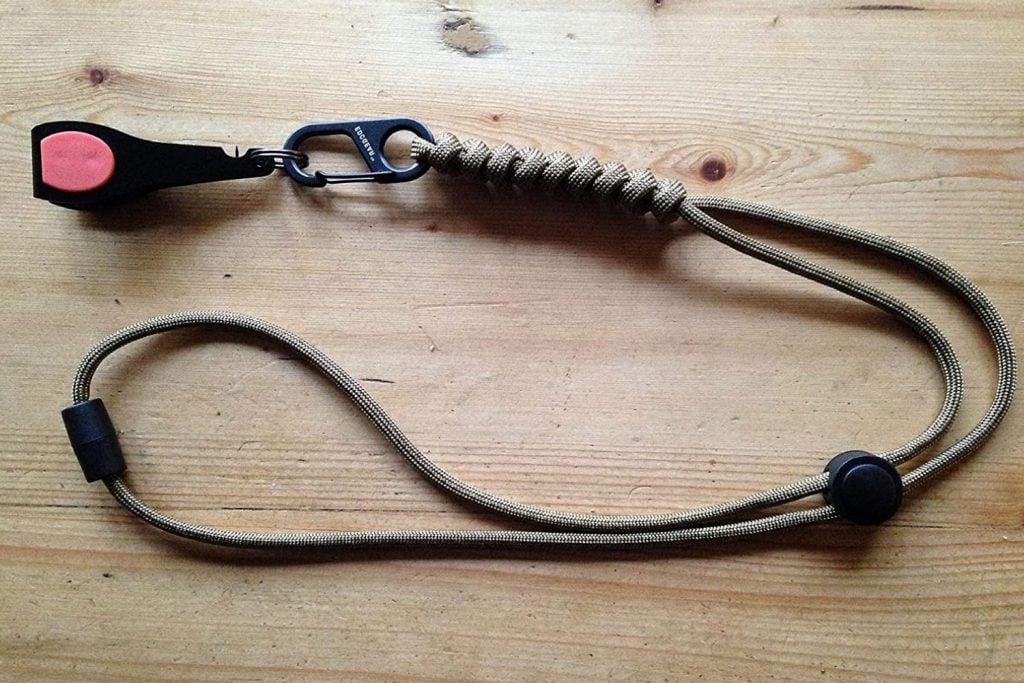
This was a minimal paracord tool keeper rather than a full accessory rack. The article described an adjustable cord, quick-release clip, loops and a carabiner, with realistic capacity of one or two tools. That simplicity can be useful if you only want nippers or forceps close at hand.
Confirm the exact material, release behavior and load limit on any example. Avoid hanging anything whose loss would end your day.
Loon Outdoors Neckvest Lanyard
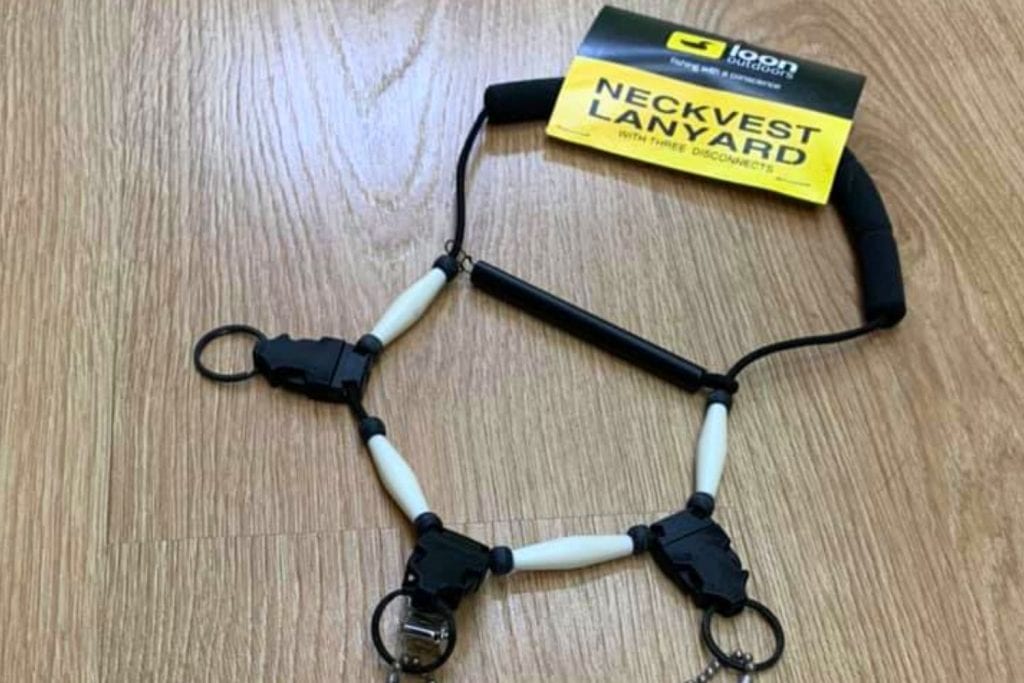
The article-era Neckvest used an adjustable cord, padded neck section, five tool attachments, two fly patches and a tippet bar. It was presented as a modular platform for tools already owned.
Decide whether you need an empty platform or a loaded kit, then compare the exact included pieces. Do not assume a similarly named lanyard includes every article-era holder or tool.
Ultimate Fly Fishing Lanyard
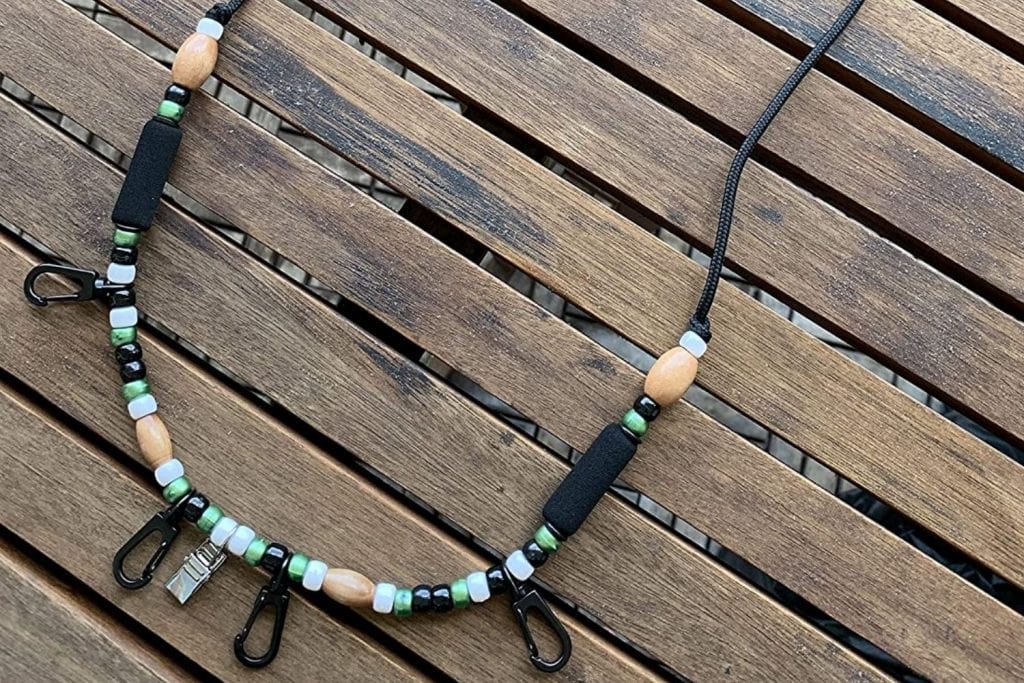
The article described four tool clips, two foam fly patches, a shirt clip, adjustable cord and neck padding. It also identified what was missing: no tippet bar and no dedicated floatant holder. That makes the old configuration closer to a basic tool rack than a complete vest replacement.
Scientific Anglers Lanyard
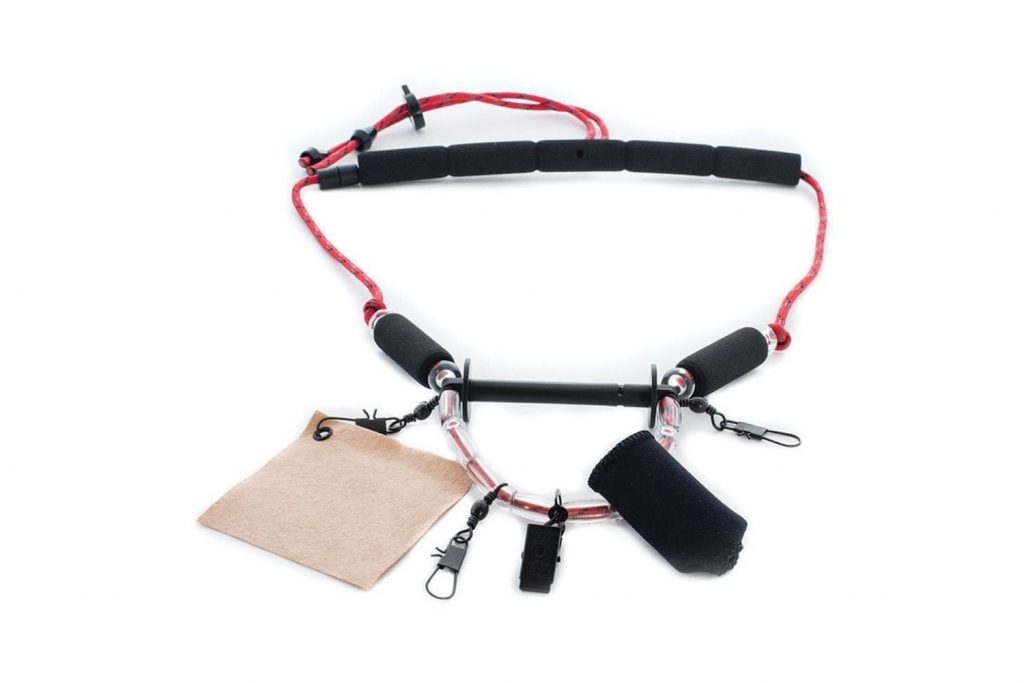
The article-era configuration was the most complete of the old list: fly patches, tippet bar, drying chamois, floatant holder, extra clips, adjustment and a quick-release connection. The original author favored that article-era setup. Confirm every holder, clip and release on any similarly named lanyard.
What should go on a fishing lanyard?
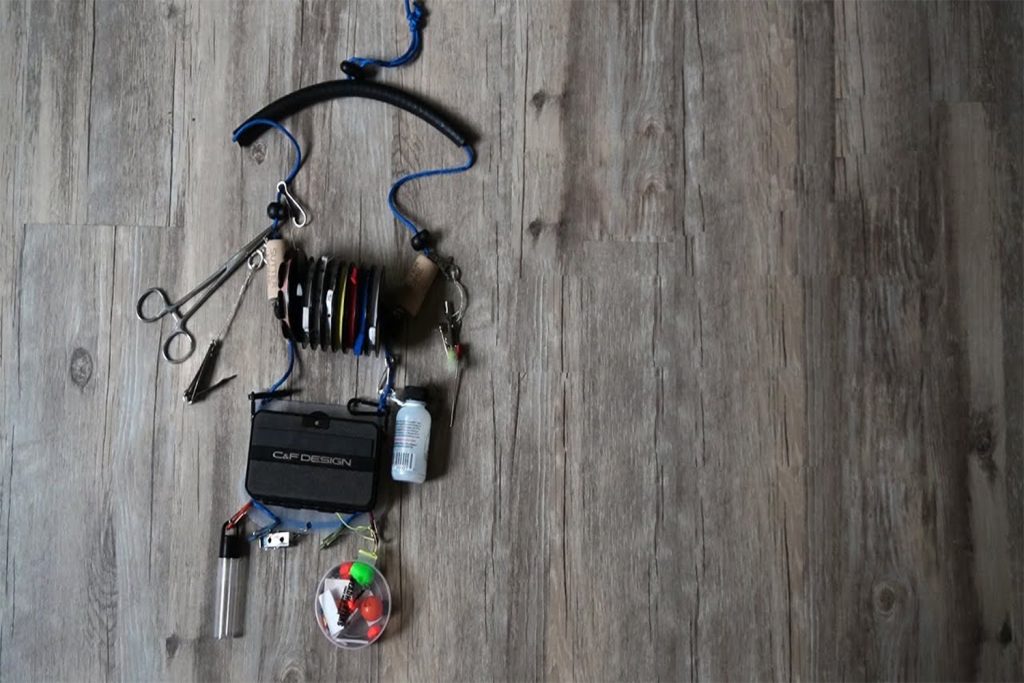
A practical starting load is nippers and forceps on retractors, a small selection of flies, floatant, tippet and a drying cloth. Treat it as a starting point, not a mandatory checklist.
- Nippers: place on the dominant-hand side and keep the cutter clear of the cord.
- Forceps: secure them by both grip and retractor if possible.
- Tippet: carry only the diameters required for the day.
- Floatant or sink treatment: choose one holder that fits the actual bottle.
- Flies: a patch is convenient for drying or temporary storage, but a small closed box protects unused flies.
Food, water, extra layers, a large fly selection and emergency items belong in a pack or vest. A lanyard should reduce searching, not move an entire tackle cabinet onto your neck.
Fit, comfort and snag safety
Use the shirt clip
A lower clip limits swing when you bend, cast or walk. It also keeps hooks and metal tools from striking each other. Place the lanyard high enough that forceps do not hit your stripping hand, but low enough that you can see and reach every tool.
Look for a real release point
A quick-release connector can reduce snag risk, but release force varies by model and condition. Test the mechanism by hand before fishing and never tie the lanyard into a knot that defeats it. Keep loose loops away from branches, boat fittings and moving line.
Share weight across systems
If the lanyard becomes uncomfortable after an hour, remove items rather than adding more padding. A slim pack paired with a light lanyard is often more comfortable than asking either system to carry everything.
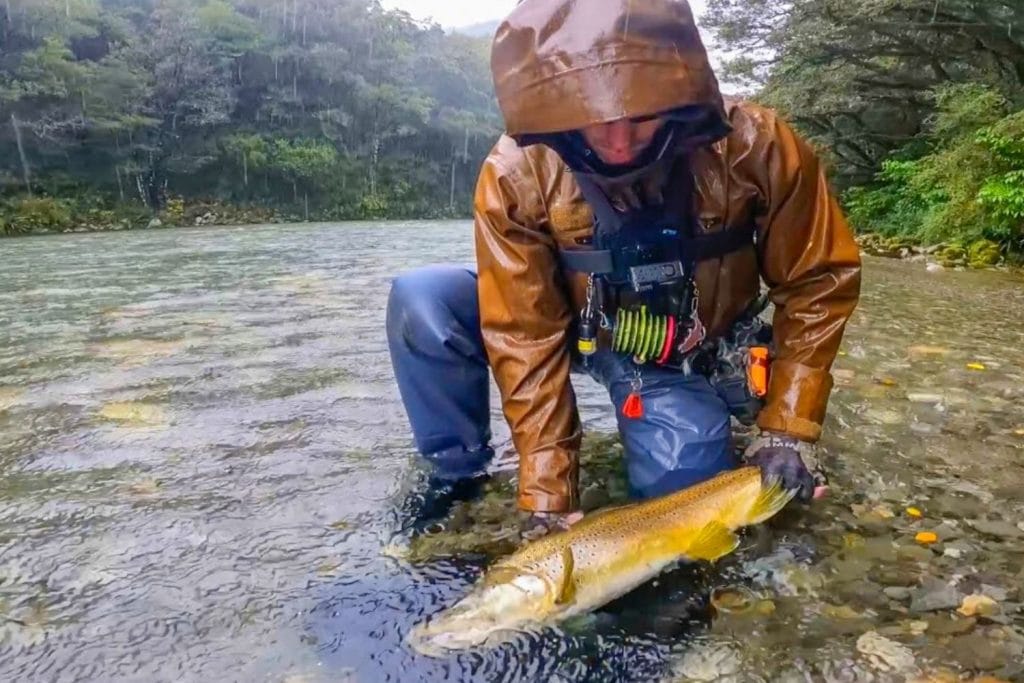
Bottom line: Choose by the number of tools you actually carry, then check neck padding, adjustment, shirt anchoring and snag release. Treat every named setup here as article-era and confirm the exact included parts before choosing a similarly named lanyard.
