
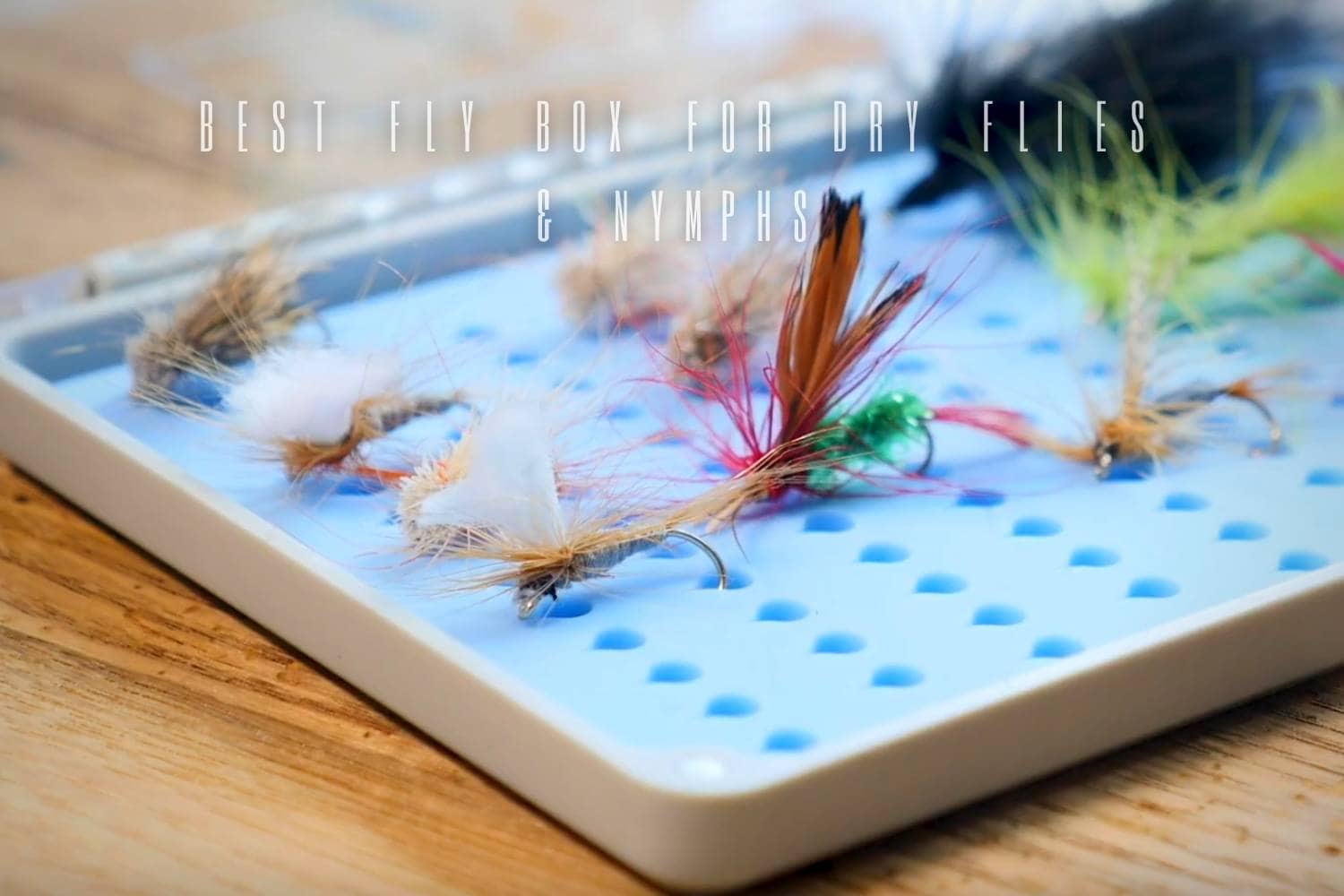
A fly box should protect the flies you actually carry while fitting the pocket, pack, or boat space you use. Capacity matters, but raw slot count can be misleading: tall hackles need headroom, small nymphs benefit from organized rows, and saltwater or streamer patterns demand stronger anchoring and more clearance. Begin with fly profile and carry method, then choose closure, insert, and seal.
Choose by the job you need done
The article-era boxes in the comparison show several insert, closure, depth, and visibility layouts. Treat them as examples for evaluating the exact box and fly assortment in front of you, rather than as a current shortlist or a promise about any older model.
| Job | Look for | Trade-off | Article-era examples |
|---|---|---|---|
| Small nymphs and dries | Dense, orderly rows with easy hook insertion | High capacity is useful only if flies remain easy to select | Tacky Original Fly Fishing Fly Box; New Phase Fly Box |
| Mixed everyday selection | Several compartments or a center leaf | Check that added leaves do not crush tall patterns | The Go-To Fly Box |
| Boat or long-trip storage | A larger body and visible layout | Large boxes may not fit a sling or wading pocket | Kingfisher fly box |
| Saltwater and larger hooks | Deeper foam and generous clearance | Rinse and dry flies according to the needs of the materials you use | C&F Grand Slam Fly Box |
| Tall or delicate patterns | More headroom and a secure closure | Check hackle clearance before filling every row | Umpqua UPG LT Standard Premium Fly Box |
Sort flies by profile, not just hook size
Two flies on similar hooks can need very different space. A sparse nymph lies flat, while a dry with tall hackle needs lid clearance. Bulky streamers may require deeper foam and wider spacing. Arrange a representative group on the table before choosing a box, then estimate how many rows you can use without bending materials or tangling adjacent patterns.
Choose the insert for repeated use
Common insert choices include slotted foam, deeper micro-slit foam, and silicone-style anchoring. The important questions are how easily the hook enters, how securely it stays during travel, and how the material behaves after repeated insertion. A dense layout is convenient for small flies, but larger hooks can damage an insert that is too thin or tightly spaced. Match insert depth and spacing to the hooks you own.
Evaluate closure and seal separately
A magnetic closure can be quick and latch-free, while a mechanical latch gives a more obvious closed state. A firm closure is not automatically a waterproof seal. Inspect the hinge, rim, gasket if present, and latch alignment as separate parts. If keeping water out is essential to your setup, verify the exact box rather than relying on a broad product-family description.
Measure the outside before chasing capacity
A box can hold many flies yet still be wrong for wading because it is too thick or wide for the intended pocket. Measure the usable opening of your vest, sling, or pack and allow room to grip the box. Boat boxes trade pocketability for area and depth. For mobile carry, a pair of smaller boxes can be easier to organize than one large box, especially when different fly groups are used at different times.
Use visibility as an organizing tool
Clear lids and bright colors can make a box easier to organize. A transparent lid lets you identify the contents before opening, while distinct colors can separate nymphs, dries, and larger patterns. Visibility should not come at the expense of fit or closure, but it can reduce unnecessary opening and searching. Labeling the edge of similar boxes is another simple way to keep a system consistent.
Common questions
How much capacity do I need?
Enough for the patterns you expect to use, with spacing that preserves their shape. Slot count alone does not account for fly height or bulk.
Is a waterproof box always better?
Not automatically. A reliable seal can matter in wet carry, but it may add bulk. Choose it when the use case justifies the trade-off.
Should every fly type share one box?
No. Separating flies by profile or fishing job can make selection faster and prevents bulky patterns from crowding delicate ones.
A practical final check
Choose a fly box by laying out the flies you actually carry and measuring the pocket, pack, or boat compartment where the box must live. Check that the insert holds those hook styles without crushing materials and that the lid closes without contact. A smaller, clearly organized box can be more useful than nominal capacity that is difficult to scan or too bulky to reach quickly.
