
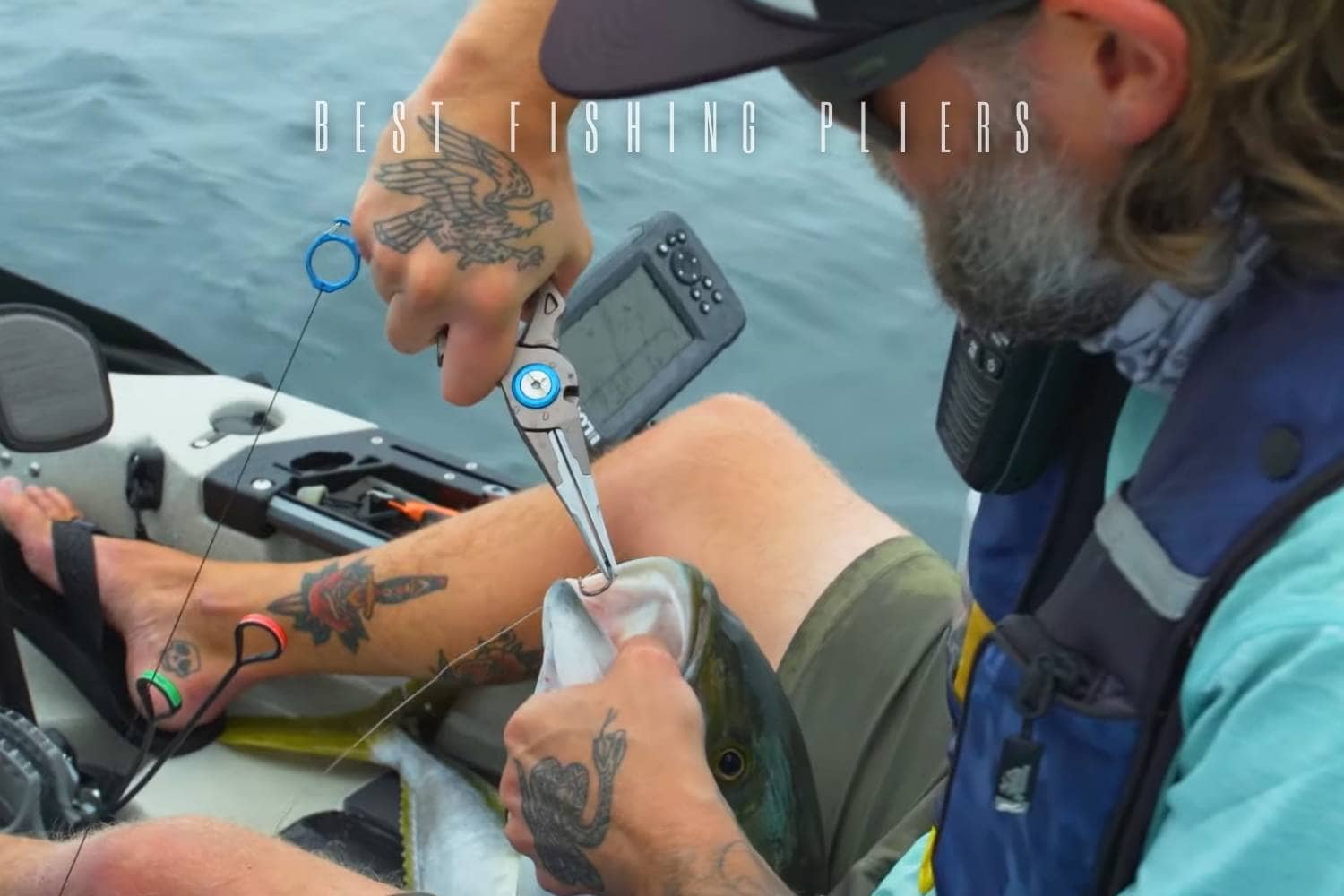
Fishing pliers earn their place by solving specific jobs: reaching a hook, cutting the line you actually use, opening split rings, or making small tackle adjustments. The most useful pair is not automatically the longest, most expensive, or most heavily featured. It is the one whose jaws, cutter, grip, and carry method match the work you do most often.
Choose by the job you need done
The article-era pliers in the comparison show different approaches to reach, cutters, handles, and carry. Use those layouts as prompts for inspecting the exact pair in front of you, not as a claim that an older model remains the best available choice.
| Job | Look for | Trade-off | Article-era examples |
|---|---|---|---|
| Hook reach and control | Long, narrow jaws | Reach and tip alignment matter more than a crowded feature list | Dr. Slick Squall Plier; Gerber Magniplier |
| Lure and split-ring work | A dedicated split-ring tip | Check that the tip fits the rings you normally handle | KastKing Cutthroat Plier; PLUSSINO 8-inch Split-Ring Plier |
| Line cutting | A cutter suited to the line material | Test the cutter on spare line before relying on it waterside | Bubba Blade Plier; Cuda Titanium Plier |
| Compact fly-fishing carry | Forceps or a small two-tool arrangement | Choose attachment and retention before extra functions | Loon Iconic Multi-Tool |
| Leverage-heavy tasks | A stout jaw and comfortable full-hand grip | Extra length can help leverage but can hinder close work | Van Staal Titanium Plier; Tails Up Tools Pistol-Grip Plier |
Start with the hardest job
List the tasks you expect during a normal trip, then circle the one that would be most difficult with an ordinary pocket tool. An angler changing treble hooks needs a different nose from a fly angler removing a small hook. Long jaws improve reach, while shorter, stouter jaws make close work easier to control. A pistol-grip layout changes the hand angle, but that does not make it automatically better for every hook or fish. Match the jaw shape to the actual work rather than treating every plier as interchangeable.
Match the cutter to your line
Braid, monofilament, fly line, tippet, leader, and metal leader present different cutting jobs. That distinction is more useful than a blanket claim that one cutter handles everything. If cutting is important, look at where the cutter sits, whether the edges meet cleanly, and whether inserts can be serviced. Before a trip, try the tool on an offcut of the same line you plan to fish. A cutter that works well on mono may still frustrate you on limp braid.
Choose reach, grip, and carry together
Overall length is only one part of handling. Nose length controls reach, handle shape affects leverage, and the attachment system determines whether the tool is available when needed. Rubber inserts may feel secure in a wet hand, while bare handles can be easier to clean. A spring-loaded jaw can speed repeated use, and a lock can keep the tool compact in storage. Consider the sheath or lanyard as part of the system rather than an afterthought.
Treat material labels carefully
Fishing pliers may combine aluminum bodies, stainless-steel jaws, titanium construction, coatings, and bonded finishes. Those terms are not equivalent. A titanium-colored or titanium-bonded component is not the same thing as a tool machined from titanium. Likewise, a corrosion-resistant material is not a promise of maintenance-free service. Examine the whole tool: pivots, cutters, fasteners, jaws, and handle inserts can age differently even when the main body looks pristine.
When standard needle-nose pliers are enough
Ordinary needle-nose pliers can perform basic gripping and hook work. Purpose-built fishing pliers become more compelling when you need a split-ring tip, an integrated line cutter, longer reach, a tether point, or a tool designed around frequent wet use. If your trips are simple and close to home, a basic tool may be adequate. If a failed cutter or lost tool would interrupt the day, prioritize a secure carry method and serviceable parts.
Common questions
Do fishing pliers need every feature?
No. Extra functions add value only when they match your fishing. A clean jaw, dependable cutter, comfortable grip, and secure carry method cover most needs.
What length should I choose?
Choose by reach and control rather than a universal number. Longer tools can reach farther; shorter tools are often easier to maneuver in tight spaces.
Should I rely on a warranty claim?
Treat warranty terms as a separate, time-sensitive detail to confirm before purchase. Judge the tool first by the construction and serviceability you can inspect.
A practical final check
Test fishing pliers against the jobs that actually slow you down: cutting the leader material you carry, reaching a hook without crowding your fingers, and operating the jaws with wet hands. Check that the cutters meet cleanly and that the handle remains controllable through several repetitions. Extra functions are useful only when they do not compromise the primary cut, grip, or reach you need beside the water.
