
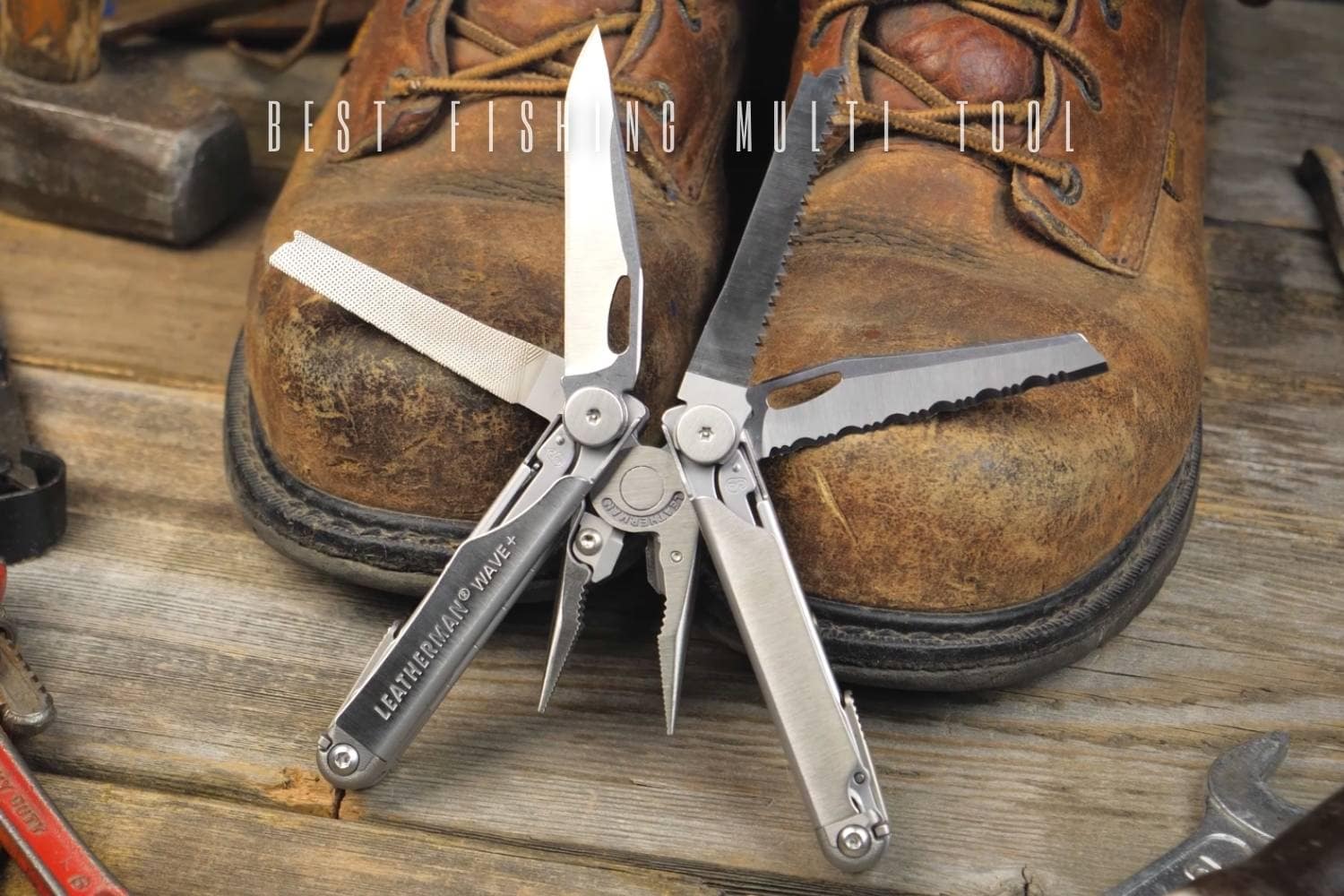
A fishing multi-tool is valuable when it replaces several tools you would otherwise carry, not when it simply has the longest feature list. The right choice begins with a small set of real jobs—cutting your line, gripping a hook, tightening hardware, filing a point, or making a simple repair—and then balances those jobs against weight, hand comfort, locking behavior, and carry position.
Choose by the job you need done
The article-era multi-tools in the table demonstrate different balances of pliers, drivers, blades, and compact storage. Compare those layouts with your own must-have list and inspect the exact tool rather than assuming an older product name settles the decision.
| Job | Look for | Trade-off | Article-era examples |
|---|---|---|---|
| Pliers-first field work | Needle-nose pliers plus dependable cutters | Open the pliers and cutter with the hand position you expect to use | Leatherman Surge; Leatherman Wave Plus |
| Compact general repairs | A useful driver and file selection | Count functions you will use, not the total advertised count | Victorinox SwissTool Spirit X |
| Tool-rich carry | Broad implement selection in one body | Accept the added weight only if several functions replace separate tools | BIBURY 18-in-1 Multitool Pliers |
| Fishing-specific extras | Hook-removal or scaling features | Check whether specialized implements are shaped well enough to do the job | Pro-Master Multitool Knife |
| Belt or pack mounting | A secure sheath and lock | Practice drawing and returning the tool without touching exposed edges | SOG Multitool |
Build a must-have list first
Write down the three functions you would notice missing on a normal trip. For many anglers that means pliers, cutters, and a screwdriver or file. Scissors can be useful for fine materials; a saw or can opener may be irrelevant. This exercise prevents a high function count from hiding weak performance in the tools that matter. A multi-tool with eighteen implements is not automatically more useful than one with fewer, better-placed components.
Check one-handed use realistically
One-handed operation matters because the other hand may be occupied. Test it deliberately: opening a stiff tool while holding a rod is different from opening it at a workbench. Check whether the main pliers deploy smoothly, whether exterior tools are reachable, and whether each sharp implement locks as intended. A secure lock matters more than rapid deployment when a blade or saw is involved.
Balance size against hand comfort
Pocketability is useful only if the folded tool still gives your hand enough purchase. Heavy models may feel stable during plier work but become burdensome on a long walk. Very compact models save space yet can be awkward under force. Compare folded length, thickness, handle edges, and sheath position. If you carry the tool in a pack, put it somewhere repeatable rather than letting it migrate to the bottom.
Look beyond the main frame material
Stainless steel and protective finishes can be useful, but the whole mechanism deserves attention. Pivots, locks, replaceable cutter inserts, and small springs may experience different wear from the handles. Open every implement and look for rubbing, looseness, or difficult access. If a tool uses replaceable cutters or bits, verify the replacement format separately before depending on that advantage.
Keep fishing tools and workshop tools distinct
A multi-tool can handle quick adjustments, but it does not replace every dedicated tool. Small scissors may cut thread yet feel clumsy for repeated precision tying. A compact file may touch up a point but will not offer the control of a bench file. Buy a multi-tool for portable problem-solving and keep specialized jobs with specialized tools when precision or repeated use matters.
Common questions
How many functions are enough?
Enough to cover your real trip list without making the tool too heavy or awkward. Three dependable functions can be more useful than a crowded set of rarely used implements.
Are spring-loaded pliers essential?
No. Spring assistance can make repeated opening easier, but jaw alignment, handle comfort, and dependable operation are more important.
Can one multi-tool replace fishing pliers?
Sometimes. Confirm that its jaw reach, cutter position, and handle geometry suit your hook and line work before leaving a dedicated pair behind.
A practical final check
Start by listing the two or three multi-tool functions you would genuinely use while fishing, then operate each one with the hand position and conditions you expect on the water. A crowded tool is a poor trade if the pliers pinch, the blade is awkward to deploy, or the frame becomes uncomfortable under load. Favor dependable access to essential functions over a longer feature count.
