
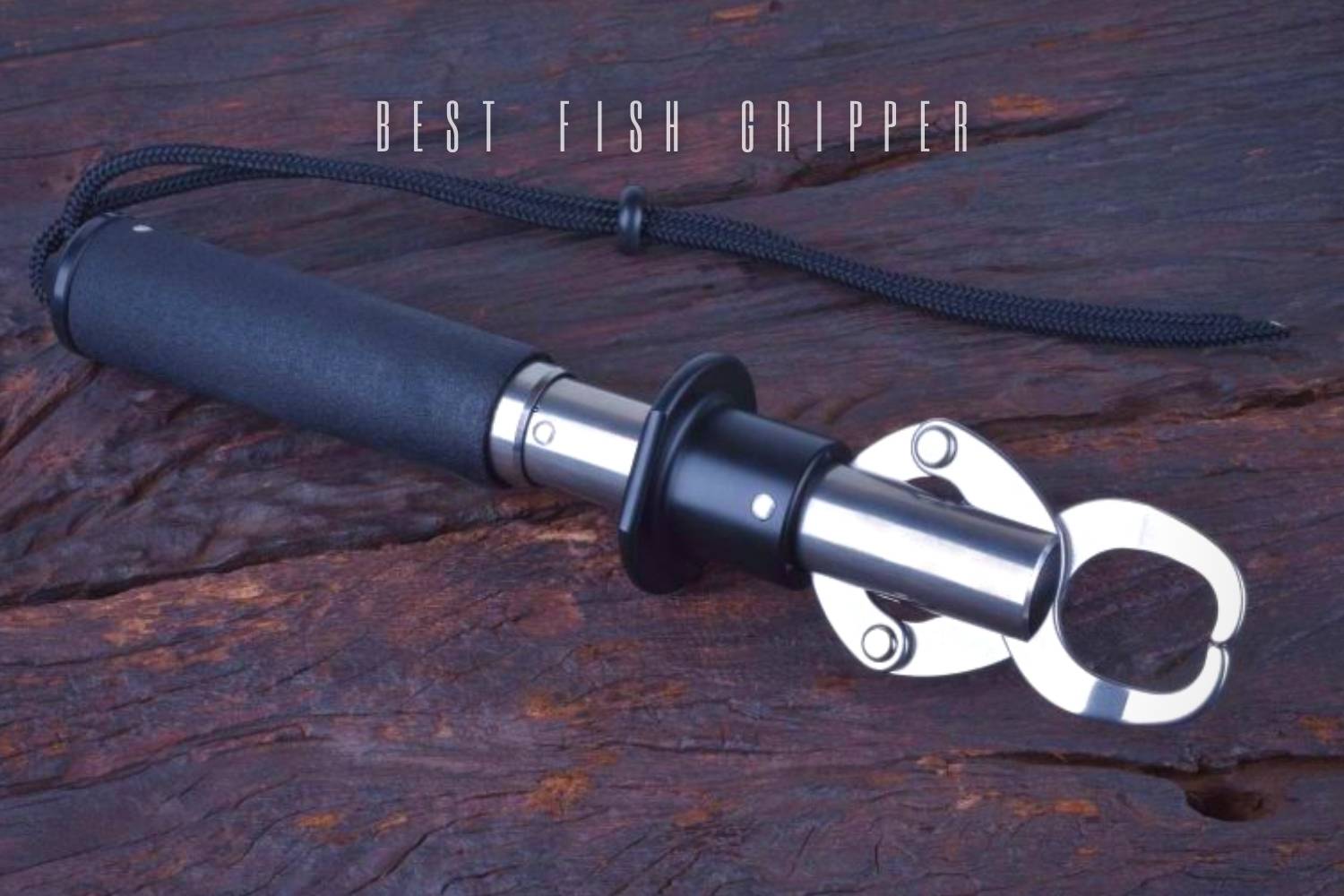
A fish gripper is a specialized holding tool, not an automatic substitute for a net or for species-appropriate handling. Choose one only after deciding why you need it: compact kayak carry, one-handed jaw operation, a rotating head, flotation, or an integrated scale. The tool should fit the fish and situation you actually encounter rather than promising one answer for every catch.
Choose by the job you need done
The article-era grippers in the comparison illustrate differences in jaw layout, handles, rotation, flotation, and weighing features. Use those examples to identify which functions matter in your fishing, then assess the exact device and follow its instructions rather than relying on an older ranking.
| Job | Look for | Trade-off | Article-era examples |
|---|---|---|---|
| Compact floating carry | A simple plastic body that floats | Lower bulk can mean fewer features and less capacity | Rapala 9-inch Floating Fish Gripper; YakGear |
| T-style operation | A trigger or sleeve that is easy to control | Check jaw opening and handle traction with your own hand | Entsport; HJJS Fishing Pliers set |
| Rotating grip | A head that turns freely under light load | Rotation does not remove the need for controlled handling | Eastaboga Tackle BogaGrip; Piscifun with Digital Scale |
| Pistol-style hold | An ergonomic trigger layout | Confirm the jaws and trigger remain controllable without excess squeeze | Fiblink Portable |
| Measurement in one tool | Integrated scale or tape | Treat scale accuracy and tool handling as separate qualities | Entsport; Piscifun with Digital Scale |
Decide whether a gripper fits the situation
Grippers can be compact alternatives when pack or kayak space is limited. That is a practical carry argument, not a rule that a gripper is better than a net. Start with target species, hook arrangement, landing position, and the space available. A tool designed around a lip hold may not suit every fish. If the fit is questionable, do not force the tool to do a job it was not chosen for.
Make one-handed control the priority
One-handed control keeps the second hand available. Test how the jaws open, how much trigger force is needed, and whether your grip remains stable through the full motion. A lanyard or belt attachment can keep the tool available, but it should not tangle with other equipment. One-handed operation is useful only when the mechanism is predictable and the handle fits your hand.
Separate rotation, flotation, and weighing
These features solve different problems. Rotation lets the head turn relative to the handle. Flotation helps recover a dropped tool. A built-in scale combines measurement and holding. Do not assume one feature guarantees another, and do not let an integrated scale distract from jaw shape and control. If measurement matters, compare the scale reading with a known weight before relying on it.
Inspect jaws and opening range
Jaw geometry deserves more attention than broad size claims. Look at the maximum opening, the contact surfaces, and how the jaws meet when closed. Smaller jaws may demand more precise placement. Larger hardware adds bulk and may be excessive for small fish. A relatively small opening demands careful placement; that kind of fit detail is more useful than a universal weight rating.
Use the free hand deliberately
One-handed gripper operation can keep the other hand available to support the fish. That is the useful principle. Do not treat a gripper as permission to suspend, swing, or control every fish by one point. Keep the task brief and deliberate, follow applicable local requirements, and use the tool only where its jaw style matches the situation.
Common questions
Do all fish grippers float?
No. Some plastic grippers float, while metal or alloy tools may not.
Is a built-in scale necessary?
No. It is useful only if you intend to measure fish and are satisfied with the scale’s operation. A simpler tool can be easier to carry.
Does a rotating head make every gripper suitable?
No. Rotation is one mechanical feature. Jaw shape, target species, operator control, and the rest of the handling method still determine fit.
A practical final check
Evaluate a fish gripper as part of a complete landing and release sequence rather than as an isolated gadget. Practice opening, positioning, and releasing it with one hand while the other remains available to support the fish or manage the line. The mechanism should be predictable without squeezing harder, twisting the wrist, or adding steps that keep the fish out of the water longer than necessary.
