
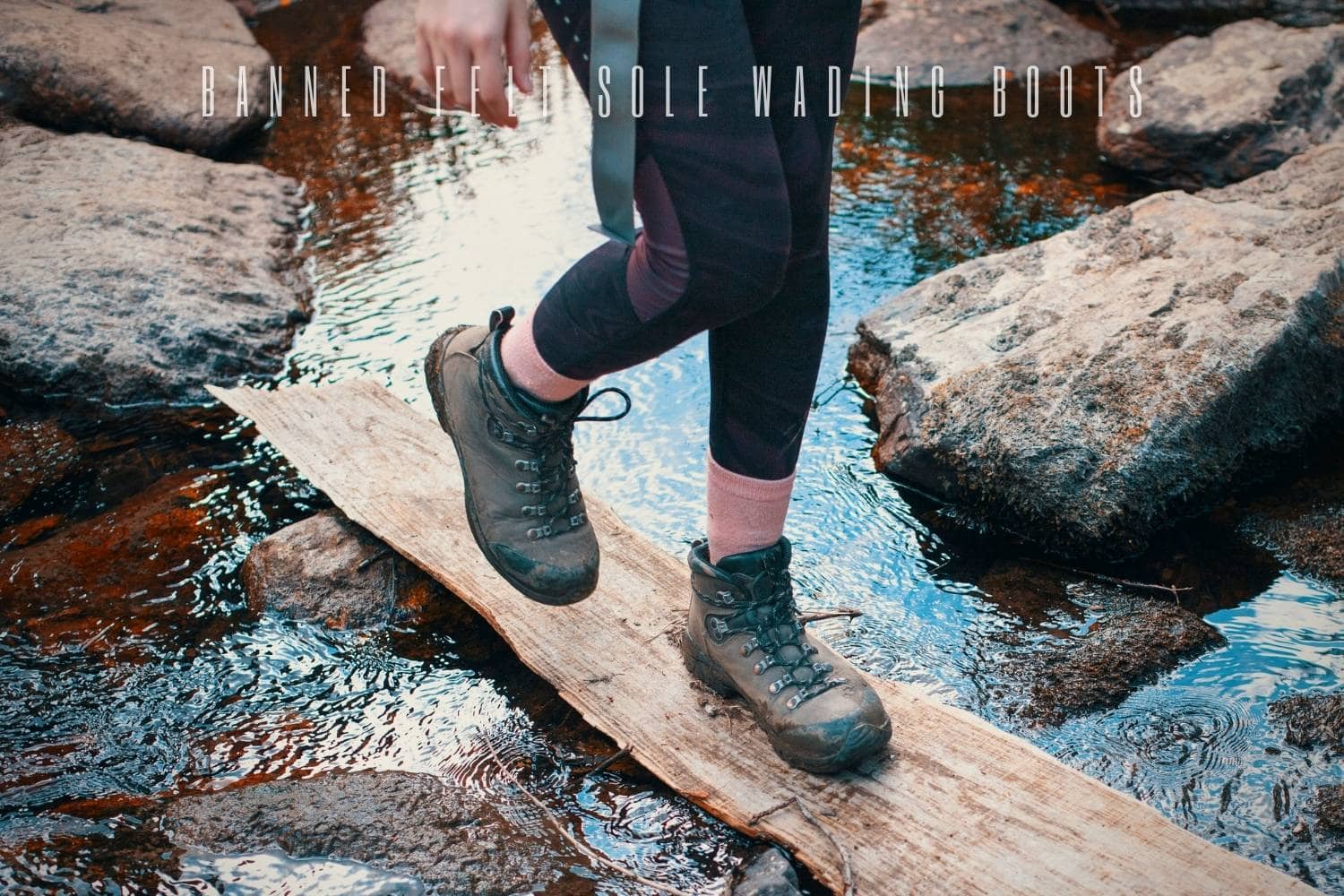
Quick answer: felt-soled wading footwear is prohibited under current rules in Alaska, Maryland, Rhode Island and South Dakota. Narrower rules also apply on Nebraska Game and Parks Commission property, selected Missouri trout waters, Yellowstone and Glacier national parks, and Red Rock Lakes National Wildlife Refuge.
Checked August 5, 2026: these rules do not all have the same scope. Confirm the current regulation for your exact water and land manager before you travel.
Where felt soles are currently prohibited
| Jurisdiction | Scope | Official source |
|---|---|---|
| Alaska | While sport or personal-use fishing, or hunting, in fresh water | Alaska Fish and Game |
| Maryland | In state waters and within five feet of state waters | COMAR 08.02.19.07 |
| Rhode Island | All freshwaters, including shared waters where Rhode Island rules apply | Rhode Island DEM |
| South Dakota | External felt-sole footwear in state waters, with an official-duty exception for government and emergency personnel | Rule 41:07:01:18 |
| Nebraska | Boots or waders with felt soles in water bodies on property owned or operated by the Nebraska Game and Parks Commission | Nebraska fishing guide |
| Missouri | Four trout parks and a named list of trout lakes and streams | Missouri Conservation |
| Yellowstone | While fishing anywhere in Yellowstone National Park | National Park Service |
| Glacier National Park | Felt-soled wading boots are prohibited in park waters | National Park Service |
| Red Rock Lakes NWR | Felt-soled wading boots are prohibited in refuge waters open to fishing | U.S. Fish and Wildlife Service |
Important: Yellowstone, Glacier and Red Rock Lakes are federal land-manager rules, not statewide bans. Missouri and Nebraska are also narrower than statewide prohibitions.
Alaska
Alaska prohibits footwear with absorbent felt or similar fibrous material on the soles while sport or personal-use fishing or hunting in fresh water. Alaska Fish and Game explains that the rule applies to freshwater use rather than every situation in the state.
Maryland
Maryland prohibits footgear with external felt soles in state waters and within five feet of state waters. “State waters” includes tidal and nontidal waters, so this is broader than a trout-stream rule.
Rhode Island
Rhode Island prohibits felt-soled waders, boots and other porous-soled footwear that absorbs water in all freshwaters, including shared waters where Rhode Island rules apply.
South Dakota
South Dakota does not allow external felt-sole footwear, including boots and waders, in the waters of the state. The codified rule makes an exception for state or federal employees and emergency personnel using felt footwear in official duties.
Nebraska
Nebraska's wording is narrower: on property owned or operated by the Nebraska Game and Parks Commission, anglers may not use boots or waders with felt soles in a water body. Do not read that as a claim about every privately owned water in Nebraska.
Missouri
Missouri prohibits porous-soled waders at four trout parks and on a named list of trout lakes and streams. That includes felt and other matted or woven fibrous soles. Use the Missouri Department of Conservation's current water list rather than treating it as a statewide ban.
Yellowstone National Park
While fishing in Yellowstone, footgear with absorbent felt or other fibrous material on the soles is prohibited. State fishing licenses do not control this park rule; Yellowstone has its own permit and fishing regulations.
Other federal land-manager rules
Glacier National Park prohibits felt-soled wading boots in park waters. Red Rock Lakes National Wildlife Refuge in Montana also prohibits felt-soled wading boots in refuge waters that are open to fishing. These are destination-specific federal rules rather than Montana statewide bans.

Why agencies restrict felt
Felt does not create an invasive species. The concern is that an absorbent, fibrous sole can hold water, sediment, plant fragments and small organisms, then move them to another waterway.
Alaska Fish and Game says felt can retain material deep in its fibers and is harder to clean, dry and decontaminate than rubber alternatives. Didymo, often called rock snot, is one example: the federal National Invasive Species Information Center identifies contaminated fishing gear, particularly felt-soled waders, as an easy pathway for spread.
Felt is not the only risk. Boats, trailers, live wells, bait containers, anchors, nets, waders and boots can all move unwanted hitchhikers between waters.
Clean, drain and dry your gear

Use the destination agency's instructions when they are more specific. The basic routine is:
1. Clean
Remove visible mud, plants and animals from boots, waders, boats and other gear. Use a stiff brush around tread, laces and seams.
2. Drain
Empty water from boats, bilges, live wells, bait containers and gear before leaving the access.
3. Dry or decontaminate
Dry gear fully between water bodies when possible, or follow the local agency's approved decontamination method.
4. Dispose
Put unwanted bait in the trash. Do not release it or pour bait water into another water body.
Minnesota is a useful example even though it does not have a statewide felt-sole ban. Its DNR asks shore and fly anglers to clean waders and hip boots, scrub footwear and choose non-felt soles to reduce risk. See the state's Clean In Clean Out guidance.
Felt or rubber: choose for the water and the rule
There is no universal best sole. Match the boot to the water, the walk in, your balance and the current regulations.
| Factor | Felt | Rubber |
|---|---|---|
| Wet-rock grip | Can feel secure on some smooth, algae-covered rock | Varies with compound, tread, rock and conditions |
| Dry-ground grip | Often poor on mud, grass and timber | Usually the more practical hiking surface |
| Cleaning and drying | Absorbent and difficult to decontaminate | Generally easier to inspect, clean and dry |
| Travel | Prohibited in some destinations | Avoids felt-specific bans; other gear rules can still apply |
| Traction options | Some boots accept studs, where legal | Some boots accept studs or bars, where legal |
If you travel often: rubber-soled boots remove the felt-specific legal complication. They do not remove the need to clean, drain and dry your gear.
Frequently asked questions
Why are felt-soled waders banned?
Agencies restrict them because absorbent, fibrous soles can retain sediment and organisms that may be moved to another water body. The aim is to reduce one pathway for aquatic invasive species and fish diseases.
Are felt boots allowed in Colorado?
Colorado's current statewide fishing materials do not list a blanket felt-sole prohibition. A park, refuge, private property or local land manager may still impose a narrower rule, so check the exact destination.
Where are felt waders banned in the United States?
The current statewide or activity-based restrictions verified here cover Alaska, Maryland, South Dakota and Rhode Island freshwaters. Narrower rules apply on Nebraska Game and Parks Commission property, selected Missouri trout waters, Yellowstone and Glacier national parks, and Red Rock Lakes National Wildlife Refuge. Other local or federal land managers may impose additional rules.
Did Vermont ban felt soles?
Vermont's statewide felt-sole ban was repealed in 2016. Destination-specific rules can still change, so check the current regulation for the water you plan to fish.
Can I use studs where felt is banned?
Often, but not automatically. A ban on felt does not necessarily prohibit studs in a rubber sole, yet some waters or land managers restrict metal traction. Check both the sole-material rule and any stud restriction.
Final thought
A boot choice should not be the surprise that unravels a fishing trip. Check the rules before you pack, carry a legal option for the destination, and clean your gear before moving between waters.
Official sources
- Alaska Department of Fish and Game: invasive species prevention
- Maryland COMAR 08.02.19.07: Felt-Soled Waders
- Rhode Island DEM: 2026 freshwater regulation reminder
- South Dakota Rule 41:07:01:18: Felt sole footwear prohibited
- Nebraska Game and Parks: 2026 fishing guide
- Missouri Department of Conservation: porous-soled waders ban
- National Park Service: Yellowstone fishing rules
- National Park Service: Glacier fishing rules
- U.S. Fish and Wildlife Service: Red Rock Lakes fishing rules
- Vermont DEC: felt-sole ban repealed in 2016
- National Invasive Species Information Center: didymo
